
Diseases
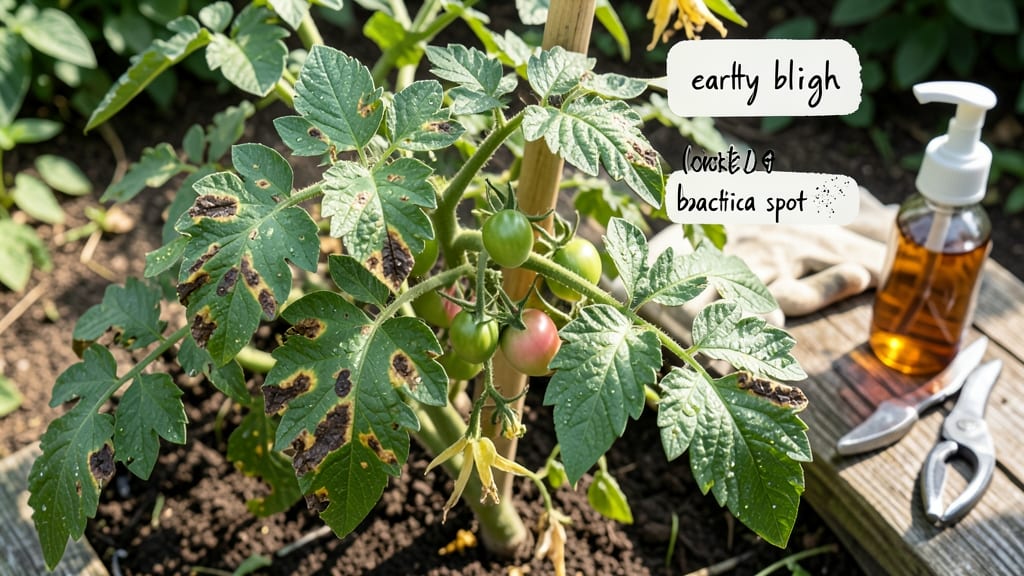
What causes brown spots on tomato plant leaves can turn a thriving garden into a gardener’s worst nightmare—but the good news is that knowing the exact triggers can save your plants before it’s too late.
Discovering those first speckles might feel like a gardener’s worst nightmare, but the good news is that knowing the exact causes (and fixes) can save your plants before they’re too far gone.
From fungal diseases like early blight to environmental stress from overwatering or nutrient deficiencies, the culprit isn’t always what it seems. Below, I’ll break down the most common triggers, how to tell them apart, and the simple steps to stop them in their tracks.
You’ll learn how to diagnose the issue fast, whether it’s a fungal infection, sun scorch, or something else entirely—and how to treat it without losing your entire crop.

5 Common causes of brown spots on tomato leaves (fungal vs. environmental)
When I first spotted those brown spots on my tomato leaves, my heart sank—was it a disease, or just environmental stress?
The truth is, both can mimic each other, but knowing the difference is key to saving your plants. Fungal infections like early blight and septoria leaf spot are the most common culprits, but sun scorch, nutrient deficiencies, and even pest damage can create similar symptoms.
Let’s break down the 5 most common causes and how to tell them apart.
First, the good news: most brown spots are treatable if caught early. The bad news? Ignoring them can lead to defoliation, reduced yields, and even plant death. I’ve seen early blight wipe out entire tomato beds in just a few weeks, so don’t wait to act.
Start by examining the shape, size, and pattern of the spots—this is your first clue to the root cause.
Fungal diseases often appear as concentric rings or irregular brown patches with yellow halos. Environmental stress, on the other hand, usually shows up as dry, crispy edges or uniform discoloration. Below, I’ve created a side-by-side comparison to help you diagnose the issue quickly—because once you know the cause, you can take targeted action to protect your tomato plants.
Now that you can spot the difference, let’s dive deeper into each cause. Early blight, caused by the fungus Alternaria solani, is one of the most aggressive tomato diseases. It thrives in warm, humid conditions and starts on the lower leaves before creeping upward.
If you see target-like spots with yellow rings, that’s your first warning sign. Late blight, on the other hand, is even more destructive—it’s the same fungus that caused the Irish potato famine and spreads rapidly in cool, wet weather.
If your tomato leaves are showing greasy brown spots with white mold, you’re likely dealing with late blight. This one moves fast, so act immediately by removing infected leaves and applying a copper fungicide. Septoria leaf spot, another fungal disease, creates tiny dark spots with gray centers.
Unlike early blight, it doesn’t form concentric rings but instead looks like tiny freckles on the leaves. It’s less aggressive but can still weaken your plants if left unchecked.
Moving to environmental causes, sun scorch is a common issue for tomato plants, especially in hot climates or when plants are suddenly exposed to intense sunlight. The spots start as white or pale areas on the leaf edges and turn brown and crispy over time.
To prevent sun scorch, make sure your tomatoes get morning sun and afternoon shade, especially in USDA zones 8-10. Nutrient deficiencies, particularly potassium or magnesium shortages, can also cause brown spots—often accompanied by yellowing between the veins.
Finally, don’t overlook pest damage as a culprit. Spider mites and aphids can create brown, stippled spots on leaves as they feed. Check the <
How to diagnose brown spots: step-by-step visual and physical checks
When you spot brown spots on tomato leaves, your first instinct might be to reach for a fungicide—but not so fast! The key to saving your plants lies in accurate diagnosis. Start by examining the leaf texture and undersides for clues.
Fungal infections like early blight often show as concentric rings on the upper leaves, while environmental stress may present as dry, crispy edges.
Grab a magnifying glass and inspect the leaf undersides for signs of fungal spores or pests. Early blight, for example, produces purple or brown spots with yellow halos, while late blight appears as greasy, dark lesions that spread rapidly.
If you see white powdery residue, it could be powdery mildew—a common issue in humid conditions.
🌱 Quick Diagnosis Guide
Check for concentric rings or greasy lesions.
Look for dry, crispy edges on upper leaves.
Yellowing leaves with mushy stems.
Next, check the stems and soil for additional clues. If the soil feels compacted or waterlogged, root rot or nutrient deficiencies could be the culprit. Dig gently around the base to inspect for dark, mushy roots—a clear sign of overwatering.
Meanwhile, nutrient deficiencies, like a lack of magnesium, often cause interveinal chlorosis (yellowing between veins) paired with brown spots.
Don’t forget to examine the fruit itself. If you notice dark, sunken spots on tomatoes, it could indicate late blight, a severe fungal disease that spreads quickly.
In contrast, blossom end rot appears as a dark, leathery spot on the fruit’s bottom, often linked to calcium deficiency or inconsistent watering.
If you’re still unsure, consider testing for pathogens using a home soil test kit or sending a sample to a local extension office. For fungal issues, a 30-second vinegar spray test can help: spray the leaves with diluted vinegar—if the spots darken, it’s likely fungal.
Once you’ve identified the cause, act fast! Prune infected leaves immediately, space plants properly for airflow, and adjust your watering schedule to prevent further spread. Early intervention is your best defense against losing your entire tomato harvest. 🌿