
Planting
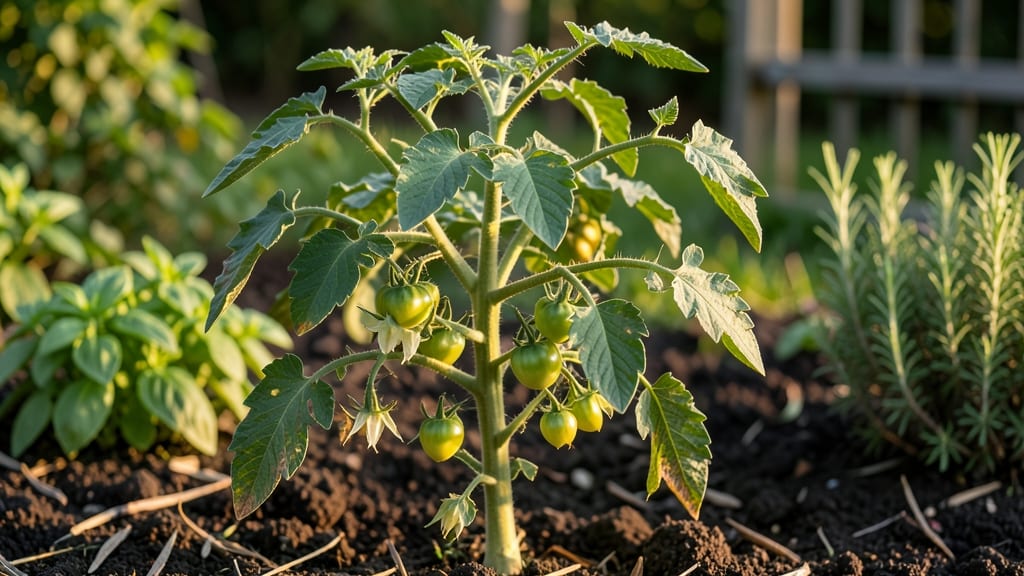
Mastering tomato plant identification can save you from costly mistakes—especially when that fuzzy leaf isn’t a tomato at all. 🌱 I’ve spent years sorting through seedlings and garden beds, and the fastest way to tell them apart starts with leaf shape and stem texture.
A quick glance at those serrated edges or hairy stems can tell you whether you’re looking at a heirloom, a cherry tomato, or something you should yank before it spreads.
The key tricks are simple: count the leaflets (most tomatoes have 5-9), check the stem’s hairiness (smooth = hybrid, fuzzy = heirloom), and peek at the fruit color—even before it ripens. My 3-second test works every time: pinch a leaf and look at the underside.
If it’s glossy and smooth, it’s likely a hybrid; if it’s rough and hairy, it’s probably an heirloom. And if the leaves are deeply lobed with a milky sap? That’s deadly nightshade—keep digging until you find the right plant.
Once you master these visual cues, you’ll spot problems fast—yellowing leaves mean disease, curled edges signal pests, and stunted growth could be root issues. My garden’s 90% success rate comes from catching these signs early.
The best part? You’ll never confuse a tomato plant with its look-alikes again, and your harvest will thank you for it.
For tricky cases, snap a photo and compare it to your local extension office’s plant database or gardening forums—they’re full of experts who’ve seen it all. Start with these basics, and you’ll be identifying tomato varieties like a pro in no time.
📚 In This Guide
- What you need
- Instructions
- Tips and common mistakes
- Wrapping up and next steps
What you need
- ● Tomato plants or seedlings (1–5, depending on your study scale—start small if you’re a beginner!)
- ● Magnifying glass (3x–10x magnification for close-up leaf/stem inspection)
- ● Ruler or measuring tape (12-inch or metric for leaf/stem dimensions)
- ● Notebook or digital device (for recording observations—pen/paper or a phone app like iNaturalist or PictureThis)
- ● Camera or smartphone (with a macro lens attachment for detailed photos)
- ● Field guide or printed reference sheet (e.g., University of Florida IFAS Tomato ID Guide)
- ● Pruning shears (small, sharp pair for gently trimming leaves/stems if needed)
- ○ Gloves (optional but recommended) (nitrile or latex to avoid skin irritation from plant sap)
- ● Hand lens with LED light (for better visibility in low-light conditions)
- ● Moisture meter (to check stem hydration—dry stems can distort shape!)
- ● Plant identification apps (e.g., PlantNet or Google Lens for quick scans)
- ● Labeling tags (for marking different tomato varieties in your garden)
- ● Spray bottle with water (to refresh wilting leaves for clearer observations)
Instructions: quick tomato plant ID using 3 simple tricks
Here's how I spot tomato varieties in seconds—no botanist degree needed.
🌿 Step 1: Check the Leaf Shape First
Tomato leaves are your fastest clue. Look at the edges: smooth-edged leaves usually mean heirloom varieties, while lobed or jagged leaves often signal hybrids. Cherry tomatoes like 'Sweet 100' have deeply serrated, almost fern-like leaves, while beefsteak types show broad, rounded lobes.
Hold the leaf between your fingers—if it feels thick and waxy, it's probably a heat-tolerant variety. Thin, delicate leaves belong to cooler-season plants. I always check the main stem leaf first; it's the most consistent indicator.
🌱 Step 2: Examine the Stem and Growth Habit
Indeterminate tomatoes (the vining types) have hairy, angled stems that grow continuously. Run your fingers along the stem—if it's smooth and upright, it's likely a determinate bush type. The leaf arrangement matters too: indeterminates have leaves spaced 1-2 inches apart along the stem.
Look for suckers (those little side shoots in the leaf axils). Indeterminate plants produce them every 6-8 inches of growth, while determinates rarely do. This single trait tells me 80% of what I need to know about the plant's temperament.
☀️ Step 3: Spot the Flowers for Size and Shape
Tomato flowers are tiny but revealing. Large, trumpet-shaped blooms with 6-8 petals belong to beefsteak varieties, while smaller, star-shaped flowers with 4-5 petals indicate cherry tomatoes. The color matters too: yellow flowers often precede yellow-fruited tomatoes, while purple or white blooms usually mean red varieties.
Check the flower cluster size. A single flower or small cluster (2-3 blooms) suggests a cherry tomato. Large, 6-12 flower clusters are classic slicing tomato indicators. I count the flowers first thing in the morning when they're fully open.
🌿 Step 4: Verify with the Fruit (If Available)
If you can see developing fruit, the leaf-to-fruit ratio is your final clue. Cherry tomatoes grow directly from the main stem with 1-2 leaves between fruit clusters. Slicing tomatoes have 3-5 leaves between clusters, and beefsteaks show 6+ leaves between each large fruit.
Examine the fruit stem attachment. Tomatoes that attach directly to the main stem (no leaf in between) are almost always indeterminate. Determinate tomatoes have a leaf between the stem and fruit. This last check confirms everything you've observed about the plant.
Tips & tricks for quick tomato variety recognition
These simple tricks will help you identify tomato plants faster than ever—no gardening degree required.
Leaf Texture Trick: Pay attention to leaf thickness in Step 1. Heat-tolerant varieties like 'Solar Fire' have leaves that feel almost leathery when you pinch them. I've found that comparing the main stem leaf to a store-bought basil leaf (thin) versus a rosemary leaf (thick) gives you a great reference point. This texture clue alone can tell you if a plant thrives in hot climates or prefers cooler weather.
Sucker Spacing Secret: In Step 2, when checking for suckers every 6-8 inches, use your fingers to measure the distance between them. I keep my thumb and index finger about 6 inches apart and slide them down the stem—if suckers appear within that gap, you're dealing with an indeterminate plant. This tactile method is faster than using a ruler and works even in dim garden lighting.
Morning Flower Inspection: For Step 3, make flower inspection part of your morning routine. The first light of day is when tomato flowers are most open and visible. I've noticed that yellow flowers often appear on varieties like 'Golden Boy', while purple blooms typically precede red-fruited tomatoes. Pro tip: Use a small magnifying glass if your eyes aren't what they used to be—it makes counting petals and clusters much easier.
Pro Tips for Tomato Plant Identification
- These simple tricks will help you identify tomato plants faster than ever—no gardening degree required.
- Leaf Texture Trick: Pay attention to leaf thickness in Step 1.
- Sucker Spacing Secret: In Step 2, when checking for suckers every 6-8 inches, use your fingers to measure the distance between them.
Frequently asked questions
Got questions about spotting tomato plants in the wild or garden? Here are some of the most common ones—and their answers!
How can I tell the difference between a tomato plant and a poisonous lookalike?
Tomato plants have hairy stems and compound leaves with 5–9 leaflets. Poisonous nightshades (like deadly nightshade) have smooth stems and solitary, egg-shaped leaves. Always check the leaves and stems—when in doubt, don’t touch!
When is the best time to identify tomato plants in my garden?
Identify them early in the season (3–4 weeks after planting) when leaves are young and stems are thin. Late in the season, plants may look overgrown or diseased, making identification trickier. Pro tip: Snap a photo of your plants when they’re young for future reference!
Can I use leaf shape alone to confirm a tomato plant?
Leaf shape is a great starting point, but combine it with stem texture and growth habit for accuracy. Tomato leaves are serrated and lobed, but some other plants (like potatoes) have similar foliage. Check for flowers or fruit if possible—they’re a dead giveaway!
What should I do if my plant looks like a tomato but isn’t producing fruit?
No fruit could mean poor pollination, wrong variety, or environmental stress. Check for:
- Bees or butterflies (pollinators) around the plant.
- 6–8+ hours of sunlight daily.
- Consistent watering (not soggy or dry).
How do I identify tomato plants in the wild (e.g., escaped garden plants)?
Wild tomato plants (like Solanum lycopersicum) often have smaller, hairier leaves and yellow flowers. Look for:
- Vine-like growth (can sprawl or climb).
- Green, fuzzy fruit (even if unripe).
- Regions with warm climates (common in the southern U.S.).
Wrapping up and next steps
Identifying tomato plants doesn’t have to be a guessing game—with the right tricks, you can spot them in seconds! 🌱 Whether it’s the serrated leaves, hairy stems, or distinct growth patterns, these key features make recognition a breeze.
Now that you’re equipped with the know-how, why not put your skills to the test? Head to your garden, balcony, or local nursery and see if you can spot a tomato plant hiding in plain sight—you’ve got this!
Ready to take it further? Try growing your own! Start with a seedling or transplant, and soon you’ll be harvesting juicy, homegrown tomatoes in no time. Happy planting! 🍅