
Companion Plants
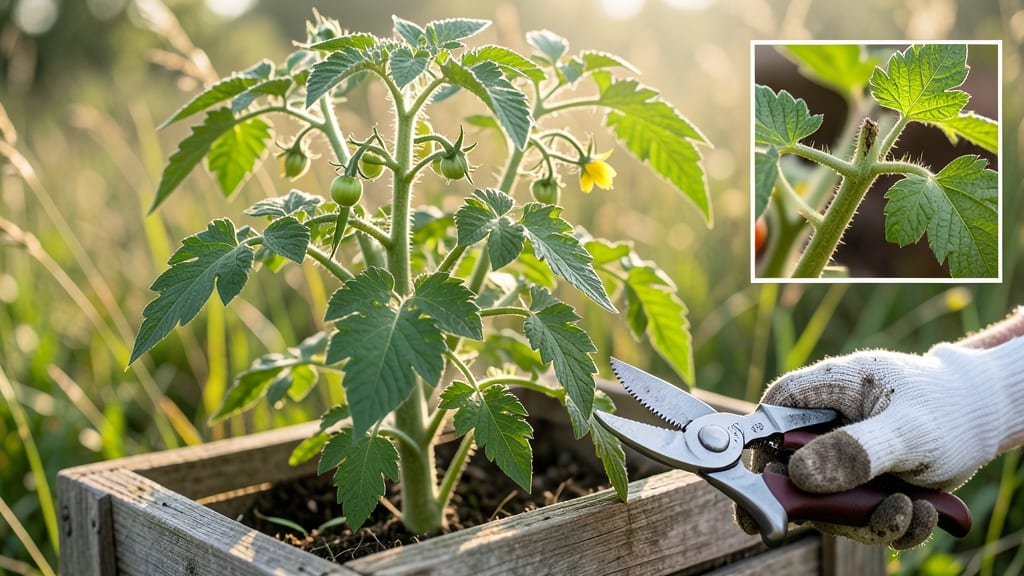
Those little sucker leaves on tomato plants between your tomato's main stem and branches are stealing energy from your harvest. 🌱 I've pruned hundreds of tomato plants, and removing suckers isn't just about looks—it's the difference between a handful of tomatoes and a bushel.
The science is simple: suckers compete with your fruit for nutrients. When you remove them, your plant puts all its energy into stronger stems and bigger tomatoes. Look for the tiny shoots growing at a 45-degree angle from the main stem—those are your targets.
You'll see thicker vines, more flowers, and tomatoes that ripen faster. The best time to prune is early morning when the plant is hydrated, and always use clean shears to avoid disease. Works for both indeterminate (vining) and determinate (bush) varieties. Here's how to do it right without over-pruning.
Root Causes of Unwanted Growth
Those pesky sucker leaves—technically called suckers or shoots—pop up where you least expect them, siphoning energy from your tomato plant’s main goal: producing juicy, flavorful fruit. But why do they appear in the first place? Let’s break down the science behind this common gardening headache.
Tomato plants are determinate or indeterminate, but both rely on a delicate balance of plant hormones—specifically auxins and cytokinins—to regulate growth. Here’s how it goes wrong:
- Auxins (produced in the tips of stems and leaves) promote vertical growth, encouraging the plant to stretch upward toward sunlight. They also suppress side shoot development.
- Cytokinins (found in roots and developing leaves) trigger lateral growth, like suckers, to maximize photosynthesis and nutrient absorption.
When a sucker emerges, it’s often because the plant’s root system is sending signals (via cytokinins) to create new growth points. This happens most aggressively when:
- The plant is overwatered, leading to excessive root activity and hormone production.
- There’s too much nitrogen in the soil, which fuels leafy (but non-fruiting) growth over fruit development.
- The plant is stressed (e.g., from drought, poor drainage, or root damage), causing it to prioritize survival over fruit production.
💡 Pro Tip: If your soil is heavy in nitrogen (common with fresh manure or synthetic fertilizers), switch to a balanced 10-10-10 or phosphorus-heavy 5-10-10 fertilizer to shift the plant’s focus toward flowering and fruiting.
Tomato plants are sun worshippers, and when they don’t get enough light—or when conditions are too ideal—they go into overdrive producing suckers. Here’s how light and temperature play a role:
- Low light conditions: When tomatoes don’t receive 6–8+ hours of direct sunlight daily, they stretch (etiolate) and produce more side shoots to compete for light. This is why indoor or shaded plants often develop suckers like crazy.
- Cool nights: Temperatures below 60°F (15°C) at night can stimulate sucker growth because the plant perceives it as a signal to slow down fruiting and focus on vegetative growth instead.
- Sudden heat spikes: While tomatoes love warmth, temperatures above 90°F (32°C) can stress the plant, leading to compensatory sucker production as a survival mechanism.
🌡️ Actionable Fix: If your tomatoes are in a low-light spot, relocate them to a sunnier window or use grow lights (12–16 hours/day). For temperature control, use shade cloth during heatwaves or row covers to moderate nighttime temps.
Not all tomatoes are created equal—and some varieties are genetically prone to producing more suckers than others. Here’s the breakdown:
| Tomato Type | Sucker Tendency | Why It Happens |
|---|---|---|
| Indeterminate Varieties (e.g., Cherry, Roma, Beefsteak) | ⭐⭐⭐⭐⭐ (Very High) | These plants keep growing until frost, producing continuous suckers along the stem to maximize foliage and fruit production. |
| Determinate Varieties (e.g., Bush Early Girl, Celebrity) | ⭐⭐ (Moderate) | These plants stop growing at a set height and focus energy on one flush of fruit, but may still produce suckers if pruned improperly. |
| Heirloom vs. Hybrid | Varies (Heirlooms often ⭐⭐⭐⭐) | Heirloom tomatoes (e.g., Brandywine, San Marzano) are less genetically stabilized and may produce more suckers as a survival trait. Hybrids (e.g., Big Beef, Solar Fire) are bred for controlled growth but can still rebel! |
✨ Gardener Hack: If you’re growing indeterminate tomatoes and suckers are out of control, consider topping the plant (pinching the main stem) to signal it’s time to focus on fruit rather than foliage.
Sometimes, you’re the reason suckers appear! Here’s how human error fuels unwanted growth:
- Over-pruning: If you aggressively prune the main stem or remove too many leaves at once, the plant perceives it as a threat and compensates by producing more suckers to replace lost growth.
- Root disturbance: Digging around the base, transplanting, or even over-watering can damage roots, triggering a cytokinin surge that tells the plant to branch out for stability.
- Broken or pinched stems: If a sucker is only partially removed (e.g., torn instead of cleanly pinched), it can regrow from the wound, leading to a sucker explosion.
🔪 Pruning Best Practices:
- Use clean, sharp pruners (or your fingers!) to pinch suckers off at the base—never tear them.
- Remove no more than 1/3 of the foliage at a time to avoid shocking the plant.
- Wait until suckers are 3–5 inches long before pruning; smaller ones are easier to manage.
How to solve it
Now that you understand why those pesky sucker leaves pop up on your tomato plants, it’s time to tackle them effectively. The good news? With the right approach, you can redirect your plant’s energy toward bigger, juicier tomatoes while keeping it healthy.
Below are practical solutions tailored to the root causes—plus tips to prevent future overgrowth.
Timing matters! Prune suckers when they’re small (2–4 inches long)—this minimizes stress on the plant and prevents energy loss. Avoid pruning during extreme heat or drought, as the plant needs all its strength to recover.
Best times to prune:
- Morning or late afternoon (avoid midday sun, which can stress the plant).
- After rain or watering (keeps the plant hydrated for faster healing).
- Every 1–2 weeks (consistent maintenance = happier tomatoes).
Ready to get your hands dirty? Follow these steps for clean, efficient removal:
- 👨🍳 Identify the Sucker
- Look for the small leafy stem growing between the main stem and a branch (the "V" shape).
- Suckers are weaker than the main stem—gently tug to test resistance.
- 🔪 Snip or Pinch It Out
- Scissors/snips: Cut just above the joint where the sucker meets the main stem (prevents stubs that attract pests).
- Fingers: Pinch off small suckers (no tools needed!).
- Never tear—this damages the plant and invites disease.
- 🌱 Dispose of Properly
- Compost or trash (never leave suckers near the plant—they can regrow!).
- Burn if diseased (to prevent spreading fungal/bacterial issues).
- ⏰ Monitor & Repeat
- Check for new suckers weekly—they grow fast!
- Focus on lower stems first (upper suckers are less critical).
Did you go overboard? No worries!
If your tomato plant looks stressed after pruning: - 💡 Water deeply (helps roots recover). - 🌿 Pause pruning for 1–2 weeks to let it bounce back. - 🍃 Add compost around the base for nutrients. - 🌞 Provide shade if it’s scorching hot outside.
Why wait for suckers to appear? Try these proactive strategies to keep them in check:
| Method | How It Works | Best For |
|---|---|---|
| Prune Early & Often | Remove suckers before they grow (weekly checks). | Determinate tomatoes (bush types). |
| Use Growth Regulators | Spray with seaweed extract or kelp-based fertilizers to slow sucker growth. | Indeterminate tomatoes (vining types). |
| Train Vines Upward | Guide main stems along a trellis or stake—reduces sucker formation. | Tall, sprawling varieties. |
| Balance Fertilizer | Too much nitrogen = more suckers. Use a low-N, high-P/K fertilizer instead. | Nutrient-heavy soils. |
| Plant Companion Herbs | Basil, marigolds, or borage near tomatoes can reduce sucker growth naturally. | Organic gardens. |
Not all suckers are bad! Leave them if:
- Your plant is struggling or young (focus on roots first).
- It’s a determinate variety (bush tomatoes don’t benefit much from heavy pruning).
- You’re growing in a short season (prioritize fruit over foliage).
Master this quick visual cue to spot suckers fast:
- Good growth: Leaves grow directly from the main stem (no "V" shape).
- Bad growth: Suckers sprout from the angle (V) between a branch and stem.
- Exception: The first few suckers below the first flower cluster can sometimes be kept (they may produce extra fruit).
- Pruning too late → Wastes energy the plant could’ve used for tomatoes.
- Leaving stubs → Invites pests and disease.
- Over-pruning → Stresses the plant, reducing yield.
- Ignoring lower suckers → They compete with fruit for nutrients.
By following these steps, you’ll minimize suckers, boost tomato production, and keep your plants thriving—without the guesswork. Happy pruning! 🍅✂️
Frequently asked questions
How do I know if I'm removing the right leaves?
Look for the small leafy stems growing at a 45-degree angle between the main stem and branches—this is the classic "V" shape. These are the suckers. Never remove leaves growing directly from the main stem, as these help the plant photosynthesize. Focus on the weak, angled shoots instead!
Can I use a knife or scissors to remove suckers?
Yes, but only if you're careful! Use clean, sharp scissors or pruners to cut just above the joint where the sucker meets the main stem. For small suckers, your fingers work perfectly—just pinch them off at the base. Never tear them, as this can damage the plant and invite disease.
What's the best time of day to prune tomato suckers?
Early morning or late afternoon is ideal. Avoid pruning during midday heat when the plant is already stressed. Prune after watering or rainfall to help the plant recover faster. Weekly checks keep suckers under control without overwhelming your plant.
Will removing suckers really increase my tomato yield?
By removing suckers, you redirect the plant's energy toward fruit production instead of leafy growth. Studies show pruned indeterminate tomato plants can produce 30-50% more tomatoes than unpruned ones. The key is balance—remove suckers but leave enough leaves for photosynthesis.
What if I accidentally prune too much?
Don't panic! If you've removed too many leaves, the plant may look stressed, but it will recover. Water deeply and pause pruning for 1-2 weeks to let it bounce back. Add compost around the base for nutrients, and provide shade if temperatures are extreme. Your plant is more resilient than you think!