
Planting
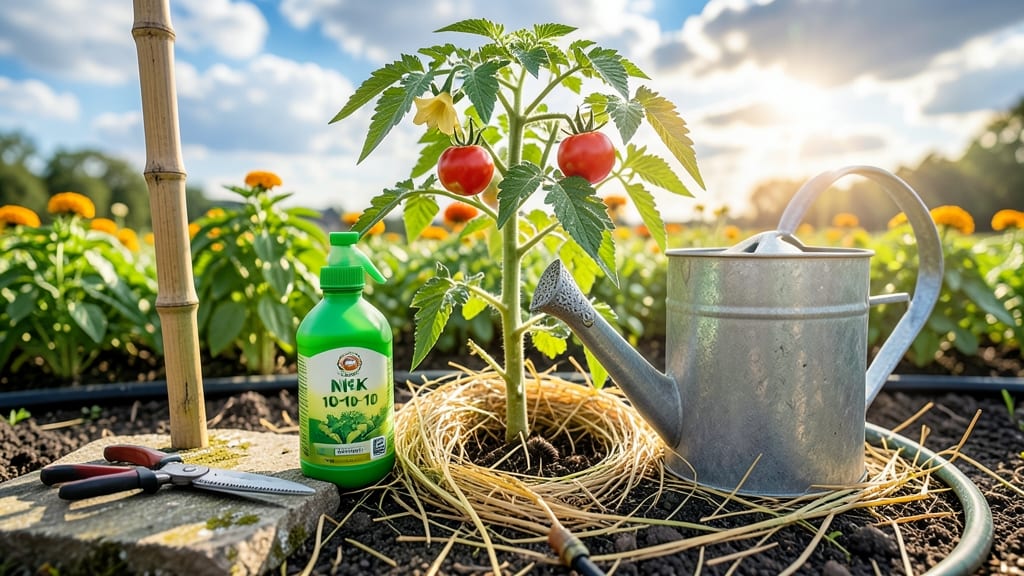
Boosting tomato plant growth starts with sunlight, water, and soil—three factors that turn floppy seedlings into foot-tall powerhouses by summer. 🌱 I’ve watched my own plants double in size within weeks using these simple adjustments, and the difference in fruit production is night and day.
The secret isn’t complicated equipment or rare techniques, but understanding how tomatoes really grow best in your specific conditions.
Most gardeners overwater or underfeed their tomatoes, both of which stunt growth faster than you’d think. Tomatoes need deep, infrequent watering—about 1-2 inches per week—to develop strong roots, and a balanced fertilizer (like 10-10-10) applied every 2-3 weeks once flowers appear.
But here’s the game-changer: mulch. A thick layer of straw or grass clippings keeps soil moist, cools roots, and suppresses weeds—all while giving your plants a steady energy boost.
By mid-summer, you’ll notice thicker stems, darker green leaves, and more flowers than ever before. The plants won’t just grow taller—they’ll grow smarter, directing energy into fruit instead of just foliage.
Pruning suckers (those little shoots between the stem and branches) early on keeps air circulating, which cuts back on disease and lets sunlight hit the lower leaves where it’s needed most.
This works whether you’re growing in raised beds, containers, or in-ground plots—just adjust watering slightly for pots (they dry out faster). The key is consistency: stick with these habits, and you’ll harvest heavier, sweeter tomatoes by late July. Ready to see your plants reach their full potential?
📚 In This Guide
- What you need
- Instructions
- Tips and common mistakes
- Wrapping up and next steps
What you need
- ● Tomato seeds or seedlings: Choose disease-resistant varieties (e.g., Cherry, Roma, or Beefsteak). 2–4 plants per person ensures plenty of harvests!
- ● Containers or garden bed: For containers: 5-gallon pots or larger (at least 12–18 inches deep) with drainage holes. 1 pot per plant.
- ● For garden beds: Loose, well-draining soil in a sunny spot (6+ hours of sunlight daily).
- ● High-quality potting mix: Look for organic, peat-free blends with compost (e.g., Miracle-Gro Organic Potting Mix). 5–10 lbs per plant.
- ● Fertilizer: Balanced starter fertilizer: 10-10-10 or 5-5-5 ratio (e.g., Jack’s Classic Blossom Booster). 1 tbsp per plant at planting.
- ● Tomato-specific fertilizer: High in phosphorus/potassium (e.g., Espoma Tomato-Tone). Apply every 2–3 weeks.
- ● Watering can or hose with gentle spray nozzle: Avoid blasting leaves to prevent disease.
- ● Mulch: Straw, shredded leaves, or black plastic mulch (retains moisture, suppresses weeds). 2–3 inches thick.
- ● Support system: Cages (5–6 ft tall) or stakes (6 ft long).
- ● Twine or soft plant ties (if using stakes).
- ● Pruning shears: Sharp, clean pair to snip suckers and dead leaves.
- ● Epsom salt: 1 tbsp per gallon of water (boosts magnesium for greener leaves). Use every 2 weeks.
- ● Compost tea: Homemade or store-bought (e.g., GT Gardening Compost Tea) for a microbial boost.
- ● Grow lights: LED full-spectrum bulbs (12–16 hrs/day) if indoors or in low-light areas.
- ● Mycorrhizal fungi: Inoculates soil for better nutrient absorption (e.g., Great White North Mycorrhizae).
- ● Drip irrigation kit: Automates watering and saves time.
- ● Fish emulsion or worm castings: Natural liquid fertilizer for a nutrient kick.
Step-by-step instructions for maximizing tomato plant growth
Here's my battle-tested system for coaxing vigorous, high-yield tomato plants from seedling to harvest.
☀️ Step 1: Optimize Sunlight Exposure for Maximum Energy
Tomatoes are sun-hungry plants that demand 6-8 hours of direct sunlight daily for optimal growth. Position your plants where they'll receive full sun exposure—south-facing windows or garden beds work best. If growing indoors, supplement with a grow light placed 4-6 inches above the plants for 14-16 hours daily.
Watch for signs of insufficient light: leggy stems, pale yellow leaves, and weak growth. If you notice these, move your plants closer to the light source or increase the duration of artificial light exposure. Rotate the plants a quarter turn every few days to ensure even growth and prevent them from leaning toward the light.
💧 Step 2: Master the Art of Consistent Watering
Consistent moisture is key to rapid tomato growth. Water deeply 1-2 times per week, ensuring the soil is moist to a depth of 6 inches. Use your finger to check moisture levels—if the top 1-2 inches of soil feel dry, it's time to water. Avoid wetting the leaves to prevent fungal diseases like blight.
I like to water in the early morning so the foliage has plenty of time to dry before evening. Overwatering or inconsistent moisture can lead to blossom end rot or cracked fruits. Use a drip irrigation system or soaker hose for even, targeted watering that keeps roots hydrated without waste.
🌱 Step 3: Feed with Nutrient-Rich Soil and Fertilizer
Start with a nutrient-dense tomato-specific potting mix or enrich your garden soil with compost or aged manure before planting. Tomatoes are heavy feeders, so incorporate a balanced fertilizer (10-10-10) at planting time, then switch to a low-nitrogen, high-phosphorus formula (5-10-10) when flowers appear to encourage fruiting.
Apply fertilizer every 3-4 weeks during the growing season, always watering the soil thoroughly afterward to prevent root burn. You'll notice stronger stems, larger leaves, and more abundant flowers when your plants are well-fed. Avoid over-fertilizing with nitrogen, which promotes leafy growth at the expense of fruit production.
✂️ Step 4: Prune and Support for Stronger Growth
Prune suckers—those small shoots that grow in the leaf axils—regularly to direct energy toward fruit production. Use clean, sharp pruners to snip these off at the base. For indeterminate varieties, prune to 1-2 main stems and remove lower leaves to improve air circulation and reduce disease risk.
Install sturdy stakes or cages at planting time to support your tomatoes as they grow. This prevents the plants from bending or breaking under the weight of heavy fruit. I also tie the main stems to the support structure with soft plant ties every 2-3 weeks to keep them upright and encourage vertical growth.
🌿 Step 5: Monitor and Adjust for Pest and Disease Prevention
Inspect your plants weekly for pests like aphids, hornworms, or whiteflies. Remove any affected leaves or pests by hand, and treat with neem oil or insecticidal soap if needed. Healthy plants are less susceptible to pests, so focus on strong cultural practices to prevent issues before they arise.
Prevent fungal diseases by ensuring proper air circulation and avoiding overhead watering. If you notice signs of disease—like yellowing leaves, spots, or mold—remove affected foliage immediately and treat with a copper-based fungicide. Healthy plants grow faster and produce more fruit, so staying vigilant pays off.
Tips & tricks for perfect tomato plant growth
Here's what nobody tells you about transforming weak tomato plants into thriving powerhouses.
Light Optimization: Those 6-8 hours of sunlight are non-negotiable, but don't stop there. I've found that positioning plants slightly east of true south captures morning sunlight longer, which boosts photosynthesis early in the day. For indoor grow lights, use a timer to maintain that 14-16 hour cycle—consistency matters more than intensity.
Soil Science: The secret weapon for rapid growth is actually what you don't put in the soil. Avoid fresh manure—it burns roots and causes nitrogen spikes that promote leaves over fruit. Instead, compost aged for at least 6 months creates a perfect balance of nutrients without shocking the plant system.
Watering Wisdom: The 1-2 times per week guideline works best in moderate climates, but your soil type changes everything. Sandy soils dry out faster—check moisture every 2 days, while clay holds water longer—wait until the top 3 inches are dry. Always water at soil level using a drip system to prevent fungal spores from splashing onto leaves.
Pruning Precision: When pruning to 1-2 main stems, don't be afraid to be aggressive with lower leaves. Remove any leaves touching the soil or within 12 inches of the ground—this drastically reduces disease risk. I also prune suckers right at the base where they meet the stem, not midway, to prevent regrowth.
Pro Tips for Boost Tomato Plant Growth
- Here's what nobody tells you about transforming weak tomato plants into thriving powerhouses.
- Light Optimization: Those 6-8 hours of sunlight are non-negotiable, but don't stop there.
- Soil Science: The secret weapon for rapid growth is actually what you don't put in the soil.
Frequently asked questions
Got questions about maximizing your tomato plant’s growth? You’re not alone!
Here are answers to the most common queries—from timing tricks to troubleshooting woes—so you can grow juicier, healthier tomatoes faster.
1. How often should I fertilize tomato plants to boost growth?
Feed your tomatoes every 2–3 weeks once they start flowering, using a balanced fertilizer (like 10-10-10) or tomato-specific mix. Pro tip: Switch to a low-nitrogen, high-phosphorus fertilizer (e.g., 5-10-10) when fruits appear to encourage blooming and fruiting. Over-fertilizing can burn roots—always water before applying!
2. What’s the best watering schedule for faster tomato growth?
Water deeply 1–2 times per week (about 1–2 inches total), aiming for the soil—not the leaves—to prevent disease. Morning watering is ideal to reduce evaporation and fungal risks. Mulch (straw or grass clippings) helps retain moisture and keeps roots cool. Never let soil dry out completely—wilting stunts growth!
3. Can I use coffee grounds or eggshells to boost tomato plants?
Yes! Coffee grounds add nitrogen and improve soil acidity (great for early growth), while crushed eggshells provide calcium to prevent blossom-end rot. Mix 1/4 cup of grounds per plant into soil monthly, and bury eggshells 2–3 inches deep 4–6 weeks before planting. Bonus: Both compost quickly—no need to overdo it!
4. Why are my tomato leaves yellowing, even with proper care?
Yellow leaves often signal overwatering, nutrient deficiency, or disease. Check for:
Lower leaves yellowing? Likely overwatering or root rot—let soil dry slightly between waterings.
Yellowing with brown edges? Could be chlorosis (iron deficiency)—add chelated iron or compost.
Yellow spots or curling? Possible fungal infection (like early blight)—remove affected leaves and space plants for airflow.
Prune damaged leaves to redirect energy to fruiting!
5. Are there any natural growth boosters I can spray on tomato plants?
Try these DIY sprays for a growth (and flavor!) boost:
- Fish emulsion tea (1 tbsp fish emulsion + 1 gallon water): Rich in nitrogen for foliage.
- Compost tea (steep compost in water for 24 hours): Packed with microbes to improve soil health.
- Aspirin spray (1 crushed aspirin + 1 gallon water): Reduces stress and boosts disease resistance.
Spray foliage (not fruit) in the morning for best absorption. Note: Test sprays on a few leaves first to avoid burns!
Wrapping up and next steps
Boosting your tomato plant’s growth is all about consistent care, smart hacks, and a little patience! 🌱 With the right balance of sunlight, water, soil nutrients, and pruning, you’ll be harvesting juicy, vibrant tomatoes in no time.
Whether you’re a seasoned gardener or just starting, these steps will set you up for success.
Now that you’re armed with the know-how, roll up your sleeves and get planting! Start small—try one or two techniques at a time—and observe what works best for your garden. Happy growing, and may your tomato harvest be bountiful! 🍅✨