
Companion Plants
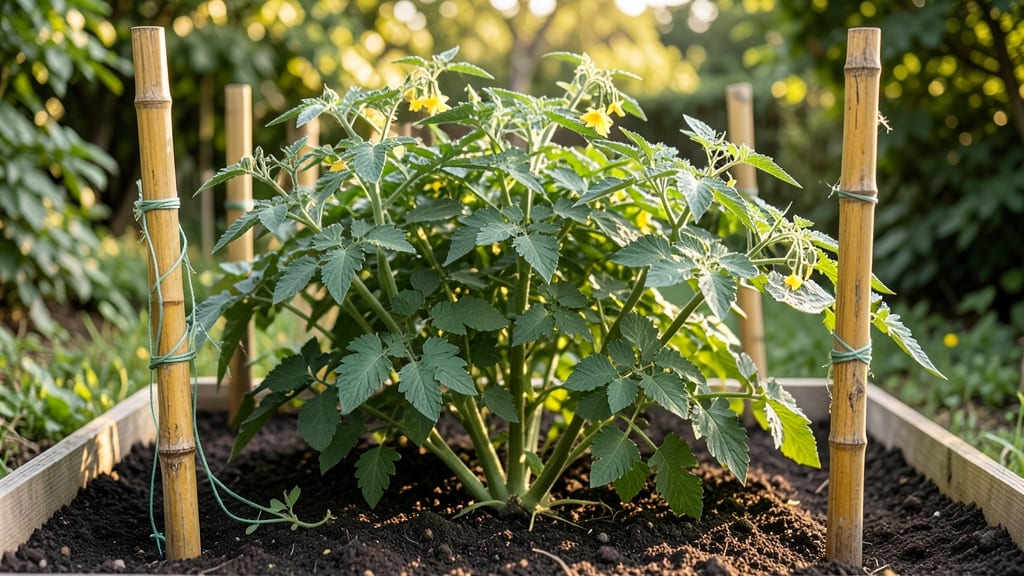
Staking indeterminate tomato plants isn't just about keeping them upright—it's about transforming wild vines into blight-resistant powerhouses that produce fruit until frost. 🌱 I learned the hard way that skipping this step means tangled messes, broken stems, and lost harvests.
The right support system and pruning routine can turn a chaotic vine into a structured, high-yielding plant that keeps giving all season.
You'll need sturdy stakes (at least 6 feet tall), soft plant ties, and a pruning shears for shaping. The key is timing: stake when plants hit 18-24 inches, then prune suckers (those little shoots in the leaf axils) to focus energy upward.
This isn't just about height—it's about airflow, which cuts down on disease. I've seen plants go from struggling to thriving just by opening up the canopy.
By mid-summer, your properly staked plants will be 8-10 feet tall, with fruit ripening at different levels. The pruning keeps the plant balanced, so it doesn't snap under its own weight.
You'll harvest until the first hard frost, with fewer diseases and more consistent yields than you'd get from unpruned vines. The secret? Regular checks—every 7-10 days—to tie new growth and remove suckers.
Works for any indeterminate variety—from 'Cherokee Purple' to 'Sungold'—and adapts to cages or stakes. The difference between a tangled mess and a productive tower comes down to these simple techniques. Let's get those vines climbing the right way!
📚 In This Guide
- What you need
- Instructions
- Tips and common mistakes
- Wrapping up and next steps
What you need
- ● Stakes or Cages: 6–8 ft tall bamboo stakes (3–4 per plant) OR
- ● 5–6 ft tomato cages (1 per plant, galvanized for durability).
- ● Tying Supplies: Soft twist ties (10–15 per plant) OR
- ● Jute garden twine (1–2 rolls) + cloth strips (for gentle tying).
- ● Pruning Tools: Sharp bypass pruners (for clean cuts).
- ● Sterilized hand pruners (smaller cuts, like Felco #2).
- ○ Support Structures (Optional but Helpful): Trellis netting (for heavy vines).
- ● Wooden A-frame stakes (for windy areas).
- ● Healthy Plants: Start with indeterminate tomato varieties (e.g., 'Sungold', 'Brandywine') that naturally grow 6–12+ ft tall.
- ● Timing: Install stakes at planting or when plants reach 12–18 inches tall.
- ○ Safety Gear (Optional): Gloves (to protect from thorns or blight spores).
- ● Disinfectant (rubbing alcohol + water for tools).
Step-by-Step guide to staking and pruning indeterminate tomatoes
Here’s how I keep my indeterminate tomatoes thriving all season—tall, productive, and blight-resistant.
🪴 Step 1: Install Supports Before Planting
Drive 5-6 foot bamboo stakes or metal cages 6 inches deep into the soil beside each plant at transplanting. I use stakes because they’re stronger and let me train vines more precisely. Position them 3-4 inches away from the main stem so you can weave the vine through later without damaging it.
For heavy vines, I add a twine or soft cloth strip tied loosely at the base. This keeps the stake stable while allowing the plant to grow into it naturally. Never tighten the tie until the vine starts climbing—you’ll know it’s ready when the first suckers appear near the base.
🌿 Step 2: Train the Main Stem Early
Once the plant reaches 18-24 inches tall, gently weave the main stem through the twine or cage. I start with a loose figure-eight pattern to encourage upward growth without restricting it. The goal is to keep the stem vertical while letting side branches develop later.
Here’s the thing—don’t rush this. Wait until the vine is 2-3 feet tall before securing it permanently. You’ll see the plant naturally bend toward the support; that’s when you tie it off with a soft strip. Too-tight ties strangle the stem as it thickens.
✂️ Step 3: Prune Suckers and Shape the Plant Weekly
Remove all suckers (the small shoots that form in the leaf axils) as soon as they’re 2 inches long. I use my thumb and forefinger to pinch them off cleanly—no need for scissors. This redirects energy to fruit production instead of leafy growth. Focus first on suckers below the first flower cluster; above that, you can leave a few to create a bushier top.
Every 7-10 days, check for new suckers and trim any leaves touching the soil. Yellowing lower leaves are normal, but diseased foliage should be removed immediately. I always prune in the morning so wounds have the day to heal before evening moisture sets in.
💧 Step 4: Water and Fertilize Strategically
Water at the base deeply 1-2 times per week, aiming for 1-2 inches of water. I water in the morning so foliage dries quickly, reducing blight risk. Avoid overhead watering—it spreads disease and makes leaves soggy. Mulch with 2-3 inches of straw to retain moisture and keep soil temperatures steady.
Feed with a balanced 10-10-10 fertilizer every 3-4 weeks starting when flowers appear. Too much nitrogen later in the season leads to leafy growth at the expense of fruit. I switch to a low-nitrogen, high-phosphorus blend once tomatoes start ripening to boost sweetness.
☀️ Step 5: Monitor and Adjust for Height
As vines grow toward 6-8 feet, add a second support if needed. I often tie the main stem to a horizontal trellis or second stake to distribute weight. Watch for signs of stress—drooping leaves or cracked stems mean the plant needs more support or water.
By mid-season, your indeterminate tomato should look like a lush, vertical tree. The key is balance: prune aggressively early, then ease up as flowers set. You’ll know you’re doing it right when the plant produces fruit continuously from the bottom up.
Tips & tricks for towering, blight-resistant indeterminate tomatoes
These pro-level techniques will transform your tomato game—keeping vines strong, productive, and disease-free all season.
Support System Stability: When installing your 5-6 foot bamboo stakes or cages, drive them 6 inches deep and position them 3-4 inches away from the main stem. This creates a sturdy base that won't topple when vines reach their 6-8 foot maximum. For extra stability in windy areas, add a second stake at a 45-degree angle from the first—this creates a tripod effect that distributes weight better than a single support. The key is preventing lateral movement that can snap stems during storms.
The Art of Vine Training: In Step 2, when weaving the main stem through your support at 18-24 inches, resist the urge to secure it immediately. Let the vine naturally bend toward the support until it reaches 2-3 feet tall—this creates a gentle curve that's stronger than forcing a straight line. Once secured, use soft cloth strips rather than wire or tight twine. These strips stretch slightly as the vine thickens, preventing the "girdling" effect that can strangle stems over time. I've seen tomatoes with stems completely encircled by wire—it's a heartbreaking sight that could have been prevented.
Pruning Precision: The 2-inch sucker rule in Step 3 is non-negotiable, but here's what nobody tells you: focus your early pruning efforts on suckers below the first flower cluster. This directs energy to fruit production while still allowing some bushiness above. As your plant matures, you can leave 1-2 suckers above the first cluster to create a slightly bushier top—this helps distribute weight and prevents the vine from becoming too top-heavy. Always prune in the morning when humidity is lower; this gives wounds time to callus over before evening moisture sets in, dramatically reducing disease risk.
Watering Wisdom: That 1-2 inch weekly watering guideline assumes average soil conditions. In sandy soils, you might need to water more frequently (up to 3 times per week), while clay soils may only need watering every 10 days. The real test is checking soil moisture 2 inches below the surface—if it's dry, it's time to water. Morning watering is critical for blight prevention, but if you must water in the evening, direct the stream to the base rather than overhead. I've lost entire plants to blight because I ignored this simple rule during humid summer nights.
Pro Tips for Staking Indeterminate Tomato Plants
- These pro-level techniques will transform your tomato game—keeping vines strong, productive, and disease-free all season.
- Support System Stability: When installing your 5-6 foot bamboo stakes or cages, drive them 6 inches deep and position them 3-4 inches away from the main stem.
- The Art of Vine Training: In Step 2, when weaving the main stem through your support at 18-24 inches, resist the urge to secure it immediately.
Frequently asked questions
Got questions about staking indeterminate tomatoes? You’re not alone! Here are answers to the most common concerns—so you can grow like a pro.
When is the best time to start staking indeterminate tomato plants?
Stake your plants early—as soon as they’re 6–12 inches tall (or when you transplant seedlings). This prevents root disturbance later. Use soft ties (like old T-shirts) to avoid damaging stems. Pro tip: If you wait too long, the plant may flop or snap under fruit weight!
What if my staked tomato plant starts leaning or falling over?
Leaning usually means the stake isn’t deep enough or the plant needs more support. Bury the stake at least 18–24 inches deep (or use a cage for stability). For severe leans, gently re-tie the vine to the stake in a zigzag pattern. Avoid yanking—just guide it gently!
Can I use alternatives to traditional stakes (like cages or trellises)?
Cages (especially 5–6 foot tall) work great for smaller gardens, while trellises save space. For heavy vines, try wooden stakes + twine or bamboo poles tied in a teepee. Just ensure your choice supports 10+ pounds of fruit!
How do I prune staked indeterminate tomatoes without hurting the plant?
Prune only suckers (side shoots in the leaf axils) to encourage upward growth. Use clean shears and cut at a 45-degree angle just above a leaf. Avoid over-pruning—keep the main stem sturdy! Warning: Never prune more than 1/3 of the plant at once.
What if my staked plant gets blight? Can staking still help?
Staking alone won’t prevent blight, but it improves airflow (critical for prevention!). Pair it with resistant varieties (like ‘Mountain Merit’) and remove infected leaves immediately. Elevate the plant off wet soil with mulch or a drip irrigation setup.
Still stumped? Drop your question below—we’ve got you covered!
Wrapping up and next steps
Staking indeterminate tomato plants isn’t just about support—it’s your secret weapon for bigger yields, better airflow, and blight-resistant vines. 🌱 With the right pruning tricks and sturdy stakes, you’ll turn sprawling chaos into a thriving, productive tower.
Whether you’re a seasoned gardener or just starting, these techniques make the process simple and rewarding.
Ready to transform your garden? Grab your pruners, set up those stakes, and watch your tomatoes reach new heights! Next up: harvest the juiciest, healthiest tomatoes of the season—or share your newfound skills with fellow green thumbs. Happy gardening! 🍅✨