
Pests
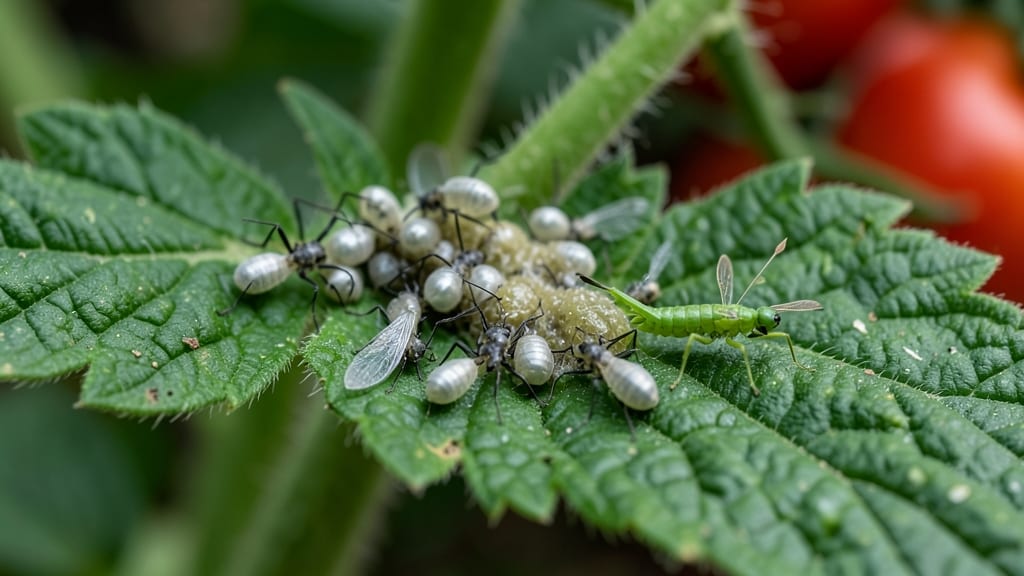
Bugs on tomato plant leaves mean your harvest is fighting a silent battle. 🌱 I've lost entire plants to aphid colonies and hornworm feasts, but I've also saved tomatoes from disaster using simple, organic tricks that work faster than you'd think.
The worst offenders—aphids, spider mites, and hornworms—don't just nibble leaves, they drain energy from your plants. Aphids cluster on new growth, spider mites spin webs on undersides, and hornworms vanish into the foliage like green ghosts. The key is catching them early, before they turn your plants into skeletons.
With the right organic sprays, neem oil, and a little elbow grease, you'll see healthier leaves within days. Your tomatoes will rebound with vibrant green foliage and plump fruit, not to mention fewer pests next season if you prevent them properly.
This works for backyard gardens, containers, and even greenhouse setups. Let's get those leaves back to their full potential!
Root Causes of Leaf Invaders
When tiny pests take up residence on your tomato plant leaves, they’re rarely just a random nuisance—they’re responding to specific conditions in your garden. Understanding why these critters show up is the first step to kicking them out for good.
Let’s break down the most common triggers, backed by science, so you can address the real problem at its source.
Tomato plants under stress—whether from poor spacing, nutrient deficiencies, or overwatering—emit volatile organic compounds (VOCs) that attract pests like aphids, spider mites, and whiteflies. These bugs thrive in weakened plants because they’re easier to feed on and less likely to mount a defense.
- How it happens: Crowded plants compete for sunlight, water, and nutrients, leading to stunted growth and thin leaves—perfect snacking material for pests.
- Science behind it: Stressed plants produce higher levels of sugars in their sap, which pests detect from up to 3 feet away using specialized sensory organs.
- Actionable fix:
- Space tomato plants 18–24 inches apart for airflow and sunlight.
- Test soil pH (ideal: 6.0–6.8) and amend with compost or balanced fertilizer (e.g., 10-10-10) if deficient.
- Avoid overhead watering to prevent fungal diseases that further stress plants.
Pests love clutter. Debris, fallen leaves, and plant residues create hiding spots and breeding grounds for insects like hornworms, stink bugs, and even fungal gnats. If your garden looks like a bug buffet, don’t be surprised when they show up in droves.
- How it happens: Organic matter like mulch, weeds, or old plant material traps moisture and provides shelter for pest eggs and larvae. For example, stink bugs lay eggs in clusters on the undersides of leaves, which go unnoticed until it’s too late.
- Science behind it: Many pests rely on chemical cues from decaying plant material to locate hosts. A messy garden amplifies these signals.
- Actionable fix:
- Clear away dead leaves, weeds, and plant debris regularly, especially under plants.
- Use clean mulch (e.g., straw or shredded leaves) and keep it 2–3 inches away from stems to deter crawling pests.
- Rotate crops yearly to disrupt pest life cycles.
Pests are opportunists, and sudden changes in temperature, humidity, or rainfall create the perfect storm for infestations. For instance, dry heat stresses plants and attracts spider mites, while excess moisture encourages fungal gnats and slugs.
| Weather Condition | Common Pests Attracted | Why It Happens |
|---|---|---|
| Drought or high heat | Aphids, spider mites, whiteflies | Plants wilt, reducing defensive chemicals like tannins, making them more palatable. |
| Heavy rain or humidity | Fungal gnats, slugs, earwigs | Soil becomes waterlogged, promoting fungal growth that pests feed on. |
| Sudden cold snaps | Overwintering pests (e.g., hornworm eggs) | Temperature shifts can trick pests into hatching early before plants are ready to defend themselves. |
Actionable fix:
- Monitor weather forecasts and water deeply but infrequently (1–2 inches per week) to maintain soil moisture without over-saturating.
- Use shade cloth (30–50%) in hot climates to reduce stress.
- Mulch with straw or wood chips to regulate soil temperature and retain moisture.
Soil that’s too rich in nitrogen or deficient in key nutrients (like phosphorus or potassium) weakens tomato plants, making them vulnerable to pests. For example, nitrogen-heavy soil produces soft, tender leaves that aphids adore, while potassium deficiencies reduce the plant’s ability to fight off insects.
- How it happens:
- Excess nitrogen: Leads to rapid, weak growth with thin cell walls—easy pickings for chewing insects like hornworms.
- Low potassium: Reduces the plant’s production of glycoalkaloids, natural toxins that deter pests.
- Science behind it: Healthy plants produce secondary metabolites (e.g., nicotine-like compounds in tomatoes) that repel pests. Nutrient imbalances disrupt this defense system.
- Actionable fix:
- Test soil with a DIY kit or send a sample to a local extension office.
- Balance nutrients with:
- Compost (for organic matter and micronutrients).
- Bone meal (for phosphorus, encouraging root and flower growth).
- Wood ash (for potassium, sprinkled lightly around the base).
- Avoid synthetic fertilizers with high nitrogen (e.g., lawn fertilizers).
💡 Pro Tip: Keep a pest journal to track outbreaks and correlate them with weather, watering, or fertilizing patterns. This helps you predict—and prevent—future infestations before they start!
Quick Fixes for Leaf Pests
Now that you’ve identified the culprits munching on your tomato leaves, it’s time to act! The good news? Most of these pests can be managed organically with simple, effective methods. Below, we’ll match common pests to their fixes—plus prevention tips to keep your plants thriving.
Signs: Sticky residue (honeydew), curled leaves, or clusters of small green/black bugs. How to Remove:
- 💦 Blast Them Off: Spray aphids directly with a strong stream of water from a hose (early morning works best).
- 🍳 Soapy Water Spray: Mix 1 tsp mild liquid soap + 1 quart water in a spray bottle. Test on a few leaves first—aphids hate it!
- 🌿 Introduce Ladybugs: Release ladybugs (sold at garden centers) or lacewings—they eat aphids like snacks.
Prevention Tips: ✔ Encourage predators like parasitic wasps (they naturally control aphids). ✔ Avoid over-fertilizing—aphids love soft, nitrogen-rich growth.
Signs: Fine webbing on undersides of leaves, yellow speckles, or leaves that look "dusted." How to Remove:
- 🌡️ Increase Humidity: Spider mites thrive in dry conditions. Mist plants daily or use a humidifier near your garden.
- 🔥 Neem Oil Spray: Mix 1 tbsp neem oil + 1 tsp mild soap + 1 quart water. Spray every 5–7 days until gone.
- 🧼 Rub Leaves: Wipe infested leaves with a damp cloth to remove mites physically.
Prevention Tips: ✔ Keep plants well-watered—mites love drought-stressed leaves. ✔ Use reflective mulch (like aluminum foil) to disrupt their sunlight-seeking behavior.
Signs: Large green caterpillars (3–4 inches!) with white stripes, half-eaten leaves overnight. How to Remove:
- 👨🍳 Handpick Them: Wear gloves and squish or drop them in soapy water. Check leaves daily at dawn—they’re most active then!
- 🐛 Attract Parasitic Wasps: These tiny wasps lay eggs in hornworms, killing them naturally. No action needed—just let them work!
- 🍄 Plant Basil Nearby: Hornworms hate basil. Interplanting deters them.
Prevention Tips: ✔ Remove egg clusters (tiny green ovals on leaves) before they hatch. ✔ Use row covers early in the season to block moths (their parents) from laying eggs.
Signs: Tiny white moth-like bugs that flutter when you disturb leaves, sticky residue. How to Remove:
- 🕯️ Yellow Sticky Traps: Hang yellow cards coated in petroleum jelly near plants to trap adults.
- 🍳 Insecticidal Soap: Spray every 3–4 days with a soapy water solution (recipe above).
- 🌿 Beneficial Nematodes: Soil-dwelling microbes that kill whitefly larvae. Water them into the soil.
Prevention Tips: ✔ Avoid overwatering—whiteflies love damp, crowded plants. ✔ Rotate crops to prevent buildup in the soil.
Signs: Dark spots with concentric rings, yellowing leaves. How to Fix:
- 🌿 Copper Fungicide Spray: Organic option to prevent spread.
- 🍃 Prune Infected Leaves: Remove and dispose of them (don’t compost!).
- 💧 Water at the Base: Avoid wetting leaves to reduce fungal growth.
Prevention Tips: ✔ Space plants for airflow—fungi thrive in humidity. ✔ Rotate crops yearly to prevent soil-borne fungi.
💡 Inspect regularly—catch pests early before they explode! 🔥 Encourage diversity—plant marigolds, dill, or nasturtiums to repel pests naturally. 🌡️ Monitor soil moisture—stressed plants attract more bugs. ✨ Rotate crops—don’t plant tomatoes in the same spot yearly.
Pro Tip: 🎯 Act fast! The sooner you treat pests, the easier it is to save your tomatoes. Most organic methods take 3–7 days to show results—stay consistent!
Frequently asked questions
Why do I see tiny bugs on my tomato leaves but no visible damage yet?
Early-stage pests like spider mites or aphids often start with subtle signs. Check leaf undersides for webbing (mites) or sticky residue (aphid honeydew). These bugs multiply fast—act within 3-5 days to prevent defoliation. A quick spray of soapy water or neem oil can stop them before damage appears.
Can I use vinegar to kill tomato plant pests?
White vinegar works for some pests, but it's not a complete solution. Mix 1 tablespoon vinegar + 1 teaspoon dish soap + 1 gallon water and spray directly on bugs. However, it won't kill eggs or deep-rooted pests like hornworms. For best results, combine with other methods like handpicking or beneficial insects.
How do I tell if my tomato plant has fungal issues vs. insect pests?
Fungal problems show as powdery white spots (powdery mildew) or dark concentric rings (early blight), while insects leave holes, webbing, or sticky residue. Tap leaves—if you see tiny crawling bugs, it's pests. Fungal issues appear on both leaf surfaces, while insect damage is usually on undersides or edges.
Will my tomato fruits be safe to eat if the leaves have bugs?
Most leaf-eating pests don't directly harm fruit quality, but some (like aphids) can transmit viruses. Wash tomatoes thoroughly before eating. The bigger risk is reduced yield—severely damaged plants produce fewer fruits. Focus on controlling pests early to maximize your harvest and safety.
How often should I inspect my tomato plants for pests?
Check your plants 2-3 times per week, especially after rain or when new growth appears. Morning inspections work best since many pests are active then. Early detection gives you the best chance to prevent infestations before they spread. Keep a small magnifying glass handy for tiny pests like mites.