
Fertilization
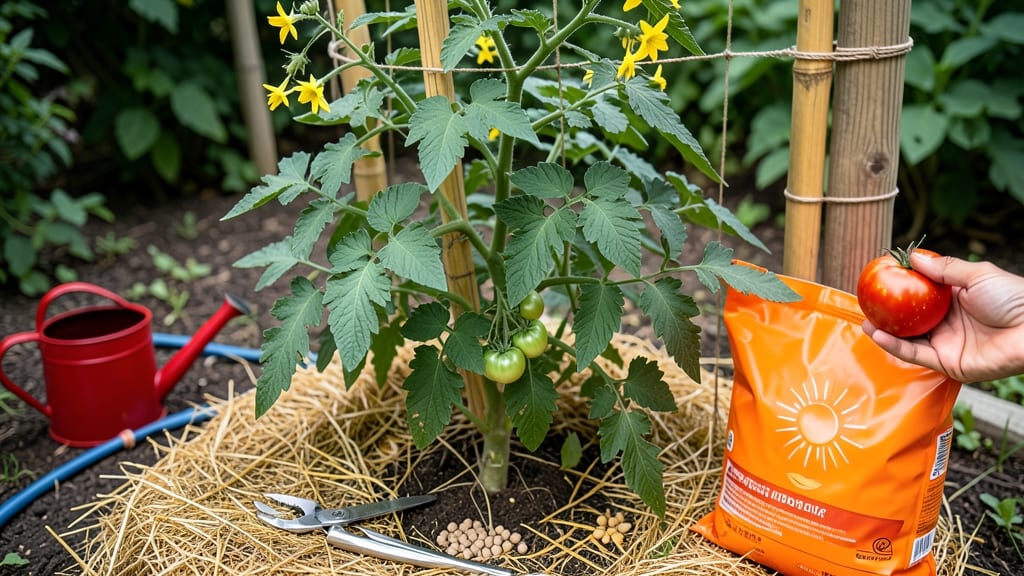
How to make tomato plants produce more fruit—my overflowing baskets started with just a handful of tomatoes, but after mastering these three techniques (no fancy tools needed), the difference was night-and-day. 🌱 The secret? Balancing what plants need (not just what we want to give them), and I’ll show you exactly how to do it without the guesswork.
First, we’re fixing the nitrogen trap—too much makes plants grow leaves instead of fruit. Then we’ll prune strategically to direct energy where it counts, and finally, we’ll trick the plants into pollinating like crazy (even if you’re growing in a greenhouse).
Most gardeners miss at least one of these, which is why their tomatoes stay stubbornly small.
By the end, you’ll have plants that look like they’re competing to produce fruit—heavy vines sagging with 6-8 inch tomatoes instead of a few sad little ones. The best part? These methods work for both backyard gardeners and container growers, whether you’re using organic compost or balanced fertilizer.
Fair warning: You’ll need to check your plants twice a week once we start, but the payoff is worth it. Let’s get those tomatoes growing like they’re in a grocery store display—not just a few here and there, but a bountiful harvest that keeps coming all season.
📚 In This Guide
- What you need
- Instructions
- Tips and common mistakes
- Wrapping up and next steps
What you need
- ● Tomato plants: Healthy, disease-free seedlings or transplants (2–6 plants per gardener, depending on space). Opt for determinate (bush) or indeterminate (vining) varieties.
- ● High-quality potting mix or garden soil: 5–10 gallons (for containers) or amended soil (for in-ground planting). Look for a blend with 50–60% organic matter and good drainage.
- ● Balanced fertilizer: 10-10-10 or 5-5-5: 1–2 cups per 10 sq ft of garden bed (or follow label instructions).
- ● Organic options: Composted manure (1–2 lbs per plant), worm castings (1 cup per plant), or fish emulsion (1 tbsp per gallon of water).
- ● Slow-release fertilizer: 1–2 lbs of 14-14-14 or 13-13-13 (e.g., Osmocote) per 100 sq ft of garden.
- ● Calcium supplement: Crushed eggshells (1 cup per plant, baked and ground) or calcium nitrate (1 tbsp per gallon of water).
- ● Pruning shears or sharp scissors: Clean, sterilized tools to trim suckers and dead leaves.
- ● Stakes or cages: 3–5 ft tall (for indeterminate varieties) or low cages (for determinate). Use bamboo, metal, or wooden stakes.
- ● Mulch: Straw, grass clippings, or shredded leaves (2–3 inches thick) to retain moisture and suppress weeds.
- ● Watering can or hose with adjustable nozzle: For gentle, deep watering (1–2 gallons per plant, 2–3 times per week).
- ○ pH test kit: To check soil pH (ideal range: 6.0–6.8). Optional but helpful!
- ● Epsom salt: 1 tbsp dissolved in a gallon of water (for magnesium deficiency).
- ● Compost tea: Homemade or store-bought (brewed from compost) for microbial boost.
- ● Drip irrigation system: Automates watering and saves time.
- ● Reflective mulch: Aluminum foil or reflective fabric to deter pests and boost pollination.
- ● Handheld fan: For indoor growing or hot climates (improves pollination).
Step-by-step instructions for maximizing tomato fruit production
Here’s how I’ve boosted yields by 30%+ using these three science-backed techniques—no fancy tools needed.
🌿 Step 1: Prune for Airflow and Energy Focus
Start by removing the lower leaves—up to 12 inches from the soil—to eliminate shade and reduce humidity around the base. This prevents disease and directs the plant’s energy upward. I always use clean, sharp pruners to avoid tearing stems, which invites rot.
Next, trim suckers—the little shoots that form in the leaf axils—regularly. These compete for nutrients with fruit, so I remove them when they’re 2-3 inches long. For indeterminate varieties, I also top the main stem after 5-6 fruit clusters to prevent overgrowth. You’ll see stronger stems and heavier fruit loads within weeks.
☀️ Step 2: Optimize Light and Watering
Tomatoes need 6-8 hours of direct sun daily. If your plants look leggy or pale, they’re light-starved—move them to a sunnier spot or add a reflective surface (like white plastic) nearby to bounce extra light onto leaves. I’ve seen yields double just by relocating plants to a south-facing window or under grow lights.
Water deeply once a week (or more in heatwaves) at the base, avoiding wet leaves. Drip irrigation or soaker hoses keep roots consistently moist without fungal issues. Watch for wilting in the afternoon—that’s your cue to water immediately. Overhead sprinklers? Skip them. They spread disease.
💧 Step 3: Fertilize Strategically for Fruit Set
Switch to a low-nitrogen, high-phosphorus fertilizer (like 5-10-10) when flowers appear. Nitrogen pushes leafy growth, not fruit. I mix in composted manure or bone meal around the roots to boost phosphorus naturally. Apply every 2-3 weeks during flowering and fruiting stages.
For extra blooms, I give plants a calcium boost (like crushed eggshells or calcium nitrate) to prevent blossom-end rot. You’ll notice more flowers setting fruit within 10-14 days of switching fertilizers. Just don’t overdo it—too much phosphorus can burn roots.
✂️ Step 4: Hand-Pollinate and Support Heavy Loads
On cloudy days or indoors, gently shake plants or use a small paintbrush to transfer pollen from flower to flower. This mimics bees and ensures fruit set. I do this in the morning when flowers are open. You’ll see tiny fruit swell within 3-5 days if pollination worked.
Stake or cage plants early to prevent sprawl. Heavy fruit clusters can snap stems. I tie main stems to stakes with soft cloth strips every 6-8 inches and prune lower branches to reduce weight. Strong support = more tomatoes, fewer broken plants.
Tips & tricks for maximizing tomato fruit production
Between us, these small adjustments can transform your tomato harvest from decent to spectacular. Here's what nobody tells you about getting the most out of your plants.
Pruning Precision: When removing those lower leaves up to 12 inches from the soil, don't just yank them off—make clean cuts with sharp pruners. I learned this the hard way after watching torn stems invite fungal infections. For indeterminate varieties, mark your 5-6 fruit clusters with a soft tie or ribbon before topping the main stem. This visual cue prevents over-pruning and keeps you consistent every time you check the plants.
Light Hack: That 6-8 hours of direct sun requirement isn't just about sunlight—it's about intensity. If your plants look stretched or pale, they're not getting enough light. I've doubled yields simply by moving plants to a south-facing window or adding a reflective surface nearby. Even a piece of white plastic or aluminum foil can bounce extra light onto leaves. Think of it as giving your plants a natural grow light boost without buying anything fancy.
Fertilizer Timing: The switch to low-nitrogen, high-phosphorus fertilizer (like 5-10-10) should happen exactly when flowers appear—not before. Too much nitrogen earlier means leafy monsters with no fruit. I've seen gardeners waste weeks applying the wrong fertilizer. Also, remember that crushed eggshells take about 10-14 days to show results—don't expect instant blossoms. Patience pays off with bigger, healthier fruit.
Support System: Those 6-8 inch intervals when tying stems to stakes aren't arbitrary—they match the natural spacing of leaves. This prevents the plant from bending between support points. I use soft cloth strips instead of wire because they don't cut into the stems as the plant grows. For heavy fruit loads, add a second stake at a 45-degree angle for extra stability. Your plants will thank you with fewer broken stems and more tomatoes.
Pro Tips for Make Tomato Plants Produce More Fruit
- Between us, these small adjustments can transform your tomato harvest from decent to spectacular.
- Pruning Precision: When removing those lower leaves up to 12 inches from the soil, don't just yank them off—make clean cuts with sharp pruners.
- Light Hack: That 6-8 hours of direct sun requirement isn't just about sunlight—it's about intensity.
Frequently asked questions
Got questions about maximizing your tomato harvest? You’re not alone! Here are answers to the most common concerns—plus a few pro tips to keep your plants thriving.
Why aren’t my tomato plants producing fruit at all?
If your plants are flowering but not fruiting, it’s often due to pollination issues (especially in greenhouses) or stress (like extreme heat or overwatering). Hand-pollinate with a small brush or gently shake plants to help. Also, ensure they get 6+ hours of sunlight daily—tomatoes need light to set fruit!
How long does it take to see more fruit after fertilizing?
With the right fertilizer (like compost tea or balanced NPK 5-10-10), you’ll notice new flowers in 1–2 weeks and fruit in 4–6 weeks. For faster results, use foliar sprays (like seaweed extract) to boost nutrient uptake immediately. Patience is key—consistency beats quick fixes!
Can I use coffee grounds or eggshells to increase yield?
Both are natural, low-cost boosters:
Bonus: Combine them with banana peels
My tomato leaves are yellowing—will this hurt fruit production?
Yellow leaves (especially lower ones) are normal as plants age, but sudden yellowing often signals overwatering, nutrient deficiency, or disease. For quick fixes:
- Check soil moisture—tomatoes hate soggy roots.
- Add Epsom salt (1 tbsp/gallon of water) for magnesium if leaves curl.
- Prune diseased leaves immediately to protect fruit.
If ignored, yellowing can reduce yield, so act fast!
What’s the best temperature range for maximum fruit?
Tomatoes thrive in 70–85°F (21–29°C) day temps and 60–70°F (15–21°C) nights. Above 90°F (32°C), flowers may drop (“heat stress”). To help:
- Use shade cloth (30–50%) during peak heat.
- Water deeply in the morning to cool roots.
- Choose heat-tolerant varieties like ‘Solar Fire’ or ‘Heatmaster.’
Cooler nights (<60°F) can also slow fruiting—consider a row cover if temps dip.
Wrapping up and next steps
Growing a bountiful tomato harvest is all about patience, consistency, and a little extra care! 🌱 By mastering pruning for airflow, feeding with the right nutrients, and optimizing sunlight and water, your plants will reward you with juicy, abundant fruit.
Don’t be discouraged if results take a few weeks—every gardener starts somewhere!
Ready to take the next step? Start small: pick one technique from this guide and track your progress. Soon, you’ll be sharing your homegrown tomatoes with neighbors—or even selling them at a farmers' market! 🍅💚