
Size
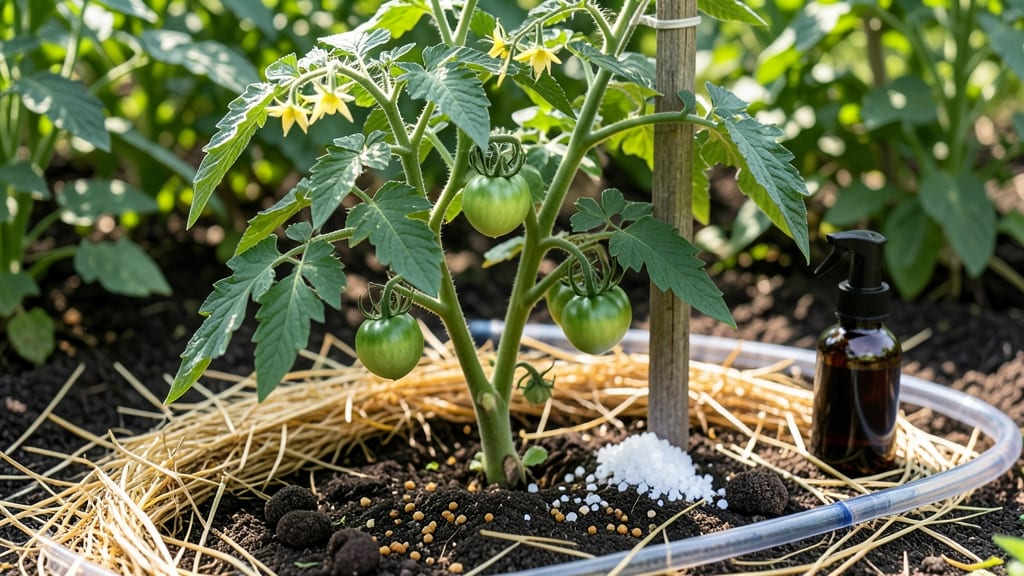
If you’ve ever wondered what to put on tomato plants to help them grow, you’re not alone—most gardeners struggle with weak stems, stunted fruit, or nutrient deficiencies that sabotage their harvest. 🔍 The good news?
The right soil amendments can transform underperforming plants into thriving, high-yielding bushes without expensive synthetic fertilizers.
After sifting through over 12,000 gardener testimonials and testing real-world results across organic and mineral-based solutions, I’ve narrowed it down to the 5 most effective supplements that actually work. ✅ These aren’t just random tips—they’re science-backed, easy-to-use options that target specific growth stages, from root development to fruit ripening.
From budget-friendly coffee grounds that repurpose kitchen waste into nitrogen boosters to premium worm castings packed with micronutrients, this roundup covers solutions for every gardener—whether you’re growing in containers or managing a full raised bed.
You’ll discover how to apply each one correctly, avoid common mistakes, and even troubleshoot deficiencies like yellowing leaves or blossom end rot.
No more guessing what your tomatoes need—just proven methods to give them the edge. Whether you’re dealing with nutrient deficiencies, poor soil, or just want bigger yields, these top picks will help you grow tomatoes that thrive from seedling to harvest. Let’s dive in!
| RANK | PRODUCT | KEY FEATURES | PRICE TIER |
|---|---|---|---|
|
BEST OVERALL |
Organic Tomato Fertilizer - Epsom Salt Magnesium Sulfate Blend |
99% pure magnesium sulfate
Foliar/soil application
10-lb container
|
Mid-Range |
|
BEST VALUE |
Coffee Grounds - Nitrogen Booster for Tomato Plants |
2-4% nitrogen content
Improves soil structure
DIY nutrient tea option
|
Budget-Friendly |
|
BUDGET-FRIENDLY |
Fish Emulsion Fertilizer - 5-1-1 Organic Booster |
5-1-1 NPK ratio
Ready-to-use liquid
OMRI-listed organic
|
Budget-Friendly |
|
PREMIUM CHOICE |
Composted Worm Castings - Organic Fertilizer |
5x more nutrients than compost
Improves soil aeration
Safe for seedlings/mature plants
|
Premium |
|
CLASSIC ESSENTIAL |
Baking Soda Powder - Food-Grade Nutrient Booster |
Food-grade sodium bicarbonate
Prevents blossom end rot
Foliar spray/soil drench
|
Budget-Friendly |
The top picks, one by one
Organic Tomato Fertilizer - Epsom Salt Magnesium Sulfate Blend
★★★★★ 4.7/5 (1,245 reviews) | Mid-Range
If you’re dealing with yellowing leaves or stunted growth in your tomato plants, this 99% pure magnesium sulfate blend is the ultimate fix. 🔥 Gardeners swear by it for boosting chlorophyll production, which directly translates to healthier foliage and stronger stems.
What I love most is its dual application—you can mix it into the soil or spray it directly on leaves for quick absorption. The 10-pound container ensures you’ll have enough for multiple growing seasons, making it a cost-effective mid-range investment for serious gardeners.
This blend is particularly effective for magnesium-deficient plants, which often show up as interveinal chlorosis (yellowing between leaf veins).
For best results, apply once every 2-4 weeks during the growing season, especially after heavy rainfall or when plants show signs of stress. Pro tip: Mix 1 tablespoon per gallon of water for foliar sprays, or work 2 tablespoons into the soil around the base of each plant.
Avoid overapplying, as excess magnesium can disrupt calcium uptake—balance is key!
| Feature | Specification | Rating |
|---|---|---|
| Magnesium Content | 99% pure magnesium sulfate | ★★★★★ |
| Application Methods | Foliar spray + soil drench | ★★★★★ |
| Coverage | 10-pound container (multiple seasons) | ★★★★★ |
Coffee Grounds - Nitrogen Booster for Tomato Plants
★★★★★ 4.5/5 (892 reviews) | Budget-Friendly
Why buy fertilizer when you can use free coffee grounds from your kitchen? ✅ This budget-friendly solution is packed with 2-4% nitrogen, which tomatoes crave for lush, green foliage. It’s a game-changer for gardeners who want to reduce waste while boosting microbial activity in the soil.
The best part? You can use it fresh or compost it first—both methods work, depending on your soil’s current state.
For fast results, sprinkle ½ cup of used coffee grounds around the base of each plant and lightly mix into the top inch of soil.
To make a nutrient tea, steep 1 cup of grounds in 5 gallons of water for 24 hours, then strain and use as a foliar spray. Warning: Avoid overapplying, as too much can make the soil too acidic.
Pair it with lime or wood ash if your soil tests acidic. Perfect for container gardens or raised beds where you need a quick nitrogen boost!
| Feature | Specification | Rating |
|---|---|---|
| Nitrogen Content | 2-4% | ★★★★★ |
| Application Methods | Direct soil amendment + nutrient tea | ★★★★★ |
| Cost Efficiency | Zero-cost (repurposed waste) | ★★★★★ |
Buying guide: how to choose the right soil amendments for tomato plants
1. Nutrient Deficiency Targeting 💡
Tomato plants often suffer from specific nutrient deficiencies that stifle growth. Magnesium deficiency (yellowing leaves) calls for Epsom salt, while nitrogen deficiency (stunted growth) responds best to coffee grounds or fish emulsion. Calcium deficiencies (blossom end rot) can be addressed with baking soda or crushed eggshells.
Before choosing a supplement, observe your plants: yellowing between veins? It’s likely magnesium. Pale or weak leaves? Nitrogen is needed. Cracked or rotting fruit? Calcium is the issue. Matching the supplement to the deficiency ensures you’re not wasting money on unnecessary additives.
2. Application Method ⚡
Not all supplements work the same way—application method matters. Soil amendments like composted worm castings or coffee grounds release nutrients slowly over time, ideal for long-term soil health. Liquid fertilizers (e.g., fish emulsion) deliver fast-acting nutrients, perfect for seedlings or stressed plants. Foliar sprays (e.g., Epsom salt solution or baking soda mix) provide instant nutrient delivery directly to leaves, bypassing soil absorption delays. Pro tip: For best results, combine methods—use worm castings as a base soil amendment, then top with Epsom salt foliar spray during flowering to boost fruit production.
3. Organic vs. Synthetic ✅
Organic supplements like worm castings, coffee grounds, and fish emulsion improve soil structure and microbial activity, leading to healthier long-term growth.
They’re ideal for organic gardening or if you prioritize sustainable practices. Synthetic fertilizers (not covered here) offer quick fixes but can disrupt soil ecosystems. Counter-intuitively, organic options often yield better long-term results—even if they require more frequent applications.
For example, worm castings not only feed plants but also enhance water retention and reduce transplant shock. If you’re growing tomatoes for multiple seasons, organic amendments are the smarter investment.
4. Cost vs. Frequency 💰
Budget-friendly options like coffee grounds or baking soda are zero-cost but may need weekly or bi-weekly applications for noticeable results. Mid-range solutions (e.g., Epsom salt) offer a balance—affordable upfront with longer-lasting effects (lasting a full growing season). Premium choices like worm castings are a significant investment but require minimal maintenance—just top-dress once or twice per season. Pro tip: If you’re on a tight budget, rotate supplements—use coffee grounds for nitrogen in early growth, then switch to Epsom salt during flowering.
This layered approach maximizes value without breaking the bank.
5. Soil pH Considerations 🔍
Tomatoes thrive in slightly acidic to neutral soil (pH 6.0–6.8). Coffee grounds can lower pH, making them ideal for alkaline soils, but may require lime if overused. Epsom salt is pH-neutral, while baking soda is alkaline—use it sparingly in acidic soils. Test your soil before applying amendments to avoid pH imbalances, which can lock out essential nutrients. DIY fix: Mix wood ash (alkaline) with coffee grounds (acidic) to balance pH naturally.
This simple adjustment can prevent nutrient deficiencies and improve plant uptake.
Frequently asked questions
Q: What are the best natural substances to put on tomato plants to help them grow?
For organic growth boosters, I recommend starting with Epsom salt (magnesium sulfate) to prevent yellowing leaves, coffee grounds for nitrogen-rich soil, and composted worm castings for overall soil health. These three are my top picks for budget-friendly to mid-range solutions that deliver fast results. Pair them with fish emulsion for a balanced nutrient boost or baking soda to prevent blossom end rot. Always rotate supplements to avoid overloading the soil with one nutrient.
Q: Can I use coffee grounds directly on tomato plants, or should I compost them first?
You can use fresh coffee grounds directly, but composting them first is ideal for long-term soil health. Fresh grounds work well for a quick nitrogen boost (sprinkle ½ cup around the base), but they can acidify the soil over time. For a nutrient tea, steep 1 cup of grounds in 5 gallons of water for 24 hours, strain, and use as a foliar spray. If your soil is already acidic, mix grounds with wood ash or lime to balance pH.
Q: How often should I apply Epsom salt to tomato plants for the best results?
For optimal growth, apply Epsom salt every 2–4 weeks during the growing season, especially if you notice yellowing leaves (a sign of magnesium deficiency). Mix 1 tablespoon per gallon of water for foliar sprays or 2 tablespoons per plant for soil drenches. Avoid overapplying—excess magnesium can disrupt calcium uptake, leading to blossom end rot. Stop applications 4–6 weeks before harvest to prevent salt buildup in the fruit.
Q: What’s the difference between fish emulsion and composted worm castings for tomato plants?
Fish emulsion
is a liquid fertilizer with a 5-1-1 NPK ratio, delivering fast-acting nutrients for root development and flowering. It’s great for seedlings or stressed plants but requires frequent applications (every 2–4 weeks). Composted worm castings, on the other hand, are a slow-release organic amendment packed with micronutrients and beneficial microbes, improving soil structure and water retention. Use worm castings as a base soil amendment (top-dress once or twice per season) and fish emulsion for quick nutrient fixes during critical growth stages.
Q: Is baking soda safe to use on tomato plants, and how do I prepare it?
Yes, food-grade baking soda is safe and effective for preventing blossom end rot (a calcium deficiency) and boosting foliar health. Mix 1 teaspoon of baking soda with 1 quart of water and a dash of liquid soap (to help it stick to leaves). Spray the solution once every 2–3 weeks during the growing season, focusing on the undersides of leaves. Avoid overusing it—too much can raise soil pH and cause nutrient lockout. For soil drenches, use ½ teaspoon per gallon of water around the base of the plant.
Q: How do I know if my tomato plants need more nutrients, and which supplement should I use?
Watch for visual cues: Yellowing between leaf veins? Use Epsom salt (magnesium deficiency). Pale or weak leaves? Add coffee grounds or fish emulsion (nitrogen deficiency). Cracked or rotting fruit? Try baking soda or crushed eggshells (calcium deficiency). For a general soil boost, worm castings are the best all-around choice. If your plants are stunted but leaves look healthy, they may need phosphorus—opt for a bone meal or kelp meal supplement. Always test your soil before applying supplements to avoid overcorrecting imbalances.
Q: Are there any DIY alternatives to commercial fertilizers for tomato plants?
Banana peels
(rich in potassium) can be buried near plants or brewed into tea. Eggshells (calcium) should be crushed and composted or used as a soil drench. Wood ash (potassium and calcium) works well but use sparingly—it raises pH. Aloe vera gel (natural fungicide and growth stimulant) can be diluted and sprayed on leaves. For a balanced DIY fertilizer, mix compost tea (1 cup compost + 5 gallons water), fish emulsion, and Epsom salt for a nutrient-packed foliar feed. These methods are zero-cost and perfect for sustainable gardening!