
Planting
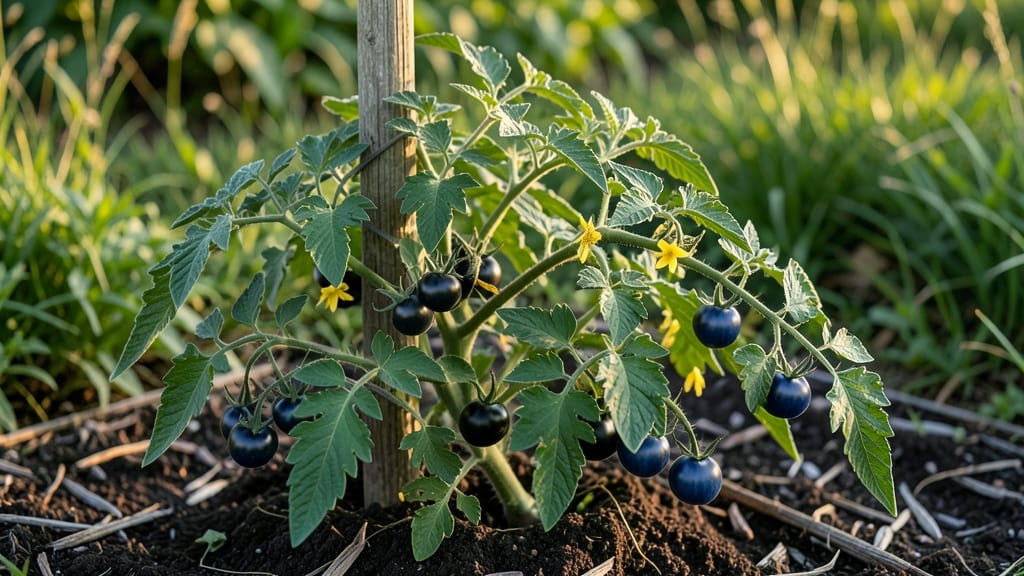
Growing blue tomato plants like Indigo Rose or Black Krim transforms your patio into a showstopper. 🌱 These deep-purple heirlooms taste sweeter than red varieties and thrive in containers with the right care—sunlight, well-draining soil, and consistent watering.
Unlike conventional tomatoes, they ripen slower but pack more complex flavor, making the wait worthwhile.
The secret to their striking color and productivity starts with a 5-gallon container at minimum, filled with a mix of compost, perlite, and potting soil. Place them in full sun (6-8 hours daily) and water when the top inch feels dry—overwatering turns their fruit mealy.
Prune suckers regularly to focus energy on fruit production, and watch as those dramatic purple tomatoes deepen in hue as they ripen.
You’ll harvest 30-50 pounds per plant in a season, with flavors ranging from smoky (Black Krim) to berry-like (Indigo Rose). The key to color retention? Avoid overripe picking—let them fully ripen on the vine.
These tomatoes pair beautifully with cheeses and balsamic, offering a visual and culinary upgrade to any meal.
Perfect for small spaces, balconies, or urban gardens, these varieties prove you don’t need a backyard for a dramatic harvest. With proper care, you’ll enjoy longer storage life and a garden that turns heads—literally. Ready to grow your own sun-kissed mystery fruits?
📚 In This Guide
- What you need
- Instructions
- Tips and common mistakes
- Wrapping up and next steps
What you need
- ● Seeds or Seedlings: 1–3 Indigo Rose tomato seeds or young plants (available at nurseries or online).
- ● Containers: 2–5 gallon pots (or larger) with drainage holes (5-gallon pots recommended for best growth).
- ● Potting Mix: 1 bag of high-quality, well-draining organic potting soil (avoid garden soil—it compacts too easily!).
- ● Fertilizer: Balanced organic fertilizer (e.g., 5-5-5 or tomato-specific formula) or compost.
- ● Support Structure: 1–2 tomato cages (5–6 ft tall) or stakes + twine per plant.
- ● Watering Can or Hose: With a gentle spray nozzle for hydration.
- ○ Mulch (Optional but Helpful): Straw or shredded leaves to retain moisture.
- ● Gloves: Gardening gloves to protect your hands.
- ● Trowel or Spade: For planting and soil prep.
- ● Pruning Shears: To trim suckers and encourage bushier growth.
- ● Sunlight Access: A sunny spot (6–8+ hours of direct sunlight daily).
- ○ pH Test Kit (Optional): To check soil pH (ideal range: 6.0–6.8 for tomatoes).
Step-by-step guide to growing blue tomato plants in containers
Here’s how I transform vibrant patio spaces into bountiful blue tomato gardens—no green thumb required.
🌱 Step 1: Select the Right Variety and Containers
Start with a blue tomato variety like 'Indigo Rose' or 'Blue Beauty,' which develop deep purple-blue hues when exposed to sunlight. These heirloom types thrive in containers and produce striking fruit. Choose 5-gallon fabric grow bags or plastic pots with drainage holes—I prefer fabric because it prevents root circling and mimics natural soil aeration.
Ensure each container has at least 12 inches of depth—shallow pots stunt root growth and limit yield. If your balcony railing only allows 6-inch pots, opt for determinate varieties like 'Tiny Tim' (they stay compact) and expect smaller fruit. Place a 2-inch layer of gravel or broken pottery at the bottom to improve drainage and prevent soggy roots.
🪴 Step 2: Prepare Soil and Plant Seedlings
Fill containers with a sterile potting mix blended with 20% compost for nutrients. I avoid garden soil—it compacts in pots and suffocates roots. Add a slow-release fertilizer (like Osmocote) at planting time to feed the plant for 3-4 months. Moisten the mix until it’s damp like a wrung-out sponge—not soggy, not dry.
Plant one seedling per container (crowding leads to disease). Dig a hole twice as wide as the root ball and place the plant so the top of the roots sits ½ inch below soil level. This ensures stability and prevents stem rot. Gently firm the soil around the base and water deeply until it drains from the bottom holes.
☀️ Step 3: Position for Maximum Sun and Support
Blue tomatoes need full sun (6-8 hours daily) to develop their signature color. Place containers on a south- or west-facing balcony or under grow lights if indoors. If your space gets afternoon shade, rotate pots every 2-3 days so all sides receive even light. You’ll notice leaves growing toward the sun—this is your cue to adjust positioning.
Install a 6-foot bamboo or metal cage immediately after planting. Tomatoes grow fast, and waiting until vines sprawl makes staking difficult. Secure the main stem to the cage with soft plant ties (avoid wire—it cuts stems). Prune suckers (the small shoots between stems and leaves) weekly to direct energy into fruit production.
💧 Step 4: Water and Feed for Vibrant Fruit
Water deeply every 2-3 days, soaking the soil until water runs from the drainage holes. Check moisture by sticking your finger 1 inch into the soil—if it’s dry, it’s time to water. Avoid wetting leaves to prevent fungal diseases like blight. I use a drip irrigation system on my balcony to keep moisture consistent without overwatering.
Fertilize every 4 weeks with a balanced liquid fertilizer (10-10-10) diluted to half strength. Blue tomatoes need extra potassium for color development, so switch to a 5-10-10 formula when flowers appear. Stop fertilizing 4 weeks before harvest—excess nitrogen makes fruit pale and watery.
✂️ Step 5: Harvest and Preserve the Blue Beauty
Harvest tomatoes when they’re fully colored and slightly soft to the touch—usually 70-80 days after transplanting. Blue varieties ripen slower than reds, so don’t rush it. Use pruning shears to cut stems ¼ inch above the fruit to avoid damaging the plant. Store harvested tomatoes in a cool, dark place for up to 2 weeks (they won’t ripen further off the vine).
For long-term storage, slice tomatoes and blanch for 2 minutes, then freeze in ice cube trays with water. This preserves color and texture for sauces or salsas. If you have an abundance, ferment them into blue tomato jam—the color intensifies beautifully when cooked with vinegar and sugar.
Tips & tricks for growing stunning blue tomato plants
Here's what I've learned after growing these striking plants for years—small details make all the difference.
Sunlight Strategy: Those 6-8 hours of daily sun are non-negotiable for the deep blue color development. If your balcony gets afternoon shade, consider adding a small portable grow light for 2-3 hours during peak growing season. I've seen blue varieties lose their signature hue when sunlight drops below 5 hours daily—it's worth the extra effort to maximize exposure.
Container Depth Matters: The 12-inch minimum depth requirement isn't just about roots—it's about creating space for the plant's natural growth pattern. I've tried 8-inch pots with indeterminate varieties, and while they survive, they produce half the yield and require more frequent pruning. For the best results, stick with the recommended depth and upgrade to larger containers if possible.
Pruning Precision: When pruning suckers in Step 3, aim to remove them when they're about the size of a pencil—this prevents energy drain while keeping the plant manageable. I've found that consistent weekly pruning (as specified) creates a more productive plant. The key is to never remove more than one-third of the plant's foliage at any single time, which maintains photosynthesis efficiency.
Harvest Timing: The 70-80 day window is a guideline, but blue tomatoes often take longer to ripen than red varieties. I recommend checking fruit weekly starting at day 70—look for that slight softening and full color development. Overripe blue tomatoes develop a mealy texture, so timing your harvest is crucial for the best flavor and texture.
Pro Tips for Blue Tomato Plant
- Here's what I've learned after growing these striking plants for years—small details make all the difference.
- Sunlight Strategy: Those 6-8 hours of daily sun are non-negotiable for the deep blue color development.
- Container Depth Matters: The 12-inch minimum depth requirement isn't just about roots—it's about creating space for the plant's natural growth pattern.
Frequently asked questions
Got questions about growing blue tomato plants? You’re not alone! Here are answers to the most common queries to help you cultivate this stunning (and delicious) variety with confidence.
What’s the difference between blue tomatoes and regular tomatoes?
The Indigo Rose tomato—often called "blue"—isn’t actually blue inside! Its skin turns deep purple when ripe, but the flesh stays red. The unique trait is its anthocyanin pigment, which gives it antioxidant-rich skin. Flavor? Sweet, tangy, and slightly smoky—perfect for slicing or sauces!
How long does it take for blue tomato plants to produce fruit?
Patience is key! From seed, expect 70–85 days to harvest, while transplants may fruit in 60–70 days. Warmth speeds things up—keep soil temps above 60°F (15°C) and provide full sun (6+ hours daily). Pro tip: Prune suckers early to focus energy on fruit production.
Can I grow blue tomatoes in containers? If so, what size pot do I need?
These vining plants thrive in 5-gallon containers or larger (at least 12" deep). Use well-draining soil, trellis them vertically, and fertilize weekly with a balanced feed. Warning: Overcrowding leads to blight—space plants 2–3 feet apart even in pots.
Why are my blue tomato leaves turning yellow?
Yellowing leaves (chlorosis) usually signal overwatering, nutrient deficiency, or fungal issues. Check soil moisture—it should dry slightly between waterings. Test for magnesium or nitrogen deficiency (Epsom salt helps!) and avoid wetting foliage to prevent blight. Quick fix: Trim affected leaves and improve airflow.
Are there alternatives to blue tomatoes with similar colors?
If Indigo Rose isn’t available, try these stunning varieties:
- Black Krim: Deep purple-black skin, rich flavor.
- Purple Cherokee: Smoky, meaty, and heirloom.
- Green Zebra: Striped skin, tangy-sweet taste.
Wrapping up and next steps
Growing blue tomato plants in containers is a rewarding adventure that brings a splash of color and a burst of flavor to your garden—or even your windowsill! 🌱 With the right soil, sunlight, and care, you’ll soon be harvesting vibrant, edible blooms that double as stunning decor.
Whether you’re a seasoned gardener or a curious beginner, this sun-kissed harvest is well within reach.
Ready to take the next step? Start by planting your seeds this week—spring or summer is ideal—and watch your container garden transform into a blue-hued oasis. Happy growing, and may your harvest be as blue-tiful as it is delicious!