
Plants
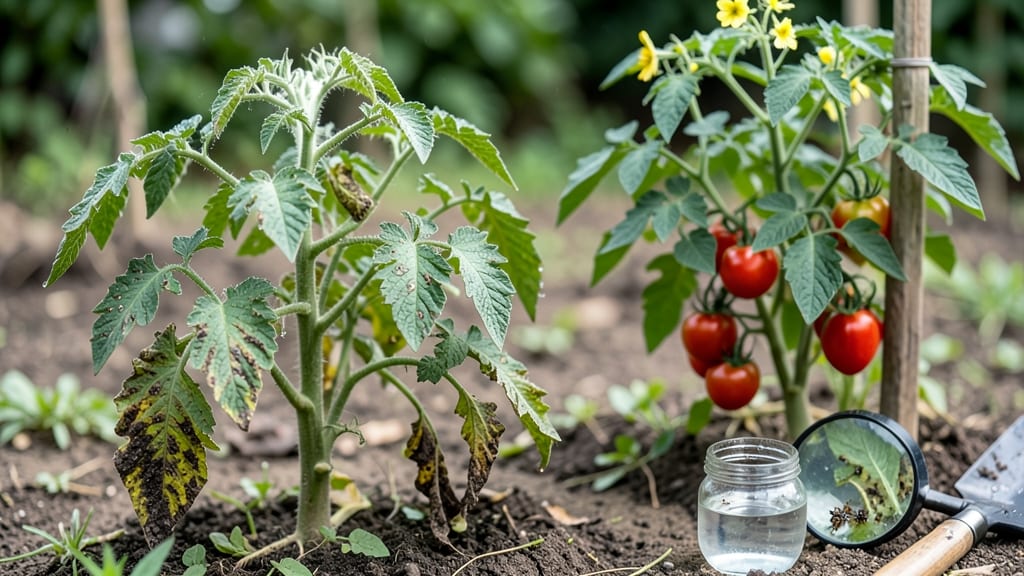
Your tomato plant’s drooping leaves are screaming for help—and the cause might surprise you. 🌱 Wilting isn’t always about water; it could be hidden stress from heat, disease, or even overzealous pruning.
I’ve diagnosed every type of wilt from my own garden, and most fixes take less than 10 minutes once you know what to look for.
Start by checking the soil: it’s either too dry or too soggy. Yellowing leaves with brown edges? That’s underwatering or salt buildup. Crispy, curled leaves? You’re dealing with heat stress or pests like spider mites.
And if the wilting happens in the morning but recovers by afternoon, you’ve got early blight—a fungal foe that thrives in damp conditions.
Here’s the game-changer: 90% of wilting fixes start with proper watering. Deep watering twice a week (not daily light sprinkles) keeps roots happy, while mulching saves moisture and prevents soil-borne diseases. For fungal issues, remove affected leaves immediately and space plants for airflow—no fungicide needed unless it spreads.
Most gardeners fix the symptoms but never the root cause. That’s why I’ll walk you through each scenario—what to look for, what to do, and how to keep your plants thriving. No guesswork, just results.
Hidden Triggers Behind Wilting
When your tomato plant’s leaves suddenly droop like a sad balloon, it’s rarely just "bad luck." Behind every wilted leaf is a specific stressor—some subtle, some obvious—disrupting the plant’s delicate balance.
Understanding these root causes (literally and figuratively) is the first step to revival. Let’s break down the science behind why your tomatoes are throwing a pity party.
Tomatoes are thirsty, but too much love can drown them. Overwatering suffocates roots by cutting off oxygen, while poor drainage traps excess moisture, creating a waterlogged soil that breeds fungal diseases like Phytophthora.
Roots deprived of air can’t absorb nutrients, causing leaves to wilt as the plant gasps for survival.
Why it happens:
- Compacted soil acts like a sponge, holding water instead of letting it drain. Clay-heavy soils are notorious for this.
- Container-grown tomatoes often lack drainage holes, turning pots into death traps for roots.
- Irregular watering (e.g., heavy watering after drought) shocks roots, causing osmotic stress.
🔍 Pro tip: Stick your finger 2 inches into the soil—if it’s soggy, hold off on watering. For containers, ensure they have drainage holes and a cache pot underneath to catch excess water.
Tomatoes are warm-weather babies, but when temperatures swing too high or too low, their cellular machinery grinds to a halt. Heat stress (above 90°F/32°C) causes transpiration to outpace water uptake, while cold snaps (below 50°F/10°C) slow metabolism, halting nutrient transport. Both scenarios leave leaves limp and crispy.
Why it happens:
- Heat waves force stomata (leaf pores) to close to conserve water, but this also blocks gas exchange, leading to wilting.
- Cold stress disrupts enzyme activity in roots, preventing water and nutrient absorption.
- Sudden temperature shifts (e.g., nighttime chills after a hot day) confuse the plant’s circadian rhythm, causing shock.
🌿 Actionable fix: Provide afternoon shade during heatwaves and use row covers or mulch to insulate roots in cold climates. Drip irrigation can also keep soil temps stable.
A wilted tomato plant might be starving—or overeating. Deficiencies in potassium, magnesium, or nitrogen disrupt cellular processes, while excess salt or fertilizer burn scorch roots, preventing water absorption. Even a slight imbalance throws the plant’s osmotic pressure off-kilter, causing leaves to droop like overcooked pasta.
Why it happens:
| Deficiency | Symptoms | Why It Causes Wilting |
|---|---|---|
| Potassium (K) | Yellowing edges, weak stems | Potassium regulates stomatal function—without it, leaves can’t control water loss. |
| Magnesium (Mg) | Interveinal yellowing (between veins) | Magnesium is key for chlorophyll production; deficiency stalls photosynthesis, weakening the plant. |
| Nitrogen (N) | Pale, yellow leaves (starting at the bottom) | Nitrogen fuels protein synthesis—low levels mean poor root and leaf development. |
| Fertilizer Burn | Brown, crispy leaf edges | Excess salts disrupt root cell membranes, preventing water uptake. |
💡 Quick test: Flush the soil with water to leach excess salts, then amend with balanced fertilizer (10-10-10) or compost tea for a gentle boost.
Hidden invaders like aphids, spider mites, or fungal pathogens (e.g., Verticillium wilt) attack roots or sap-sucking pests drain nutrients, leaving leaves wilted and stunted. Even root-knot nematodes—microscopic worms—can gnaw on roots, reducing their ability to absorb water.
Why it happens:
- Sap-sucking pests (aphids, whiteflies) inject toxins that disrupt plant hormones, causing wilting.
- Fungal infections clog xylem vessels (the plant’s plumbing), blocking water transport.
- Root damage from grubs or nematodes reduces surface area for absorption, triggering hydraulic failure.
🛡️ Prevention: Inspect leaves daily for pests, use neem oil as a natural repellent, and rotate crops to break disease cycles.
Tomatoes may look sturdy, but prolonged wind exposure or even rough handling (like aggressive pruning) can damage delicate stems and leaves. Wind increases transpiration rates while reducing the plant’s ability to photosynthesize, leading to wilting as it struggles to keep up with water loss.
Why it happens:
- Transpiration overload: Wind removes the boundary layer of humid air around leaves, making them dry out faster.
- Physical trauma: Snapping stems or tearing leaves disrupts the vascular system, causing localized wilting.
- Root disturbance: Even gentle movement (like mulching too close to the stem) can injure feeder roots.
🌳 Solution: Use windbreaks (like bamboo stakes or mesh) and stake tomato plants early to prevent stem damage. Avoid pruning during heatwaves.
Fix Wilting Tomato Leaves Fast
Now that you know the root causes behind those droopy tomato leaves, let’s roll up our sleeves and get those plants thriving again! The right fix depends on the issue, but don’t worry—most solutions are simple and effective.
Below, we’ll break down practical, step-by-step fixes for each common cause, plus prevention tips to keep your tomatoes healthy long-term.
Signs: Yellowing leaves, mushy stems, waterlogged soil, or a foul smell.
How to Fix It:
- 🔥 Stop Watering Immediately
- Let the soil dry out completely before watering again. Stick your finger 1–2 inches into the soil—if it’s damp, wait.
- 🍳 Improve Drainage - If your pots lack drainage holes, move the plant to a container with them ASAP.
For in-ground plants, amend the soil with perlite, sand, or compost to loosen it up. - Pro tip: Elevate pots slightly (use bricks or a saucer) to prevent water pooling.
- 👨🍳 Prune Damaged Areas
- Snip off any black, mushy stems or leaves with clean scissors. This stops the spread of rot.
- ⏰ Adjust Your Watering Habits
- Water deeply but infrequently—aim for 1–2 inches per week (adjust for rain). Early morning is best to reduce fungal risks.
Prevention Tips: ✔ Use well-draining soil (mix potting soil with compost or coconut coir). ✔ Check soil moisture before watering—don’t stick to a schedule! ✔ Mulch around plants to retain moisture without over-saturating roots.
Signs: Crispy, brown edges on leaves, wilting even when soil is dry, or leaves curling upward.
How to Fix It:
- 💦 Water Deeply and Slowly
- Give your tomato plant a long drink—water until it runs out the drainage holes. Repeat every 2–3 days in extreme heat (or daily if soil is bone-dry).
- 🌡️ Provide Shade Relief
- If temps hit 90°F+ (32°C+), use shade cloth (30–50%) or a temporary cover (like an old sheet) to block direct sun for a few hours.
- 🥗 Boost Humidity (For Container Plants)
- Place a tray of water near the pot or mist leaves early in the day (avoid evening to prevent fungus).
- 🎯 Mulch to Lock in Moisture
- Spread 2–3 inches of straw or wood chips around the base to reduce evaporation.
Prevention Tips: ✔ Water at the base, not overhead, to avoid leaf burn. ✔ Group plants together to create a microclimate with higher humidity. ✔ Choose heat-tolerant varieties like ‘Solar Fire’ or ‘Heatmaster’ for hot climates.
Signs: Holes in leaves, sticky residue (aphids), or chewed stems (caterpillars).
How to Fix It:
- 🔪 Handpick the Culprits
- Drop pests like tomato hornworms or squash bugs into soapy water. Check under leaves and along stems.
- 🍳 Spray Homemade Pesticides
- Neem oil spray: Mix 1 tbsp neem oil + 1 tsp mild soap in 1 quart of water. Spray evenly (including undersides) every 5–7 days.
- Soap spray: 1 tbsp castile soap per quart of water. Test on a small leaf first!
- 🌿 Introduce Beneficial Bugs
- Release ladybugs (aphid eaters) or parasitic wasps (for hornworms) from garden centers.
- 🔥 Remove Infested Debris
- Prune and dispose of heavily damaged leaves in a sealed bag (not compost).
Prevention Tips: ✔ Inspect plants weekly—catch pests early! ✔ Plant companion flowers like marigolds or basil to repel pests naturally. ✔ Avoid over-fertilizing with nitrogen—it attracts soft-bodied pests like aphids.
Signs: Yellowing between leaf veins (iron/chlorosis), stunted growth, or purple stems (phosphorus).
How to Fix It:
- 📊 Test Your Soil
- Grab a DIY soil test kit (or send a sample to a local extension office) to identify deficiencies.
- 💪 Apply Targeted Fertilizer
- For yellow leaves (nitrogen): Use a balanced fertilizer (10-10-10) or compost tea.
- For purple stems (phosphorus): Try a bone meal or rock phosphate supplement.
- For weak growth (potassium): Use wood ash or a potassium-rich fertilizer (like banana peel tea).
- 🥗 Boost Organic Matter
- Mix well-rotted compost into the top 6 inches of soil. Tomatoes are heavy feeders—they need nutrients consistently!
Prevention Tips: ✔ Fertilize every 2–3 weeks during growing season (spring to fall). ✔ Avoid synthetic fertilizers—they can burn roots. Opt for slow-release organics. ✔ Rotate crops—don’t plant tomatoes in the same spot yearly to prevent nutrient depletion.
Signs: Spots (early blight), mold (late blight), or wilting despite wet soil (fusarium wilt).
How to Fix It:
- 🔥 Remove Infected Plants Immediately
- Dig up entire plants showing fungal signs (like late blight) and dispose of them (don’t compost!). Burn or trash-bag them.
- 🍳 Apply Fungicide
- Baking soda spray: Mix 1 tbsp baking soda + 1 tsp soap + 1 gallon water. Spray weekly for prevention.
- Copper fungicide: Follow label instructions for early blight or septoria leaf spot.
- 🌿 Improve Airflow
- Prune leaves to create space between plants (aim for 12–18 inches apart).
- Stake or cage tomatoes to keep foliage off the ground.
- ⏰ Adjust Watering
- Water at the base only and avoid evening watering to reduce humidity (fungi love damp leaves).
Prevention Tips: ✔ Rotate crops—don’t plant tomatoes, peppers, or eggplants in the same spot for 3+ years. ✔ Solarize soil in fall: Cover beds with clear plastic for 4–6 weeks to kill fungus spores. ✔ Choose resistant varieties like ‘Mountain Merit’ (blight-resistant) or ‘Defiant PhR’ (fusarium-resistant).
Frequently asked questions
Why do my tomato plant leaves wilt in the morning but recover by afternoon?
This classic pattern often signals early blight, a fungal disease that thrives in damp conditions. The fungus blocks water transport in stems, causing temporary wilting when moisture levels drop overnight. Check for brown spots with yellow halos on older leaves—this confirms the diagnosis.
Can I save a tomato plant with completely wilted leaves?
It depends! If the wilting is from underwatering or heat stress, the plant often recovers within hours after proper care. But if leaves are crispy, black, or mushy (signs of disease or rot), prune the damage immediately and assess root health. For severe cases, check roots—healthy ones should be white, not brown or slimy.
How do I tell if my tomato plant is wilting from overwatering vs. underwatering?
Overwatered plants have yellow, mushy leaves and may smell foul, while underwatered ones show crispy, brown edges and dry soil. Stick your finger 2 inches deep—if the soil is soggy, you’ve overwatered; if it’s bone-dry, you’re underwatering. Both need immediate adjustment!
Will pruning wilted leaves help my tomato plant recover?
Yes! Pruning removes the plant’s energy drain and improves airflow, which fights fungal diseases. Focus on removing only the most damaged leaves—don’t over-prune, as this stresses the plant further. Use clean scissors and avoid tearing stems, which can introduce infections.
Can I use coffee grounds to fix wilting tomato plants?
Coffee grounds can help long-term by adding nitrogen, but they won’t fix immediate wilting. If your soil is too acidic (pH <6.0), coffee grounds may worsen nutrient uptake. Instead, mix them into compost first or use a balanced fertilizer (10-10-10) for quick results.