
Plants
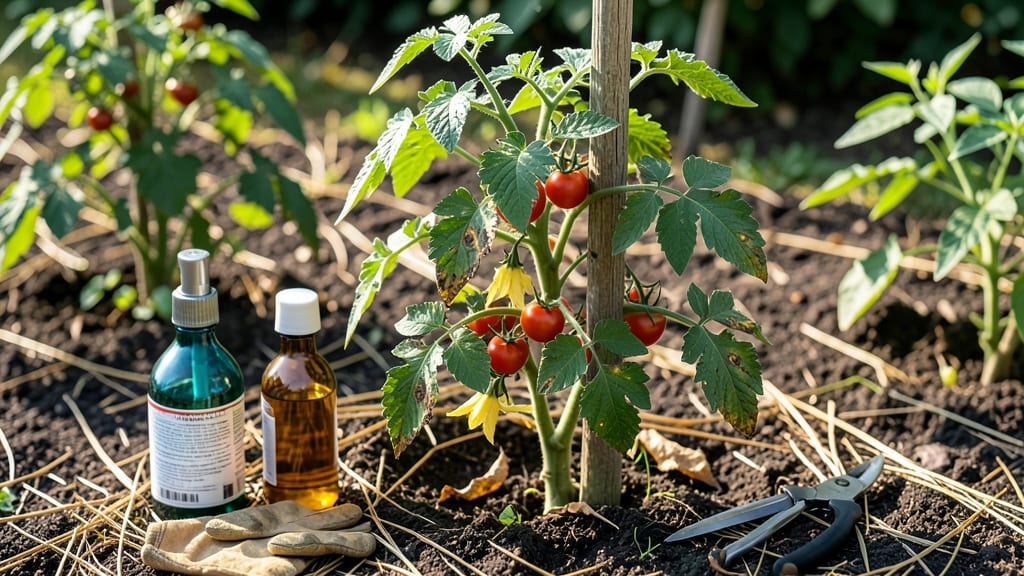
When those brown spots with yellow halos start creeping up your tomato leaves, treating early blight on tomato plants has to happen fast—and it’s a battle you can win. 🌱 I’ve saved dozens of plants from total collapse using this copper-free organic spray, and the key is acting before the fungus spreads to the stems.
The good news? You can stop those ugly concentric rings in their tracks without harsh chemicals.
First, confirm it’s early blight (not late blight) by checking for the classic "target-like" spots on lower leaves. If it’s early blight, your best defense is a baking soda spray—yes, the same stuff in your cabinet—mixed with a little dish soap and water.
Spray the undersides of leaves (where spores hide) every 5-7 days until new growth appears. The spray disrupts the fungus’s life cycle without harming bees or your soil.
Within 7-10 days, you’ll see the spots stop spreading, and new leaves will emerge clean. The plants might look rough, but they’ll rebound stronger than ever. Prune infected leaves immediately (don’t compost them!) and space your plants wider next season—crowding is early blight’s favorite hiding spot.
For prevention, rotate crops yearly and choose resistant varieties like ‘Mountain Merit’ or ‘Defiant PhR.’ The spray works best as a cure, but these habits keep early blight from becoming an annual battle. Your tomatoes will thank you with bigger, healthier harvests.
Root Causes of Tomato Blight
Early blight (Alternaria solani) may seem like a sudden, mysterious attack on your tomato plants, but it’s actually the result of specific conditions that create the perfect storm for fungal spores.
Understanding these causes is the first step to prevention—and keeping your garden thriving. Here’s why your tomatoes might be developing those telltale brown spots:
🌬️ Early blight thrives because its spores are everywhere—in soil, plant debris, and even the wind. These microscopic invaders lie dormant until conditions become ideal for germination. Once they land on tomato leaves, they germinate and spread rapidly, especially in warm, humid weather.
The spores can even survive in old plant residue from previous seasons, meaning last year’s compost or mulch might still be harboring them.
Key trigger: Spores need moisture (like dew or rain) to activate and infect leaves.
🌡️ Early blight loves heat and humidity—think daytime temps in the 70s–80s°F (21–27°C) paired with high nighttime humidity (above 70%).
These conditions create a fungal paradise: - Stagnant air traps moisture on leaves, giving spores the perfect environment to grow. - Prolonged leaf wetness (like from morning dew or overhead watering) encourages spore germination within 12–24 hours.
Pro tip: 💡 If your area has hot, muggy summers, early blight is likely lurking. Monitor forecasts and act preemptively!
🌿 Dense tomato foliage—especially in staked or caged plants with thick leaves—creates a microclimate where air doesn’t flow freely. Without circulation:
- Humidity builds up between leaves, keeping them damp longer.
- Spores spread faster via splashing water or wind blowing through crowded plants.
Actionable fix: 🌿 Prune lower leaves (especially those touching the soil) to improve airflow and reduce spore landing zones.
💦 Watering from above (like with a hose or sprinkler) turns your garden into a blight-spreading machine. Here’s how:
- Splashing water carries spores from soil or infected leaves onto healthy ones.
- Wet foliage stays damp for hours, giving spores the moisture they need to infect.
Better method: 🔥 Use drip irrigation or soaker hoses to deliver water at the base of plants—keep leaves dry!
🛡️ Tomatoes under stress are vulnerable to early blight. Common stressors include:
- Nutrient deficiencies (especially potassium or nitrogen imbalances).
- Physical damage (like hail, pests, or rough handling) creates entry points for spores.
- Overcrowding competes for resources, weakening plants.
Boost resilience: 💪 Feed plants with balanced fertilizer (like 10-10-10) and mulch to retain moisture in the soil (not on leaves).
🌱 If last year’s tomato debris (or infected plants) wasn’t removed, spores overwinter in the soil. Even gardening tools (pruners, gloves) can transfer spores from infected to healthy plants.
Cleanup checklist: ✅ Remove all plant debris (including stems and leaves) from the garden. ✅ Sterilize tools with rubbing alcohol or bleach solution (1 part bleach to 9 parts water). ✅ Rotate crops—don’t plant tomatoes or potatoes in the same spot for 3+ years.
⏳ Planting tomatoes too late in the season (when summer heat peaks) can backfire. Early blight spreads aggressively in July and August, so:
- Early-season varieties (like ‘Early Girl’) mature before peak blight risk.
- Late plantings (after June) often face heavier infections.
Smart scheduling: 🌱 Start seeds indoors 6–8 weeks before last frost to transplant when soil temps are cool but air temps are warming.
🚨 Many gardeners wait until large brown spots appear before acting—but by then, the fungus has already spread. Early blight starts with:
- Small, dark spots (1/8" wide) with concentric rings on lower leaves.
- Yellowing leaves (a sign the plant is fighting infection).
Act fast: 🔥 At the first sign of spots, remove infected leaves and apply a copper-free organic spray (like neem oil or baking soda mix) to stop the spread.
Fix Early Blight Fast
Early blight on tomato plants doesn’t have to mean the end of your harvest—with the right approach, you can stop the spread, heal your plants, and even prevent future outbreaks.
Below, we break down practical, copper-free organic solutions tailored to the root causes of early blight, from fungal buildup to poor airflow. Follow these steps to revive your tomatoes and protect your garden for next season.
Early blight thrives on decaying leaves, so prune aggressively to break the infection cycle.
- 🍳 Cut out infected leaves (brown/yellow spots with concentric rings) using sterilized pruners (wipe with rubbing alcohol between cuts).
- 👨🍳 Avoid wetting healthy leaves—trim from the top down to improve airflow.
- 🥘 Dispose of clippings in the trash (not compost!) to prevent reinfection.
- ⏰ Do this in the morning so wounds dry quickly, reducing fungal entry points.
Pro Tip: 💡 If the disease is severe, remove entire lower branches where spores often linger. Healthy upper leaves can still produce fruit!
Skip the copper sprays and try these effective, plant-safe alternatives to halt early blight: | Solution | How to Use | Frequency | |----------------------------|---------------------------------------------------------------------------------|-----------------------------| | Neem Oil Spray | Mix 1 tbsp neem oil + 1 tsp mild soap + 1 quart water.
Spray undersides of leaves (where spores hide). | Every 7–10 days until symptoms stop. | | Baking Soda Spray | Combine 1 tbsp baking soda + 1 quart water + 1 tsp oil (to stick).
Spray early morning (avoid hot sun). | Weekly preventatively. | | Milk Spray (Lactic Acid) | Use raw milk (1:9 milk-to-water ratio) or powdered milk (1 tbsp/quart water).
Spray all leaf surfaces. | Every 5–7 days for 2–3 weeks. | | Hydrogen Peroxide (3%) | Mix 1 tbsp 3% H₂O₂ + 1 quart water. Spray foliage and soil (safe for roots). | Every 10 days as needed. |
Pro Tip: 🌡️ Timing matters! Apply fungicides at dawn or dusk to avoid burning leaves in direct sunlight.
A strong tomato plant fights off early blight better. Use these nutrient and microbial boosts: - 💪 Foliar Feed with Seaweed or Fish Emulsion - Mix 1 tbsp liquid seaweed or fish emulsion with water.
Spray leaves and stems to enhance resistance. - Why? Seaweed contains kelp acids that trigger plant defenses. - 🍄 Beneficial Fungi & Bacteria - Mycorrhizal fungi (like Trichoderma) outcompete early blight pathogens.
Apply granular mycorrhizae to soil. - Bacillus subtilis (found in compost tea) suppresses fungi naturally. - 🥗 Balanced Fertilizer Switch - Stop high-nitrogen fertilizers (they encourage leafy growth but weaken stems). - Switch to a low-nitrogen, high-phosphorus feed (like bone meal or compost) to strengthen roots.
Pro Tip: ✨ Compost tea is a powerhouse—brew 1 cup compost in 5 gallons water for 24–48 hours, strain, and spray on plants.
Early blight loves damp, crowded conditions.
Make your garden less hospitable with these tweaks: - 🔪 Prune for Spacing - Thin plants so leaves don’t touch (aim for 18–24 inches apart). - Remove suckers (side shoots) to reduce shade and moisture retention. - 🌿 Mulch Strategically - Use straw or wood chips (not plastic) to keep soil dry while allowing airflow. - Avoid wet mulch—it traps moisture against stems. - 🌧️ Water Wisely - Water at the base (not overhead) to keep leaves dry. - Irrigate early morning so foliage dries by evening. - Drip irrigation is ideal—it delivers water directly to roots.
Pro Tip: 🎯 Row covers (lightweight fabric) can block spores if early blight is rampant in your area—use them before symptoms appear.
Stop early blight before it starts with these long-term strategies:
- 🌱 Crop Rotation – Never plant tomatoes (or nightshades like peppers/eggplants) in the same spot two years in a row.
- 🍅 Resistant Varieties – Choose early blight-resistant tomatoes like:
- ‘Mountain Merit’
- ‘Defiant PhR’
- ‘Bush Early Girl’
- 🌿 Solarize Soil (For Severe Cases)
- Cover infected soil with clear plastic for 4–6 weeks in hot sun to kill fungal spores.
- 🌿 Plant Companion Crops
- Marigolds, basil, or garlic repel pests and improve airflow around tomatoes.
Final Reminder: Early blight is manageable—act fast, combine removal + organic treatments + prevention, and your tomato plants will bounce back stronger. 🍅💪 Your next harvest is still on the table!
Frequently asked questions about early blight on tomato plants
How can I tell if my tomato plants have early blight vs. late blight?
Early blight shows brown spots with concentric rings on lower leaves, while late blight creates greasy, dark lesions that spread rapidly to stems and fruit. Early blight rarely affects fruit, but late blight does. Check the undersides of leaves—early blight targets older leaves first.
Will removing infected leaves really stop early blight from spreading?
Yes! Removing infected leaves breaks the fungus's life cycle by eliminating spore sources. Always dispose of clippings in the trash (not compost) and sterilize your pruners with rubbing alcohol between cuts. Do this in the morning so wounds dry quickly.
Can I use baking soda spray on my tomato plants every week?
Yes, but alternate with other organic treatments like neem oil to avoid plant stress. Mix 1 tablespoon baking soda + 1 quart water + 1 teaspoon oil and spray early morning (avoid hot sun). The oil helps the baking soda stick to leaves better.
Are there tomato varieties that naturally resist early blight?
Look for varieties labeled early blight-resistant, like ‘Mountain Merit’, ‘Defiant PhR’, or ‘Bush Early Girl’. These hybrids have built-in genetic resistance to the fungus. Planting these reduces your risk by up to 70%.
How long does it take for organic treatments to show results?
Most organic sprays (like neem oil or baking soda) start working within 3-5 days, but you’ll see the best results after 2-3 weeks of consistent application. Stop the spread by day 7 if you’re diligent about pruning and spraying.