
Vegetables
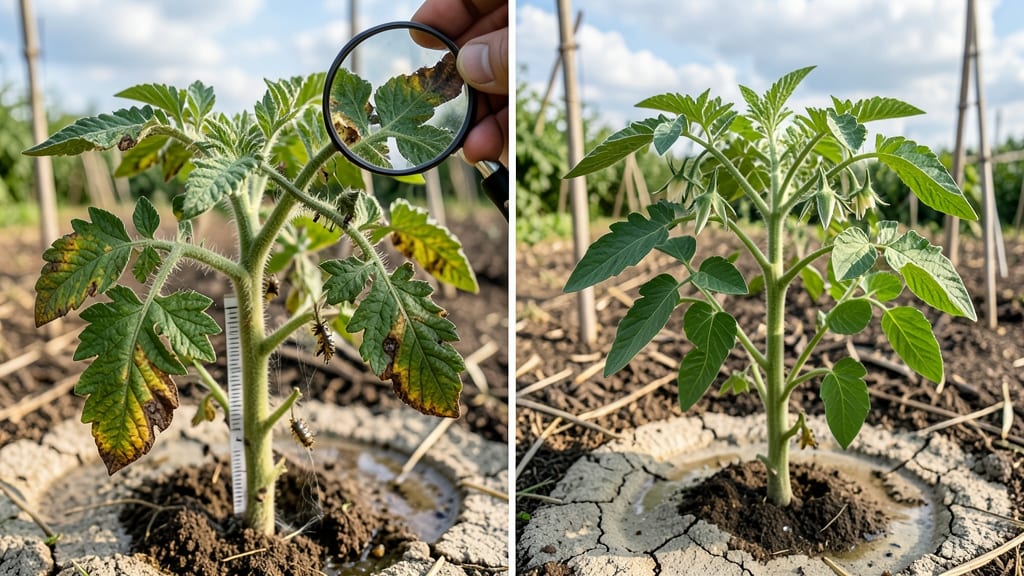
Tomato stems curling can turn your garden dreams into a nightmare—unless you know these three simple fixes that work every time. 🌱 I’ve seen blighted plants recover in days with the right approach, and I’ll show you exactly how to diagnose and reverse it before it spreads.
The culprits? Often hornworms munching stems or wind whipping plants like a sail, but sometimes it’s underwatering stress or disease hiding in plain sight. The good news: most cases fix fast with targeted action—no expensive sprays or guesswork.
Start by checking for chewed leaves, sticky residue (whiteflies), or dark spots (fungus). You’ll restore your plants in under an hour with basic tools: pruners, neem oil, or even a strong spray of water.
The key is acting fast—once stems curl, the plant diverts energy away from fruit, and your harvest shrinks. I’ll walk you through each step, so you can save your tomatoes before they’re too late.
First, rule out pests by inspecting stems and leaves for holes, frass (bug poop), or tiny webs. Hornworms leave behind skeletonized leaves, while whiteflies cause a sticky mess. For wind damage, stake plants immediately and water deeply to help them recover.
If the issue is water-related, adjust your schedule to 1-1.5 inches per week—consistency is everything. Next, treat the problem organically: neem oil spray for pests, copper fungicide for disease, or mulch to stabilize soil moisture.
Most plants bounce back within 3-5 days if you catch it early. The goal isn’t just to stop the curling—it’s to prevent it next season with better support and care.
Once your tomatoes are back on track, focus on prevention for next year. Use row covers against pests, deep watering to avoid stress, and strong stakes for windy areas.
A healthy plant resists damage better, and your harvest will thank you. This isn’t just about fixing a problem—it’s about growing tomatoes that thrive, not just survive.
Root Causes Behind Curling Stems
Understanding why your tomato stems curl is the first step toward fixing the issue. This problem rarely happens in isolation—it’s usually a symptom of deeper plant stress. Below are the most common culprits, explained in clear, actionable terms so you can diagnose and treat your tomatoes like a pro.
Tomatoes thrive in warm but stable conditions. When temperatures swing wildly—especially between scorching days and chilly nights—the plant’s growth hormones get thrown off balance. Curling stems often signal heat stress, where the plant tries to reduce surface area to conserve moisture.
- Why it happens: Extreme heat (above 90°F/32°C) disrupts photosynthesis and causes water loss.
The plant’s cells shrink, leading to curling and wilting. - Actionable fix: - Provide shade cloth (30-50% coverage) during peak afternoon sun. - Water deeply in the morning to keep roots cool. - Avoid planting tomatoes in low-lying areas where heat collects.
Too much water—or waterlogged soil—smothers roots, cutting off oxygen. This triggers curling stems as the plant struggles to uptake nutrients and water efficiently.
- Why it happens: Excess moisture leads to root rot (often from Phytophthora fungi), weakening the stem’s structural support.
Poor drainage or compacted soil worsens the issue. - Actionable fix: - Test your soil: Stick a finger 2 inches deep—if it’s soggy, hold off on watering. - Amend soil with compost or perlite to improve aeration. - Raise beds or use containers with drainage holes if your garden retains water.
Tiny pests like spider mites and aphids suck sap from stems and leaves, causing curling as the plant’s defense mechanism. Their webbing or sticky residue (honeydew) is a dead giveaway.
- Why it happens: These pests thrive in dry, hot conditions and inject toxins that distort growth.
Heavy infestations weaken the stem’s integrity. - Actionable fix: - Blast them off with a strong stream of water (early morning works best). - Spray neem oil (1 tsp per quart of water) weekly for prevention. - Introduce beneficial insects like ladybugs or lacewings.
Fungi like early blight or septoria leaf spot and bacteria such as Pseudomonas can infect stems, causing curling as the plant fights the invasion.
- Why it happens: Overhead watering, humid conditions, or contaminated tools spread pathogens.
Infected stems may also develop dark lesions or oozing sap. - Actionable fix: - Remove infected leaves/stems immediately and dispose of them (don’t compost!). - Water at the base (avoid wetting foliage) and space plants for airflow. - Apply copper fungicide as a preventive spray every 10–14 days.
Tomatoes need a balanced diet of nitrogen, phosphorus, and potassium. Too little (or too much) of any nutrient can cause stems to curl or distort.
- Why it happens:
- Nitrogen deficiency (yellowing lower leaves + curling) or potassium deficiency (weak stems, brown edges).
- Excess salt (from fertilizers or tap water) burns roots, limiting nutrient uptake.
- Actionable fix:
- Test your soil (DIY kits work!) and amend with balanced fertilizer (10-10-10 or 5-10-10).
- Flush soil with rainwater if you suspect salt buildup.
- Side-dress with compost mid-season for a slow-release boost.
If roots get tangled during transplanting or disturbed by cultivation, the plant struggles to establish itself, leading to curling stems as it conserves energy.
- Why it happens: Damaged roots can’t absorb water/nutrients efficiently, causing stress responses like curling or stunted growth.
- Actionable fix:
- Transplant carefully, keeping roots intact and burying stems deeper (up to the first leaves) to encourage new root growth.
- Avoid tilling around tomato plants—roots are shallow and sensitive.
- Use root stimulator (like mycorrhizal fungi) at planting time for faster recovery.
Strong winds or harsh handling (like rough pruning) can physically damage stems, causing them to curl as the plant repairs itself.
- Why it happens: Wind desiccates leaves and stems, while rough handling disrupts the plant’s vascular system.
- Actionable fix:
- Stake or cage plants early to provide support.
- Prune gently with clean, sharp shears—avoid tearing stems.
- Plant windbreaks (like corn or tall sunflowers) if your garden is exposed.
How to solve it
When your tomato plants start showing signs of stems curling or wilting, it’s time to take action before the problem spreads. The good news? Most causes have simple, effective fixes—whether you’re dealing with pests, disease, or environmental stressors.
Below, we’ve mapped out the most common culprits and the best ways to reverse the damage, plus tips to keep your plants thriving. Let’s get your tomatoes back on track!
🐛 Pests: Spider Mites, Whiteflies, or Aphids
If tiny bugs are the culprits, you’ll likely spot webbing, yellowing leaves, or sticky residue (honeydew) on your plants. Here’s how to kick them out:
- 💦 Spray with soapy water: Mix 1 tsp mild dish soap with 1 quart of water, then spray directly on the undersides of leaves where pests hide. Repeat every 3–4 days until gone.
- 🌿 Introduce beneficial insects: Ladybugs, lacewings, or predatory mites devour pests naturally. Buy them online or from garden centers.
- 🌞 Hose them off: Blast pests away with a strong stream of water in the early morning or evening to avoid shocking the plant.
💡 Prevention tip: Encourage diversity in your garden—pests hate marigolds, basil, and dill! Plant these near your tomatoes to repel invaders.
🌡️ Environmental Stress: Heat, Wind, or Poor Soil
Tomatoes are sensitive to extremes. Curling can signal they’re struggling with temperature swings, dry soil, or even root-bound stress. Try these fixes:
- 💧 Water deeply and consistently: Aim for 1–2 inches of water per week (more in extreme heat). Use drip irrigation or soaker hoses to keep roots moist without wetting leaves.
- 🌿 Mulch like a pro: Spread 2–3 inches of straw or wood chips around the base to retain moisture and regulate soil temperature.
- 🌳 Shield from wind: If gusts are whipping your plants, add a windbreak like a trellis, fence, or even a row of tall sunflowers.
- ✂️ Prune wisely: Trim suckers (the small shoots between the stem and branches) to improve airflow and reduce stress on the plant.
🎯 Prevention tip: Plant tomatoes in well-draining soil rich in compost. Amend clay or sandy soil with organic matter before planting to create the perfect growing conditions.
🍄 Fungal or Bacterial Diseases: Early Blight or Verticillium Wilt
If curling stems are paired with brown spots, wilting, or yellowing leaves, a fungal or bacterial infection might be to blame. Act fast with these remedies:
- 🧴 Apply copper fungicide: Spray a preventative mix (like copper sulfate) every 7–10 days during humid weather to stop spores in their tracks.
- 🌿 Remove infected foliage: Snip off and dispose of (don’t compost!) any severely affected leaves to prevent spread.
- 🌧️ Water at the base: Avoid overhead watering, which can splash spores onto leaves. Water early in the day so foliage dries quickly.
- 🌱 Rotate crops: If disease is recurring, avoid planting tomatoes (or nightshades like peppers) in the same spot next year.
✨ Prevention tip: Strengthen your plants with a balanced fertilizer (like 10-10-10) at planting time and again when flowers appear. Healthy plants fight disease better!
🌱 Nutrient Deficiencies: Lack of Calcium or Magnesium
Curling or distorted stems can also signal a mineral deficiency. Test your soil or use these quick fixes:
- 🥛 Add calcium: Mix 1 tbsp of crushed eggshells or bone meal into the soil around the base, or use a calcium nitrate spray (follow package instructions).
- 🌿 Feed with Epsom salt: For magnesium, dissolve 1 tbsp of Epsom salt in a gallon of water and water the soil monthly.
- 🌱 Use compost tea: Brew a batch of compost tea (steep compost in water for 24–48 hours) to give plants a nutrient boost.
📊 Prevention tip: Before planting, test your soil’s pH (aim for 6.0–6.8). Tomatoes thrive in slightly acidic soil, and pH affects nutrient uptake.
🚨 Emergency Care: Severe Wilting or Collapse
If stems are severely curled, limp, or splitting (a sign of blossom end rot), take immediate action:
- 💧 Hydrate ASAP: Soak the root zone with water to revive the plant. Add a handful of calcium-rich material (like gypsum) to the soil.
- 🌿 Trim damaged fruit: Remove any cracked or rotting tomatoes to redirect the plant’s energy to healthy growth.
- 🌳 Support the plant: If stems are weak, stake or cage the tomato to prevent further stress.
- 🌱 Consider replanting: If the plant is beyond saving, pull it and replace it with a new transplant if the season allows.
🔥 Pro tip: For future crops, use cage supports early to avoid stem stress as plants grow heavier with fruit.
Frequently asked questions
Why do tomato stems curl upward instead of downward?
Upward curling often signals heat stress or wind damage—the plant tries to reduce surface area to conserve moisture. Downward curling usually indicates overwatering or root rot, where stems sag from weakened support. Check for wilting leaves or soggy soil to confirm.
Can curling stems still produce good tomatoes?
It depends! Mild curling from pests or wind may recover with treatment, but severe cases (like fungal infections or blossom end rot) can stunt fruit quality. Focus on fixing the root cause first—healthy stems = better harvests. If stems are cracked or oozing, remove the plant to prevent spread.
How do I tell if curling is from pests vs. disease?
Pests (like aphids or spider mites) leave tiny webs, holes, or sticky residue on leaves. Disease (early blight, verticillium wilt) shows dark spots, wilting, or yellowing with curled stems. Inspect undersides of leaves—pests hide there, while disease often starts at the base.
Will pruning help curled tomato stems recover?
Yes, but only if you address the cause first! Prune damaged leaves (not healthy ones) to improve airflow. Remove suckers (side shoots) to reduce stress, but avoid over-pruning—healthy foliage helps the plant recover faster. Pair pruning with watering and pest control for best results.
Can I save a tomato plant with severely curled stems?
Maybe! If the roots are healthy and the issue is environmental (wind/heat), the plant may recover in 3-5 days with proper care. For pests/disease, act fast—remove infected parts and treat immediately. If stems are mushy or blackened, the plant is likely beyond saving.