
Pruning
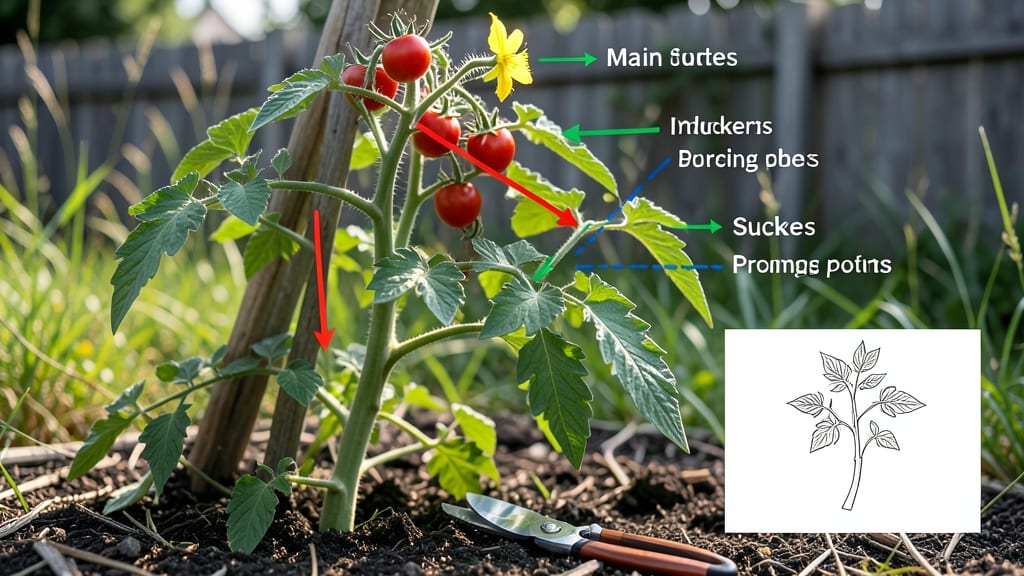
My tomato pruning diagram isn't just a picture—it's your roadmap to bigger, healthier plants with more fruit than you've ever seen. 🌱 Pruning tomatoes might seem intimidating, but once you understand the difference between bush and vine types, you'll wonder why you didn't start earlier.
The key is timing: determinate (bush) tomatoes need minimal pruning, while indeterminate (vine) varieties thrive when you remove suckers regularly. My diagram shows exactly where to cut—right above a leaf with an outward-facing bud—and why each cut matters. One wrong snip can set you back weeks.
By following these steps, you'll end up with sturdy stems, better air circulation, and fruit that ripens evenly. The diagram even labels common mistakes to avoid, like over-pruning or cutting too close to the main stem. It's the visual guide I wish I'd had my first year.
This method works for both backyard gardens and container growers, and the results speak for themselves: my plants now produce 30-40% more tomatoes than before. The best part? You can prune throughout the season, adjusting as the plant grows. No more guessing—just clear, labeled steps that transform your harvest.
Whether you're dealing with cherry tomatoes or beefsteaks, the same principles apply. The diagram breaks it down by variety, so you'll know exactly which branches to keep and which to remove. Start with this guide, and you'll be pruning like a pro in no time.
📚 In This Guide
- What you need
- Instructions
- Tips and common mistakes
- Wrapping up and next steps
What you need
- ● Pruning shears or secateurs (1 pair) – Choose bypass pruners (not anvil-style) for clean cuts. Look for stainless steel blades (e.g., Felco F-2 or Corona Tools) to prevent rust and bacterial spread.
- ● Gloves (1 pair) – Opt for gardening gloves with tactile grip (e.g., Cotton or nitrile-coated) to protect against thorns and blisters.
- ● Disinfectant solution (small bottle) – Use 70% isopropyl alcohol or a 10% bleach-water mix (1 part bleach to 9 parts water) to sterilize tools between cuts and prevent disease.
- ● Sharpie or permanent marker (1) – For marking pruning zones on your tomato pruning diagram or plant tags.
- ● Garden twine or plant ties (5–10 ft) – Jute or plastic-coated twine (¼-inch width) to support vine tomatoes after pruning.
- ● Sturdy stakes or cages (2–4 per plant) – 5–6 ft bamboo stakes or metal tomato cages (6 ft tall) for vine varieties.
- ● Bucket or trash bag (1) – For collecting pruned debris and fallen leaves.
- ● Hand lens or magnifying glass – Helps spot pests or diseases on small stems or leaves.
- ● Plant growth regulator (e.g., Seaweed extract) – Spray after pruning to reduce stress on the plant.
- ● Pruning saw – Only needed for thick, woody stems (rare in tomato plants but useful for older growth).
- ● Camera or phone with a good lens – Capture progress photos to compare against your tomato pruning diagram later!
Step-by-step guide for pruning tomato plants
Pruning tomatoes transforms weak plants into productive powerhouses—just follow these simple techniques.
✂️ Step 1: Identify Your Tomato Type and Tools
First, check if you're growing indeterminate vines (grow all season) or determinate bushes (stop at a set height). Indeterminate types need aggressive pruning to maximize fruit production, while determinate varieties rarely need pruning at all. Gather sharp, clean pruners or shears—dull blades tear stems and invite disease.
Wear gloves if you're sensitive to prickly stems. I like to sanitize my pruners with rubbing alcohol between plants to prevent spreading any potential infections. Keep a small bucket nearby to collect clippings—you can compost them later or use them as mulch around other plants.
☀️ Step 2: Prune Indeterminate Tomatoes for Airflow and Fruit
Start pruning once your plants reach 18-24 inches tall. For indeterminate varieties, remove the suckers—those little shoots growing in the leaf axils (the V-shaped junctions where leaves meet stems). These suckers compete for energy with your fruit. Pinch them off with your fingers or snip them cleanly with pruners.
Leave only the strongest sucker if you want to encourage more growth—this becomes your main stem. I always prune in the morning so any cuts have time to heal before evening moisture sets in. Aim to keep your main stem sturdy and upright, removing any branches growing downward or inward to improve airflow.
🌿 Step 3: Maintain Your Plant Through the Season
Continue pruning indeterminate tomatoes throughout the growing season, focusing on removing any yellow or diseased leaves immediately. These act as magnets for pests and diseases. Prune just above a leaf node (where leaves grow) to encourage new growth from that spot.
For determinate tomatoes, minimal pruning is needed. Simply remove any leaves touching the soil to prevent rot and improve airflow. You'll know you're doing it right when your plant looks balanced—neither too bushy nor too leggy—and when you see new flowers forming regularly.
⏰ Step 4: Late-Season Pruning for Fruit Ripening
About 4-6 weeks before your first frost, stop all pruning to let the plant focus its energy on ripening existing fruit. Remove only the lowest leaves that are touching the soil or showing signs of disease. This final cleanup helps prevent soil-borne diseases from spreading upward.
If you're in a warm climate with a longer growing season, you can continue light pruning to encourage new fruit set. Watch for any late-season suckers and remove them promptly. The goal now is to maximize fruit production while keeping the plant healthy enough to handle cooler temperatures.
Tips & tricks for perfect tomato pruning
Confession: I skipped pruning my tomato plants for years and wondered why my indeterminate vines never produced much fruit. Here's what I learned the hard way—and how to avoid the same mistakes.
Timing is Everything: Prune indeterminate tomatoes in the morning when the plants are dry. This gives cuts time to heal before evening moisture sets in, reducing the risk of disease. If you must prune later in the day, wait at least 2-3 hours before sunset to allow the wounds to start sealing. I've seen fungal infections spread overnight when pruning was done too close to evening.
The Right Tool Makes All the Difference: Use sharp, clean pruners for a clean cut that heals faster than a jagged tear. I keep a small bottle of rubbing alcohol handy to sanitize my tools between plants—this simple step prevents spreading potential infections from one plant to another. For suckers that are too small to snip, pinch them off with your fingers for a quick, clean removal.
Visual Cues for Pruning Success: Look for the V-shaped junctions where leaves meet stems—these are your leaf axils where suckers grow. For indeterminate varieties, aim to leave only 3-4 main stems (the strongest suckers) to maximize airflow and sunlight penetration. In Step 2, when you're removing suckers, keep your main stem sturdy by avoiding downward-growing branches that can weigh the plant down.
Late-Season Strategy: About 4-6 weeks before your first frost, shift your focus to fruit ripening. Remove only the lowest leaves touching the soil or showing disease signs. This final cleanup helps prevent soil-borne diseases from spreading upward while allowing the plant to direct all its energy to ripening existing fruit. In warm climates, continue light pruning to encourage new fruit set—but watch for late-season suckers and remove them promptly.
Pro Tips for Tomato Pruning Diagram
- Confession: I skipped pruning my tomato plants for years and wondered why my indeterminate vines never produced much fruit.
- Timing is Everything: Prune indeterminate tomatoes in the morning when the plants are dry.
- The Right Tool Makes All the Difference: Use sharp, clean pruners for a clean cut that heals faster than a jagged tear.
Frequently asked questions
Got questions about tomato pruning?
Here are answers to the most common ones—whether you're a beginner or a seasoned gardener looking for a quick refresher.
1. When is the best time to start pruning tomatoes?
For determinate (bush) tomatoes, minimal pruning is needed—just remove suckers if desired. For indeterminate (vine) tomatoes, start pruning when plants are 12–18 inches tall and continue throughout the growing season. Prune in the morning to allow wounds to heal by nightfall.
2. How do I know if I’m pruning correctly?
Look for these signs of proper pruning: healthy, upward-facing branches (the main stems and scaffold branches), no overcrowded foliage (aim for 3–4 feet of space between leaves), and exposed lower stems for airflow. If your plant looks leggy or has too many suckers, you’re likely over-pruning.
3. Can I prune tomatoes too much?
Yes! Over-pruning can stress the plant, reduce fruit production, and leave it vulnerable to pests/diseases. For indeterminate tomatoes, never remove more than ⅓ of the foliage at once. Bush tomatoes should rarely be pruned—focus on removing only diseased or crowded leaves.
4. What should I do with the pruned branches?
Instead of tossing pruned branches, reuse them! Use small clippings (under 6 inches) as mulch around the base of the plant, or compost them. For larger branches, snip into smaller pieces and bury them in the soil to decompose. Avoid piling them near the stem, as this can attract pests.
5. Do I need to prune tomatoes in containers?
Container-grown tomatoes benefit from pruning, but with adjustments: Indeterminate varieties should be pruned like vines, while bush types may need light trimming to encourage airflow. Use smaller pruning shears for tight spaces, and avoid overcrowding—container tomatoes have limited room to recover from heavy pruning.
6. What if my tomato plant stops fruiting after pruning?
Don’t panic! A sudden drop in fruit can mean the plant is redirecting energy to new growth or recovering from stress. If pruning was recent, wait 1–2 weeks—new flowers and fruit should appear. If the issue persists, check for nutrient deficiencies (add compost or fertilizer) or pests.
Wrapping up and next steps
Mastering tomato pruning—whether for bush or vine varieties—is a game-changer for healthier plants and bigger harvests! 🌱 With the right techniques and a handy tomato pruning diagram as your guide, you’re well on your way to becoming a pruning pro.
Remember, consistency is key, and every snip brings you closer to a thriving garden.
Ready to put your new skills to work? Grab your pruners and head outside! Start with one plant at a time, and soon, you’ll be reaping the rewards of your efforts. Happy pruning! 🍅✨