
Pruning
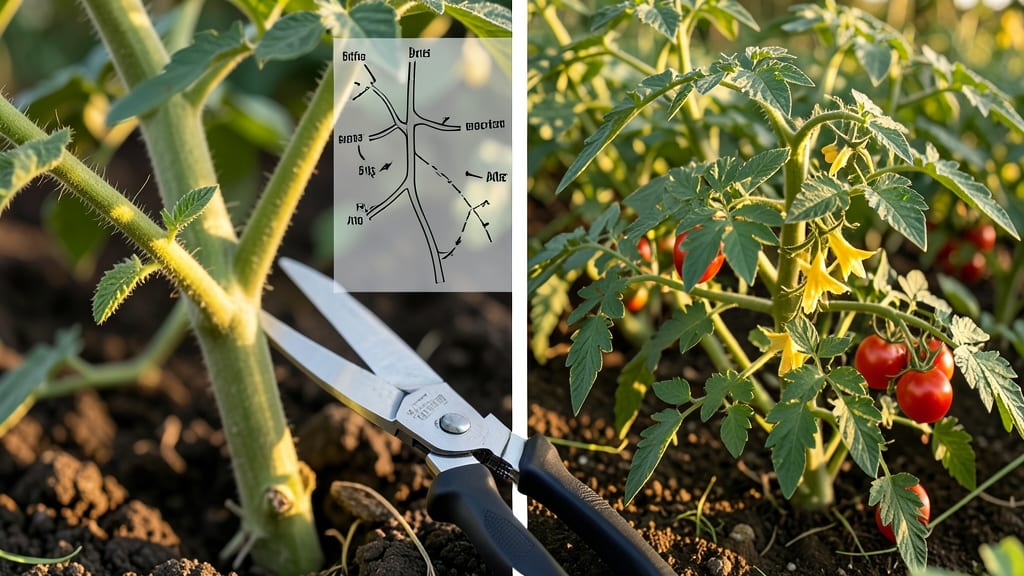
Pruning tomato plants the right way—knowing which branches to prune on tomato plants—turns a tangled mess into a fruit-loaded powerhouse. 🌱 I used to ignore those little side shoots—until I learned they’re either free lunch (suckers) or thieves (diseased stems).
The secret isn’t just cutting; it’s knowing which branches to trim and when to leave them alone for bigger harvests.
Start by hunting for suckers—those tiny shoots growing between the main stem and leaves. These steal energy from your tomatoes, but if you’re growing indeterminate varieties, some can stay (just not too many).
Diseased or yellowing branches? Snip them immediately to stop rot from spreading. And those wild, sprawling vines? Prune them back to encourage stronger growth and better air circulation.
By midseason, you’ll see the difference: plants with room to breathe produce heavier, riper tomatoes than overcrowded ones. The key is timing—prune suckers weekly during the growing season, but avoid heavy cuts after early summer. Use clean shears and always cut at a 45-degree angle to prevent water from pooling.
This method works for both bush and vine tomatoes, but determinate varieties need minimal pruning. Master this, and you’ll never waste another tomato season on tangled, underproducing plants again.
📚 In This Guide
- What you need
- Instructions
- Tips and common mistakes
- Wrapping up and next steps
What you need
- ● Pruning shears or scissors: Sharp, clean, and sterilized (use rubbing alcohol or a 10% bleach solution). Avoid dull tools—they crush stems instead of cutting cleanly.
- ● Gloves: A pair of sturdy, garden-grade gloves to protect your hands from thorns and dirt.
- ○ Disinfectant (optional but recommended): A small spray bottle with rubbing alcohol or hydrogen peroxide (3%) to wipe tools between cuts and prevent disease spread.
- ● Garden twine or plant ties: Thin, flexible twine (¼-inch width) to support pruned plants as they grow. You’ll need about 10–20 feet per plant, depending on size.
- ● Stakes or cages: Sturdy bamboo stakes (5–6 feet tall) or tomato cages (5–6 feet in diameter) to provide vertical support. 1–2 per plant is ideal.
- ● Garden knife or pruning saw: For thicker stems (e.g., suckers at the base). A bypass pruner is best for clean cuts.
- ● Garden journal or notepad: To track pruning dates, branch locations, and plant progress.
- ○ Plant growth regulator (optional): Products like Apogee or ProGibb can slow excessive sucker growth—use sparingly if your tomatoes are overly vigorous.
- ● Mulch (straw or shredded leaves): Spread a 2–3 inch layer around the base to retain moisture and reduce weed competition.
- ● Plant food (balanced fertilizer): A 10-10-10 or 5-5-5 formula to replenish nutrients after pruning. Apply every 4–6 weeks.
How to prune tomato plants for maximum fruit production
Here’s how I’ve learned to prune tomatoes for bigger, healthier harvests—no guesswork, just science-backed technique.
🌿 Step 1: Identify the Main Stem and Remove Suckers
The main stem (or leader) is the thick, central vine that grows straight up from the base. This is your plant’s backbone, and you’ll never prune it—it supports all your fruit. What you will remove are suckers, the small shoots that grow in the V-shaped junction between the main stem and a branch.
Suckers are easy to spot: they’re the tiny, spindly growths that appear where a branch meets the main stem. Pinch them off early—when they’re no bigger than a pencil eraser—before they drain energy from your fruit. I use my thumb and forefinger to snap them cleanly at the base. If left unchecked, suckers will compete with your main plant for nutrients, resulting in smaller tomatoes.
✂️ Step 2: Prune Lower Leaves for Airflow and Disease Prevention
Once your plant reaches 12-18 inches tall, start removing the lowest set of leaves—those within 6 inches of the soil. These leaves block airflow, trap moisture, and create the perfect conditions for blight and fungal diseases. Use clean, sharp pruners to snip them off at the stem, avoiding tears that can invite infection.
Continue pruning lower leaves every 4-6 inches as the plant grows, but leave the top leaves intact—they’re essential for photosynthesis. The goal is to create a bare stem at the base while keeping the upper canopy dense. This isn’t just about looks; it’s about health. A well-ventilated plant resists disease and directs energy upward, where it belongs—into your fruit.
☀️ Step 3: Prune for Light Penetration and Fruit Development
As your plant grows, focus on opening up the canopy so sunlight reaches the inner branches and fruit. Remove any branches that grow too close together, rubbing against each other. These crowded stems create shade, which leads to poor fruit set and misshapen tomatoes. Aim for a balanced, open structure—think of it like a tree with well-spaced limbs.
For indeterminate tomatoes (the vining types that grow continuously), prune aggressively to encourage succession blooming. Cut back any branches that have already produced fruit, allowing the plant to redirect energy into new growth and future blooms. You’ll know you’re doing it right when you see new leaves and flower clusters emerging from the pruned areas within 7-10 days.
⏰ Step 4: Time Your Pruning for Optimal Growth
Prune early in the morning on a dry, sunny day—this gives the cuts time to dry before evening moisture sets in. Avoid pruning during hot afternoons or after rain, as this increases the risk of sunscald or fungal infections. I also never prune more than 1/3 of the plant at once, as this can shock the tomato and stunt growth.
For determinate tomatoes (the bush types), prune lightly—just enough to improve airflow and remove diseased leaves. These varieties produce fruit all at once, so aggressive pruning isn’t necessary. But for indeterminate types, keep pruning throughout the growing season, especially after major harvests. The key is consistency: a little attention every few weeks keeps your plant productive and healthy.
Tips & tricks for perfect tomato pruning
These game-changing secrets will help you maximize your tomato harvest without the guesswork.
Timing is Everything: In Step 4, when instructions mention pruning early morning on dry days, trust me—this isn't just about avoiding fungal risks. The morning hours give cuts time to dry and form a natural seal before evening dew sets in. I've seen firsthand how plants pruned in the afternoon often develop sunscald or fungal spots within days. For indeterminate varieties, schedule your pruning sessions every 10-14 days—this matches their natural growth cycles and prevents overstressing the plant.
Visual Cues for Pruning: When identifying suckers in Step 1, look for the classic "V" shape where branches meet the main stem. But here's what nobody tells you—the healthiest suckers to remove are those growing below the first flower cluster. These compete directly with your fruit for energy. For leaf pruning in Step 2, aim to expose about 12-18 inches of bare stem—this creates that crucial airflow while still leaving enough foliage for photosynthesis.
Equipment Matters: Those clean, sharp pruners in Step 2 aren't just about clean cuts—they're about preventing disease entry points. I've ruined multiple tomato plants by using dull shears that crush stems instead of cutting cleanly. For suckers, your fingers work perfectly, but invest in bypass pruners for thicker branches. Sterilize them with rubbing alcohol between plants to prevent spreading any potential pathogens.
Seasonal Adjustments: While instructions focus on the growing season, here's the secret for fall pruning: once your indeterminate plants show signs of slowing growth (usually in late summer), switch to a maintenance pruning schedule. Remove only diseased leaves and any branches that have already fruited. This redirects remaining energy into ripening existing fruit rather than producing new growth that won't have time to mature.
Pro Tips for Which Branches To Prune On Tomato Plants
- These game-changing secrets will help you maximize your tomato harvest without the guesswork.
- Timing is Everything: In Step 4, when instructions mention pruning early morning on dry days, trust me—this isn't just about avoiding fungal risks.
- Visual Cues for Pruning: When identifying suckers in Step 1, look for the classic "V" shape where branches meet the main stem.
Frequently asked questions
Got questions about pruning tomato plants? You’re not alone! Here are answers to the most common ones to help you grow like a pro.
When is the best time to start pruning tomato plants?
Prune indeterminate tomatoes early and often—start when plants are 12–18 inches tall. For determinate varieties, minimal pruning is needed, but remove suckers (side shoots) when they’re small (about 2–3 inches long). Pro tip: Wait until morning so wounds have time to heal before evening moisture sets in.
What happens if I don’t prune my tomato plant at all?
Unpruned plants may still produce fruit, but yields will be smaller and less consistent. Without pruning, energy is split between too many branches, leading to weaker stems, fewer blossoms, and higher disease risk. Plus, fruit may ripen unevenly. Think of it like this: Pruning = directing your plant’s energy toward bigger, juicier tomatoes.
Can I prune too much? How do I know I’ve gone overboard?
Yes! Over-pruning stresses plants and reduces harvests. Stop when:
- You’ve left 3–4 main stems (indeterminate) or 1–2 primary branches (determinate).
- Leaves start looking too sparse—aim for a balanced canopy with sunlight reaching the lower fruit.
- You see yellowing leaves or stunted growth.
Should I prune tomato plants in hot or cold weather?
Avoid pruning during extreme heat or cold (below 50°F or above 90°F). Why? Plants struggle to heal wounds, increasing disease risk. Best conditions: Prune on mild, dry days (60–80°F) when humidity is low. Morning sessions work best—let cuts dry before watering.
Are there any branches I should never prune?
Yes! Leave these alone:
- Fruit-bearing branches—never cut off a stem with blooms or green tomatoes.
- Lower leaves touching soil—they help block weeds and disease, but remove them if diseased.
- Strong, healthy suckers near the main stem—these can become productive branches later.
What’s the difference between pruning determinate vs. indeterminate tomatoes?
| Indeterminate Tomatoes | Determinate Tomatoes |
|---|---|
| Prune heavily—remove suckers and weak branches to encourage vertical growth. | Prune minimally—focus on opening the center for airflow; avoid cutting main stems. |
| Grow until frost—keeps producing fruit all season. | Grow until first fruit sets—then let them ripen en masse. |
| Examples: Roma, Cherry, Beefsteak. | Examples: Bush Early Girl, Celebrity, Patio. |
Quick tip:
If unsure, check your seed packet—it’ll label the type!
Wrapping up and next steps
Pruning your tomato plants isn’t just about trimming—it’s about unlocking their full potential! By focusing on suckers, lower leaves, and overcrowded branches, you’ll redirect energy to fruit production, leading to juicier, healthier tomatoes.
Remember, timing and technique matter—prune early, use clean tools, and always work in the morning for the best results.
Now that you’re armed with these succession-bloom secrets, grab those shears and get pruning! 🌱 Start with one plant, practice your skills, and soon you’ll be a pruning pro—rewarded with a bountiful harvest that’ll make your neighbors jealous. Happy gardening!