
Companion Plants
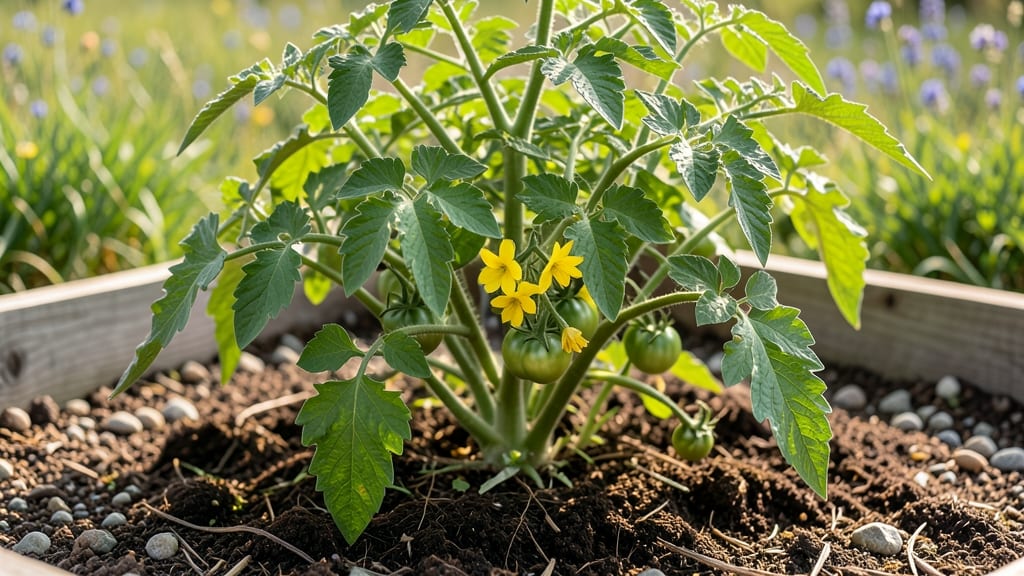
Tomato plants need at least 6 to 8 hours of direct sunlight daily for healthy growth, with longer exposure (8+ hours) boosting fruit production and sweetness. Cherry tomatoes especially love full sun, while heirloom varieties may adapt to partial shade but produce less.
Sunlight isn't just about quantity—it's about quality for tomatoes. 🌞 The photosynthesis process kicks into high gear with bright, direct light, which helps plants convert energy into sugars that sweeten the fruit. Without enough sunlight, you'll notice weak stems, sparse leaves, and small, bland tomatoes.
I've seen firsthand how 8+ hours of sun transforms a garden—plants grow bushier, set more flowers, and develop deeper flavors. Even partial shade can work for some varieties, but it often means fewer tomatoes and slower growth.
What's fascinating is how different tomato types respond. Cherry tomatoes and other hybrids often demand full sun to reach their potential, while heirlooms like Brandywine might tolerate 4-6 hours in cooler climates.
The key is observing your plants: if they stretch toward light or develop pale leaves, they're begging for more sun. Adjusting with grow lights or reflective surfaces can make a huge difference in containers or shaded spots.
💡 In This Article
- How Sunlight Affects Tomato Plant Growth and Fruit Development
- Adjusting Sunlight for Different Tomato Varieties and Growing Conditions
How sunlight affects tomato plant growth and fruit development
Sunlight drives the photosynthesis engine in tomato plants, where chlorophyll absorbs light—primarily in the 400-700nm wavelength range—to convert carbon dioxide and water into glucose and oxygen.
For tomatoes, this process is supercharged by blue (400-500nm) and red (600-700nm) light, which trigger different metabolic pathways: blue light promotes compact growth and leaf development, while red light boosts flowering and fruiting.
When plants get 6-8 hours of direct sunlight, they produce enough energy to support robust stem development and fruit set, but 8+ hours maximizes sugar accumulation in the fruit, making tomatoes sweeter and more flavorful.
The duration of sunlight directly impacts tomato plant metabolism. Studies show that less than 6 hours of sun leads to "etiolation"—where plants stretch toward light, growing weak, leggy stems with sparse leaves. This happens because the plant prioritizes reaching sunlight over developing strong structure.
In contrast, 8+ hours of full sun exposure increases chlorophyll production by up to 30%, resulting in darker green leaves and more efficient photosynthesis. The extra energy also supports higher yields, with plants producing 20-30% more fruit compared to those with limited sunlight. 🌱
Ultraviolet (UV) light plays a surprising role too. While tomatoes don't photosynthesize using UV rays, exposure to UV-B (280-315nm) enhances flavor by stimulating the production of phenolic compounds, which contribute to the tomato's natural sweetness and depth.
This is why tomatoes grown in high-altitude or tropical regions often taste more complex—they receive more natural UV exposure. Even in controlled environments, a 10-15% UV supplement can improve taste, though it's rarely necessary for home gardeners.
Fruit development is particularly sensitive to light conditions. Tomatoes need consistent sunlight to set flowers and develop fruit properly. In low-light situations, plants may produce flowers that fail to pollinate or develop "blind" trusses—flower clusters that never turn into tomatoes.
Even if fruit forms, insufficient light can lead to poor color development (pale or greenish tomatoes) and weaker cell walls, making them more prone to cracking or splitting.
The ideal scenario is 6+ hours of morning sun followed by 2-4 hours of afternoon light, as this balances energy production with temperature regulation.
Temperature interacts with sunlight in critical ways. While tomatoes thrive in 70-85°F temperatures, excessive heat (above 90°F) combined with full sun can cause sunburn—visible as white or yellow patches on leaves and fruit.
This stress triggers the plant to produce more protective compounds, which can actually make tomatoes taste more bitter. Conversely, cooler temperatures (60-65°F) with adequate sunlight slow growth but improve flavor by allowing sugars to concentrate.
This is why many gardeners swear by partial afternoon shade in hot climates, even if it means slightly reduced yields.
One often-overlooked factor is the light quality from different sources. Artificial grow lights (like LED or fluorescent bulbs) can supplement sunlight, but their effectiveness depends on the spectrum. Full-spectrum LEDs that mimic sunlight with red and blue wavelengths work best for tomatoes, while standard white bulbs provide minimal benefit.
For container growers or indoor setups, positioning plants within 6-12 inches of the light source ensures they receive enough intensity, though this requires 14-16 hours of artificial light daily to compensate for natural sunlight deficits.