
How To
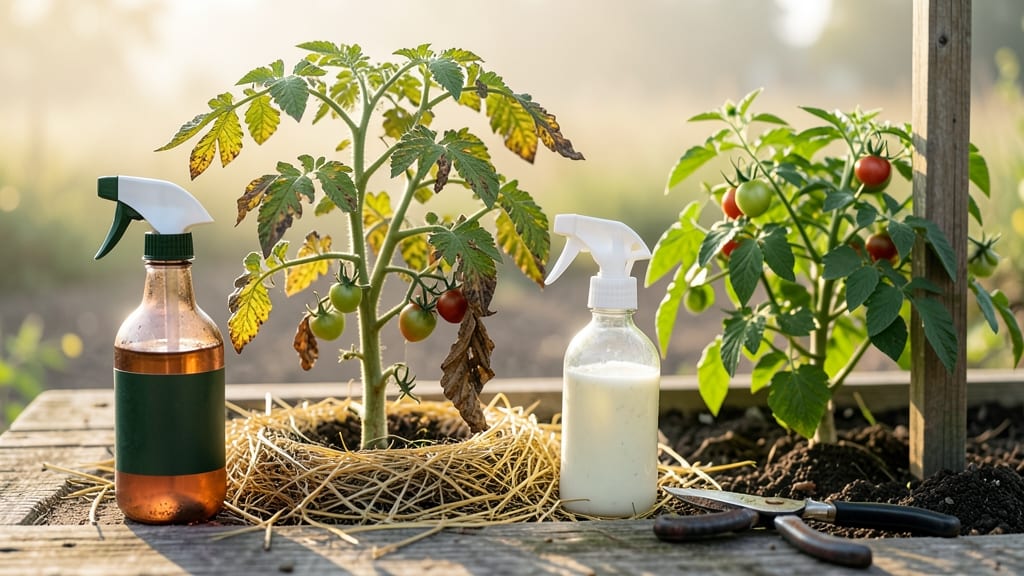
My tomato plants looked healthy one morning and covered in brown rot the next—until I discovered this home remedy for tomato blight that actually works. 🌱 The key is catching blight early and applying the right mix before it spreads to every leaf.
This remedy isn’t just cheap—it’s organic, safe for edible plants, and stops the fungus in its tracks when used correctly. I’ve saved entire plants with just a spray bottle, a few household ingredients, and 10 minutes of work. The secret? Timing and consistency.
By the end of the treatment, you’ll see new green growth pushing through the damaged leaves, and the rot will stop spreading. It’s not a cure-all, but for early-stage blight, this spray is my go-to first defense.
Works best in warm, humid conditions—exactly when blight thrives. Here’s the exact recipe and schedule that’s saved my harvests for years.
Root Causes of Tomato Blight
Tomato blight—whether early blight (Alternaria solani) or late blight (Phytophthora infestans)—isn’t just random bad luck. It thrives due to a mix of environmental, biological, and even gardening mistakes.
Understanding these triggers helps you prevent and treat it before it ruins your harvest. Here’s why your tomato plants are under attack.
Blight spores love damp conditions. Late blight, in particular, spreads explosively when humidity stays above 75% for prolonged periods. Here’s how it works:
- Fungal Feast: High humidity creates a thick, water-saturated air layer that lets spores land and germinate on leaves. Late blight spores can even swim in water droplets to infect new plants.
- Poor Airflow: Crowded tomato plants or dense foliage trap moisture. Without airflow, leaves stay wet longer—ideal for spore growth. Pro tip: Prune plants to improve circulation!
- Overnight Dew: Cool nights + warm days = heavy dew. If leaves stay wet until morning, blight spores double their infection rate.
Actionable Fix: Space plants 18–24 inches apart, avoid overhead watering, and harvest promptly to reduce leaf wetness.
Watering from above or relying on rain alone turns your garden into a blight breeding ground. Here’s why:
- Splashing Spores: Rain or sprinklers splash spores from soil or infected leaves onto healthy foliage. Late blight spores can travel up to 10 feet this way!
- Wet Soil = Happy Spores: Overwatering keeps soil saturated, encouraging Phytophthora (late blight) to thrive in the root zone. Early blight also spreads faster when soil stays damp.
- Nighttime Watering: Watering after sunset gives leaves 12+ hours to stay wet—prime time for spore germination.
Actionable Fix: Use drip irrigation or soaker hoses to keep foliage dry, and water early in the day so leaves dry by evening.
Blight doesn’t just appear—it hitches a ride on wind, tools, or even your shoes. Here’s how spores invade:
- Windborne Spores: Late blight spores can travel miles in wind, especially in humid climates. Early blight spores also spread via air currents, landing on leaves and stems.
- Contaminated Tools/Garden Waste: Pruners, trellises, or compost piles harbor spores. If you don’t sterilize tools between plants, you’re spreading the problem.
- Surviving Spores: Blight spores can overwinter in soil, plant debris, or even infected tubers (like potatoes). Next season? They’re ready to strike again.
Actionable Fix: Clean tools with 70% isopropyl alcohol between uses, remove all plant debris at season’s end, and avoid planting tomatoes in the same spot yearly.
Tomatoes thrive in warm, stable conditions—but sudden changes weaken their defenses. Blight exploits this:
- Cool Nights + Warm Days: Ideal for late blight. Spores germinate best at 60–70°F (15–21°C) with high humidity—common in early morning.
- Heat Stress: Temperatures above 90°F (32°C) can burn leaves, creating entry points for fungi. Weakened plants = easier infections.
- Nutrient Deficiencies: Lack of potassium or phosphorus stresses plants, making them 3x more susceptible to blight.
Actionable Fix: Use mulch to regulate soil temps, fertilize with potassium-rich compost, and avoid planting tomatoes too early in cool climates.
Neglecting basic garden care turns your plot into a blight magnet. Here’s how:
- Crowded Plants: Overcrowding blocks airflow and traps moisture, speeding up spore spread. Early blight can defoliate entire plants in 2 weeks if unchecked.
- Ignored Infected Leaves: Yellow or brown spots? Those are spore factories. Removing infected foliage stops the spread—but only if you dispose of it properly (not in compost!).
- Monoculture Gardening: Planting tomatoes in the same spot yearly builds up blight spores in the soil. Fun fact: Some soils become so contaminated that blight can survive for years.
Actionable Fix: Rotate crops (avoid Solanaceae family plants like peppers/eggplants in the same bed), prune aggressively, and sterilize soil with solarization or composting before replanting.
Quick Fixes for Blighted Tomatoes
Tomato blight doesn’t have to mean the end of your garden—with the right approach, you can save your plants, restore their health, and even prevent future outbreaks. Below are practical, science-backed solutions tailored to the most common causes of blight, from fungal infections to environmental stress.
Each fix is designed to be easy, affordable, and effective—no fancy tools required!
If your tomato leaves are spotted with brown, yellowing patches (early blight) or dark, greasy-looking lesions (late blight), fungi are the culprits. These spread fast in humid, damp conditions, so act quickly!
🔥 Step 1: Prune & Remove Infected Foliage
- Cut off any leaves with black or brown spots (at least 6 inches below the damage).
- Dispose of them immediately—don’t compost!—to prevent spores from reinfecting your garden.
- Sterilize pruners with rubbing alcohol between cuts to avoid spreading spores.
🍳 Step 2: Apply a Homemade Fungicide Spray
Mix 1 tablespoon baking soda + 1 teaspoon dish soap + 1 gallon water in a spray bottle. Spray thoroughly (top and bottom of leaves) every 7–10 days or after rain. Why it works: Baking soda raises the leaf’s pH, making it hostile to fungi, while soap helps the mixture stick.
🌡️ Step 3: Improve Air Circulation
- Space plants 18–24 inches apart (if starting fresh).
- Stake or cage tomatoes to keep foliage off the ground.
- Avoid overhead watering—use drip irrigation or water at the base in the early morning so leaves dry quickly.
✨ Prevention Tip:
- Rotate crops—don’t plant tomatoes (or potatoes/peppers) in the same spot next year.
- Solarize soil in fall by covering beds with clear plastic for 4–6 weeks to kill fungal spores.
If your tomatoes show wilting, yellowing leaves, or cracked stems but no spots, overwatering or root rot may be the issue.
💡 Step 1: Check the Soil
- Stick your finger 1–2 inches deep—if it’s soggy, reduce watering immediately.
- Amend heavy clay soil with compost or perlite to improve drainage.
👨🍳 Step 2: Adjust Watering Habits
- Water deeply but infrequently—1–1.5 inches per week (more in extreme heat).
- Mulch heavily (2–3 inches of straw or shredded leaves) to retain moisture and prevent soil splashing onto leaves.
🔪 Step 3: Trim Damaged Roots (If Needed)
- Gently loosen soil around the base and trim any mushy, black roots with sterilized scissors.
- Replant in well-draining soil if root rot is severe.
🎯 Prevention Tip:
- Test your soil’s pH (ideal: 6.0–6.8). Too acidic? Add lime; too alkaline? Use sulfur.
- Avoid planting in low spots where water pools.
Pests weaken plants, making them more susceptible to blight. If you see chewed leaves, sticky residue, or tiny bugs, tackle them first!
🍖 Step 1: Handpick & Remove Pests
- Hornworms? Squish them (they’re camouflaged—look for green caterpillars with white stripes).
- Aphids? Blast them off with a strong stream of water or neem oil spray.
🥘 Step 2: Use Natural Repellents
- Spray with neem oil (1 tbsp neem oil + 1 tsp dish soap + 1 quart water) weekly.
- Plant companion crops like basil, marigolds, or nasturtiums to deter pests.
⏰ Step 3: Encourage Beneficial Insects
- Ladybugs and lacewings eat aphids—buy them online or attract them with dill or fennel.
- Hang yellow sticky traps to catch flying pests.
💡 Prevention Tip:
- Rotate planting to disrupt pest life cycles.
- Remove garden debris in fall to eliminate hiding spots.
- Boost plant immunity with a seaweed or fish emulsion fertilizer (rich in silica and potassium).
- Avoid nitrogen-heavy fertilizers (like blood meal)—they promote soft, blight-prone growth.
- Harvest early—pick tomatoes before blight spreads to salvage your crop.
- Disinfect tools & containers between uses with bleach or alcohol to prevent cross-contamination.
Remember: The key to beating blight is early action + prevention. Once you spot the first signs, act fast, and your tomatoes will bounce back stronger than ever! 🍅💪
Frequently asked questions
Can I use vinegar as a standalone treatment for tomato blight?
While vinegar can help as part of a mix, never use it alone—it’s too harsh and can burn plant leaves. Instead, combine 1 tablespoon white vinegar + 1 teaspoon baking soda + 1 teaspoon dish soap + 1 gallon water. This diluted solution raises leaf pH while adding antifungal properties. Always test on a small leaf first!
How often should I apply the baking soda spray?
Apply the baking soda spray every 7–10 days or immediately after rain. Consistency is key—blight spores multiply fast in damp conditions. For severe cases, spray twice weekly until new growth appears. Always spray in the early morning so leaves dry quickly.
Will this remedy work on blight that’s already spread to the stems?
If blight has reached the stems, home remedies alone may not save the plant. At this stage, remove the entire plant (including roots) and dispose of it—don’t compost! For future prevention, practice crop rotation and sterilize soil. Early detection is critical—stop blight when you see the first leaf spots!
Can I use this spray on other plants like peppers or potatoes?
Yes! The same baking soda spray works on all Solanaceae family plants (peppers, eggplants, potatoes) since they’re susceptible to similar fungi. Just adjust the concentration for delicate plants—use half the baking soda amount. Avoid spraying flowering plants, as the solution may harm pollinators.
Why does my tomato plant keep getting blight even after treatment?
Repeated infections often mean spores are lingering in your soil or garden tools. Sterilize pruners with rubbing alcohol, remove all plant debris, and consider solarizing soil (covering beds with plastic for 4–6 weeks). Also check watering habits—overhead watering spreads spores, so switch to drip irrigation.