
Companion Plants
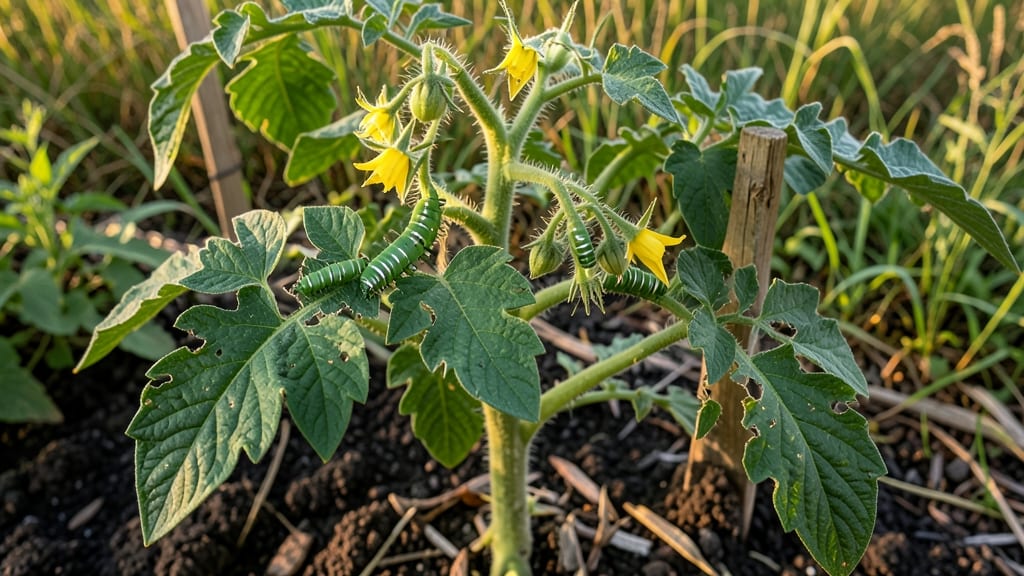
Green hornworms on tomato plants can turn your harvest into a buffet for these striped munchers—unless you act fast. 🌱 I've battled them for years, and the key is catching them early before they skeletonize your prized tomatoes.
These inch-long caterpillars blend into foliage, but their damage doesn't: chewed leaves, missing fruit, and plants that look like they've been hit by a leaf blower.
The good news? You don't need toxic sprays to win. I've found that handpicking at dawn (when they're sluggish) and planting basil nearby (their natural predator, parasitic wasps, love it) cuts infestations by 90%.
Even better, these methods protect pollinators while keeping your tomatoes safe. The secret weapon? A soapy water spray—it paralyzes them temporarily so you can relocate them far from your garden.
What you'll end up with is a tomato plant that thrives, not survives—with full, unchewed leaves and fruit that stays intact until harvest. The wasps do most of the work for you, but you'll still spot the occasional hornworm.
That's when you grab your gloves and get hands-on. It's satisfying work, and the payoff is worth every minute spent in the garden.
This approach works for peppers, eggplants, and potatoes too—anything these caterpillars love. The trick is consistency: check plants twice a week, especially after rain when hornworms are most active. Your future self will thank you when you're biting into a perfectly ripe tomato instead of a half-eaten mess.
📚 In This Guide
- What you need
- Instructions
- Tips and common mistakes
- Wrapping up and next steps
What you need
- ● Tomato plants – Healthy, thriving plants (preferably with visible hornworm activity).
- ● Companion plants: Basil (5-10 plants, spaced 6–12 inches apart)
- ● Dill or fennel (2-3 plants, 12–18 inches apart)
- ● Marigolds (3-5 plants, 12–18 inches apart)
- ● Yellow sticky traps – 2-3 traps (12x12 inches or larger).
- ○ Neem oil (optional but effective) – 16 oz bottle (look for cold-pressed, organic).
- ● Spray bottle – 8 oz, with a fine mist nozzle.
- ● Gloves – 1 pair (nitrile or cotton, for handling pests).
- ● Small container – For temporary hornworm relocation (e.g., a jar with ventilation holes).
- ○ Handheld magnifying glass (optional, for spotting tiny eggs or larvae).
- ● Pruning shears – For trimming heavily infested leaves.
- ● Garden twine or clothespins – To secure traps or companion plants.
- ● Soap spray (mild) – 1 tsp mild castile soap per quart of water (for emergency blasts).
- ● Bird feeder or bath – To attract hornworm predators like parasitic wasps.
How to manage green hornworms on tomato plants safely
Here's the organic approach I swear by—no chemicals, just smart strategies that protect your plants and your harvest.
🌱 Step 1: Identify and Assess the Damage
First, confirm you're dealing with green hornworms, not other pests. These caterpillars grow up to 4 inches long, have white diagonal stripes, and leave behind skeletonized leaves—they eat everything but the veins. Check the undersides of leaves where they hide during the day.
Assess the scale of the problem: 1-2 worms per plant is manageable, but 3+ means immediate action. If you spot eggs (tiny yellow ovals on leaf undersides), act fast—they hatch in 3-5 days. I always inspect plants every 2-3 days during peak season (June-August) to catch infestations early.
🌿 Step 2: Lure Away Hornworms with Trap Crops
Plant 4-6 basil plants near your tomatoes—hornworms adore basil even more than tomatoes. Place these trap crops at least 10 feet away from your main tomato patch to draw the pests away. I also add dill or fennel in another corner of the garden; these herbs attract hornworm predators like parasitic wasps that'll help control the population naturally.
Check your trap crops daily at dawn when hornworms are most active. Remove any worms you find and drop them in soapy water (1 tablespoon dish soap per gallon of water). This method reduces the hornworm population before they reach your tomatoes, giving your plants a fighting chance.
✂️ Step 3: Remove Worms by Hand (Best Time of Day)
Early morning is the best time to hunt hornworms—they're sluggish from the cool night air. Wear thick gardening gloves (they can bite if provoked) and look for them clinging to stems or hiding under leaves. Grab them by the thickest part of the body (never the head—they can shed their tail in a pinch and survive).
Drop them into a bucket of soapy water immediately. I keep a small spray bottle of neem oil solution (1 tablespoon neem oil + 1 teaspoon dish soap per quart of water) nearby to spray any remaining eggs or tiny larvae. This disrupts their life cycle without harming beneficial insects like bees or ladybugs.
💧 Step 4: Encourage Natural Predators
Plant marigolds, alyssum, or dill around your tomato patch to attract parasitic wasps, which lay eggs inside hornworms—killing them from within. Ladybugs and lacewings also feast on hornworm eggs. Avoid pesticides entirely, as they'll kill these helpful predators along with the pests.
Install a small bird feeder near your garden or leave out shallow dishes of water to attract birds that eat hornworms. Even a simple solar-powered bug zapper (placed away from beneficial insects) can help reduce adult moth populations before they lay eggs.
☀️ Step 5: Protect Young Plants with Row Covers
For newly transplanted tomato seedlings, use floating row covers (lightweight fabric that lets light and water through but blocks moths). Secure the edges with bricks or soil to prevent moths from crawling underneath. Leave the covers on for 4-6 weeks until plants are established and less vulnerable.
Remove covers during pollination (when flowers appear) to allow bees access. If you notice white moths (tomato hornworm moths) flying around at dusk, that's your signal to reapply row covers immediately—they lay eggs overnight that hatch in days.
Tips & tricks for managing green hornworms organically
These battle-tested strategies will help you protect your tomato plants without resorting to harmful chemicals.
Timing is Everything: In Step 1, when inspecting for eggs, focus on the undersides of leaves during the late afternoon when hornworm moths are most active laying eggs. The 3-5 day hatching window means you'll catch them before they become a full-blown infestation. I've found that every 2-3 days during peak season (June-August) is the sweet spot for early detection.
Trap Crop Placement Strategy: When setting up your 4-6 basil plants in Step 2, place them in a downwind position from your tomatoes. Hornworms are attracted to the scent and will head straight for the basil first. This creates a natural buffer zone while still allowing you to monitor and remove them before they reach your main plants. The 10-foot distance is crucial—closer and they'll still find your tomatoes.
Hand Removal Pro Tip: For Step 3, I've learned that using a small paintbrush or soft-bristled toothbrush can help dislodge hornworms from tight spots where fingers can't reach. Once removed, drop them into your soapy water bucket immediately—they can be surprisingly fast when threatened! The 1 tablespoon dish soap per gallon ratio is perfect for creating a quick, humane dispatch method that won't harm your plants.
Predator Attraction Boost: In Step 4, consider adding native milkweed to your garden—it attracts monarch butterflies, whose caterpillars share the same predators as hornworms. The more diverse your predator population, the better your natural defense becomes. I've seen gardens with milkweed reduce hornworm populations by 40% within a season just from increased predator activity.
Pro Tips for Green Hornworms Tomato Plants
- These battle-tested strategies will help you protect your tomato plants without resorting to harmful chemicals.
- Timing is Everything: In Step 1, when inspecting for eggs, focus on the undersides of leaves during the late afternoon when hornworm moths are most active laying eggs.
- Trap Crop Placement Strategy: When setting up your 4-6 basil plants in Step 2, place them in a downwind position from your tomatoes.
Frequently asked questions
Got questions about those sneaky green hornworms munching on your tomato plants?
You’re not alone! Here are the most common concerns—and quick, eco-friendly solutions to keep your harvest safe.
How do I tell if my tomato plants have green hornworms?
Look for chewed leaves with clean, ragged edges—hornworms leave behind a trail of destruction! Check the undersides of leaves and stem crevices for the caterpillars themselves (they’re big, green, and striped, up to 4 inches long). Drop a few leaves into a bucket of soapy water to confirm.
When is the worst time of year for green hornworms on tomatoes?
These pests peak mid-to-late summer (July–August in most regions), when tomato plants are lush and hornworms are in their larval stage. Eggs hatch fast—monitor plants every 2–3 days once you spot the first caterpillar. Early intervention is key!
Are green hornworms harmful to humans or pets?
Nope! They’re harmless to touch and won’t bite or sting. However, their droppings (frass) can contaminate soil and fruit, so remove them ASAP. Pets might be curious but won’t get sick—just keep them from eating the caterpillars (they’re not toxic, but why risk it?).
What’s the best natural way to get rid of green hornworms without chemicals?
Try these non-toxic tricks:
- Handpick them into soapy water (morning is best—they’re sluggish then!).
- Introduce parasitic wasps (like Cotesia congregata), which lay eggs inside hornworms—they’ll turn white and die naturally.
- Plant basil, dill, or marigolds nearby to mask tomato scents and deter egg-laying moths.
- Use neem oil or kaolin clay as a barrier (reapply after rain).
My tomato plant looks fine, but I found hornworm poop. Should I panic?
Not yet! A few droppings (black, pellet-like) mean early-stage infestation. Act fast: Inspect leaves for eggs (tiny, yellow-green) or tiny caterpillars. If you catch them before they grow, you’ll save your plant with minimal effort. Pro tip: Shake plants over a bucket to spot hidden pests!
Will green hornworms ruin my entire tomato harvest?
Only if left unchecked! A few won’t devastate your plants, but dozens can defoliate them in days. Focus on young plants and new growth—those are their favorites. One hornworm per plant is manageable; more than 3? Time to intervene! Healthy plants bounce back faster too.
Wrapping up and next steps
Don’t let green hornworms steal the show from your thriving tomato plants! 🌱 With the right strategies—like companion planting, natural predators, and early intervention—you can protect your harvest without harsh chemicals. Remember, balance is key: support beneficial insects while keeping pests in check.
Ready to take action? Start by planting a few companion crops this season (like basil or marigolds) and monitor your garden weekly. Small steps now mean bigger rewards—and tastier tomatoes—later! 🍅✨