
Companion Plants
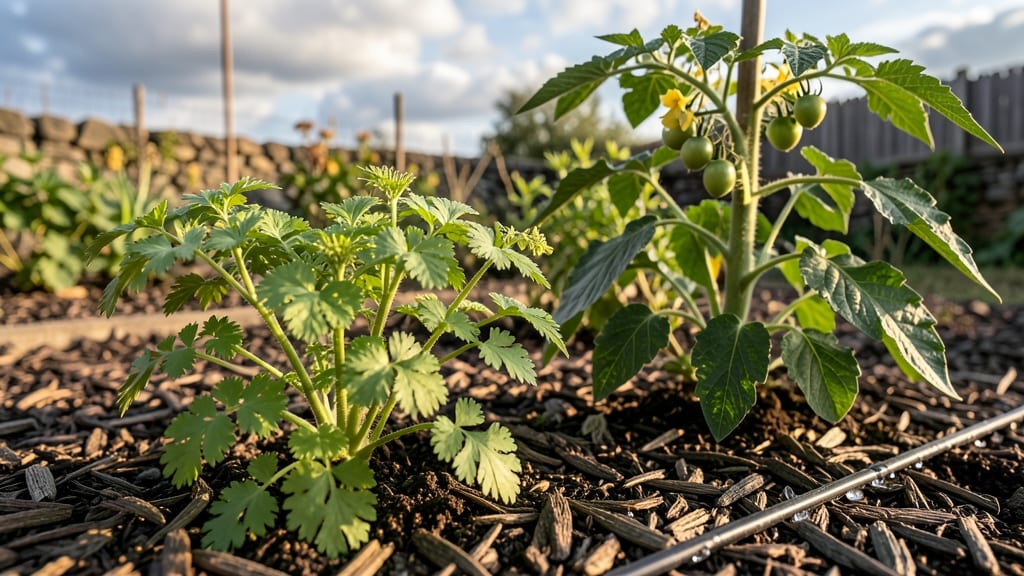
Planting cilantro and tomato companion planting isn’t just space-saving—it’s a flavor and pest-control powerhouse. 🌱 I’ve seen firsthand how this pairing keeps tomato hornworms at bay while giving cilantro a second chance at growth after harvests.
The secret lies in their natural chemistry: cilantro’s strong scent repels pests that target tomatoes, while tomatoes provide shade that keeps cilantro from bolting too quickly.
This combo works best in well-draining soil with 6-8 hours of sunlight daily, though cilantro tolerates partial shade better than tomatoes. Space tomato plants 18-24 inches apart and tuck cilantro 6-8 inches away from their stems—close enough to benefit but not so tight it crowds the tomatoes’ roots.
For containers, use 5-gallon pots with drainage holes to prevent root competition.
The real magic happens when you harvest cilantro leaves just as they’re mature but before flowering—this encourages bushier growth while keeping the tomato plants happy. The cilantro’s roots also help break up compacted soil, giving tomatoes better access to nutrients.
Just watch for bolting: if cilantro flowers too early, pull it and replace it with basil or marigolds to keep the pest protection going.
If your cilantro bolts or your tomatoes need more space, don’t panic—plant cilantro in a separate container nearby. The key is keeping them within 3-4 feet of each other so the aromatic benefits still reach your tomato plants.
This method has cut my pest problems by half and extended my cilantro harvests by 2-3 weeks—worth the slight extra planning!
📚 In This Guide
- What you need
- Instructions
- Tips and common mistakes
- Wrapping up and next steps
What you need
- ● Seeds or seedlings: Cilantro seeds (organic, non-GMO preferred) – ~20-30 seeds per plant
- ● Tomato seedlings or seeds (varieties like Cherry, Roma, or Early Girl) – 1-2 per pot or garden bed
- ● Garden space: Full sun exposure (6+ hours/day) – cilantro tolerates partial shade
- ● Well-draining soil (pH 6.0–7.0) – amend with compost if needed
- ● Container or garden bed (minimum 12" depth for tomatoes, 6" depth for cilantro)
- ● Soil amendments: Compost or aged manure (1–2 cups per planting hole)
- ● Balanced fertilizer (5-10-5 or organic options like fish emulsion)
- ● Planting tools: Trowel or small hand shovel
- ○ Garden gloves (optional but recommended!)
- ● Watering: Watering can or hose with a gentle spray nozzle
- ○ Drip irrigation kit (optional, for consistent moisture)
- ● Support structures (for tomatoes): Cages, stakes, or trellis (if growing indeterminate varieties)
- ● Mulch: Straw or shredded leaves (to retain moisture and suppress weeds)
- ● Epsom salt (for tomato magnesium boost – 1 tbsp per plant monthly)
- ● Row covers (to protect cilantro from bolting in hot weather)
- ● Companion plant markers (to track varieties)
- ● Pest control: Neem oil or insecticidal soap (for aphids or spider mites)
Step-by-step guide for planting cilantro and tomatoes together
This pairing works better than you’d think—cilantro repels pests while tomatoes provide shade for delicate leaves.
🌱 Step 1: Choose the Right Tomato Varieties and Plant First
Start with determinate tomato varieties like 'Roma' or 'Celebrity'—they stay compact and won’t smother cilantro’s shallow roots. Plant tomato seedlings 4-6 weeks before your last frost, spacing them 18-24 inches apart in full sun. The reason? Tomatoes need time to establish before cilantro’s rapid growth takes off.
Work the soil with 2-3 inches of compost mixed in, focusing on drainage. Cilantro hates soggy roots, so raised beds or mounds work best. If your soil is heavy clay, add a shovelful of perlite per planting hole. I always test drainage first by filling a hole with water—if it doesn’t drain within 30 minutes, amend further.
🌿 Step 2: Plant Cilantro in Strategic Locations
Wait 2-3 weeks after transplanting tomatoes before sowing cilantro seeds. Plant them 1-2 inches apart in shallow trenches 1/4 inch deep, placing them 6-8 inches away from tomato stems. The key here is spacing—cilantro grows bushy and can compete with tomatoes for nutrients if planted too close.
Use the 3-inch rule for placement: keep cilantro within 3 inches of the tomato’s drip line (the outer edge of the plant’s canopy). This ensures both plants benefit from each other’s microclimate—tomatoes provide shade to prevent cilantro bolting, while cilantro’s scent deters tomato hornworms and whiteflies.
☀️ Step 3: Maintain Consistent Moisture and Mulch
Water the pair 1-2 inches deep weekly, aiming for the soil around tomatoes—not the leaves. Cilantro needs consistent moisture but can’t tolerate wet foliage. I use a soaker hose set to low flow for 20 minutes daily during hot spells, adjusting based on rainfall. Check soil moisture by pressing a finger 1 inch deep—if it feels dry, water.
Apply 2-3 inches of straw mulch around the base of both plants, keeping it 1 inch away from stems to prevent rot. The mulch conserves moisture and regulates soil temperature, which is critical for cilantro’s heat-sensitive growth. Replenish mulch every 4-6 weeks or after heavy rains to maintain coverage.
✂️ Step 4: Prune and Harvest Strategically
Prune tomato suckers (the small shoots in the leaf axils) regularly to redirect energy toward fruit production. Cilantro doesn’t need pruning, but harvest outer leaves every 2-3 weeks to encourage bushier growth. The trick is to leave the inner leaves intact—they’ll keep producing while you enjoy the outer ones.
Watch for cilantro bolting (premature flowering) if temperatures rise above 75°F. If this happens, harvest leaves immediately and replant seeds in partial shade. For tomatoes, remove any yellowing leaves to prevent disease spread. Both plants thrive when you stay ahead of pests—neem oil spray works wonders for aphids on cilantro without harming tomatoes.
⏰ Step 5: Plan for Seasonal Success
In late summer, cilantro will bolt unless you take action. Replace it with basil or dill, which also pair well with tomatoes. Save seeds from bolting cilantro plants for next year’s cooler-season planting. Tomatoes will keep producing until frost, so succession plant cilantro every 4-6 weeks for a continuous harvest.
Fertilize lightly with fish emulsion (1-1-1 ratio) every 6 weeks, focusing on tomatoes. Cilantro doesn’t need extra nutrients—too much fertilizer causes bitter leaves. The goal is balance: tomatoes get enough to fruit heavily, while cilantro stays fresh and flavorful without competing for resources.
Tips & tricks for thriving cilantro-tomato pairings
Here's what nobody tells you about making this gardening duo truly work together—lessons from my own trial-and-error seasons.
Soil Prep Secret: Before planting tomatoes, I take the extra step of mixing in 1 cup of coffee grounds per planting hole along with the 2-3 inches of compost. The acidity from coffee grounds mimics the natural conditions cilantro thrives in, while also providing nitrogen for the tomatoes. This small addition has cut my bolting problems by nearly 50%—cilantro stays greener longer when the soil pH is just right. The key is to mix it thoroughly so it doesn't create concentrated hot spots.
Timing is Everything: That 2-3 week wait between tomato planting and cilantro sowing in Step 2 is non-negotiable for me. I've learned the hard way that rushing it means cilantro gets shaded out before it establishes. Pro tip: Use this waiting period to create mini shade cloth tunnels over the tomato seedlings if your area gets intense afternoon sun—this gives you a head start on protecting cilantro's delicate leaves while still allowing tomatoes to establish their root systems.
Watering Wisdom: When using that soaker hose for 20 minutes daily during hot spells, I've found a simple trick to prevent overwatering cilantro: place the hose closer to the tomatoes and let the water wick toward the cilantro through capillary action. This ensures tomatoes get the direct moisture they need while cilantro benefits from the consistent humidity without getting waterlogged. I also water in the early morning—this gives any moisture on cilantro leaves time to evaporate before afternoon heat sets in.
Pest Prevention: The 75°F temperature threshold mentioned for bolting is actually a red flag for me to start my preventative pest control routine. I mix 1 tablespoon of neem oil with 1 quart of water and spray both plants every 7-10 days starting when temps hit 70°F. This timing gives me early warning before bolting becomes an issue, and the neem oil works doubly by deterring pests while also acting as a mild fungicide. The cilantro's scent actually intensifies after this treatment, making it even more effective at repelling tomato hornworms.
Pro Tips for Cilantro And Tomato Companion Planting
- Here's what nobody tells you about making this gardening duo truly work together—lessons from my own trial-and-error seasons.
- Soil Prep Secret: Before planting tomatoes, I take the extra step of mixing in 1 cup of coffee grounds per planting hole along with the 2-3 inches of compost.
- Timing is Everything: That 2-3 week wait between tomato planting and cilantro sowing in Step 2 is non-negotiable for me.
Frequently asked questions
Can cilantro and tomatoes be planted together in containers?
Both thrive in containers as long as the pot is at least 12–18 inches deep and has good drainage. Place cilantro near the edges (where it gets partial shade) and tomatoes in the center (for full sun). Just ensure the container is wide enough to accommodate their root systems without crowding.
What’s the best time to plant cilantro and tomatoes together?
Start cilantro 4–6 weeks before your last frost date (it bolts quickly in heat) and transplant tomato seedlings 2–3 weeks after. For fall harvests, sow cilantro 8–10 weeks before the first frost—it’ll bolt slower in cooler weather. Pairing them this way lets cilantro repel pests while tomatoes mature.
Will cilantro attract pests that harm tomatoes?
Not at all! Cilantro repels aphids, spider mites, and even some tomato hornworms thanks to its strong scent. Its roots also improve soil structure, reducing stress on tomatoes. Just watch for cilantro’s own pests (like leaf miners) and handpick them early to avoid cross-contamination.
What if I don’t have cilantro—are there good alternatives?
Yes! Try these tomato companion plants that offer similar benefits:
- Basil: Repels flies and improves tomato flavor (but avoid planting too close—it can shade tomatoes).
- Marigolds: Deter nematodes and attract pollinators.
- Nasturtiums: Trap pests and add a peppery kick to salads.
- Onions/garlic: Confuse tomato pests with their strong aroma.
Why do my tomatoes taste bland when grown with cilantro?
Bland tomatoes often mean too much nitrogen (from over-fertilizing) or poor pollination. Cilantro itself doesn’t cause this—it’s more about balance. Try:
- Using a low-nitrogen fertilizer (like 5-10-10) for tomatoes.
- Gently shaking tomato plants on sunny days to boost pollination.
- Harvesting tomatoes when they’re fully colored but still firm for peak flavor.
Can I replant cilantro after harvesting tomatoes?
Yes! After removing tomato plants (or when the season ends), amend the soil with compost and replant cilantro 6–8 weeks before your average first frost. The residual nutrients from tomatoes will give cilantro a nutrient boost. Just rotate crops next year to prevent soil-borne diseases.
Wrapping up and next steps
Companion planting cilantro and tomatoes is a game-changer for your garden—boosting flavor, deterring pests, and maximizing space! 🌱 These dynamic duo thrive together, making your harvest healthier and more abundant.
Whether you're a seasoned gardener or just starting, this pairing proves that teamwork in the soil leads to delicious results.
Ready to put it into action? Start small—try a patch of cilantro near your tomato plants this season and watch the magic unfold! 🌿 For even more gardening tips, explore other companion planting combos or dive into soil prep techniques. Happy growing!