
Pruning
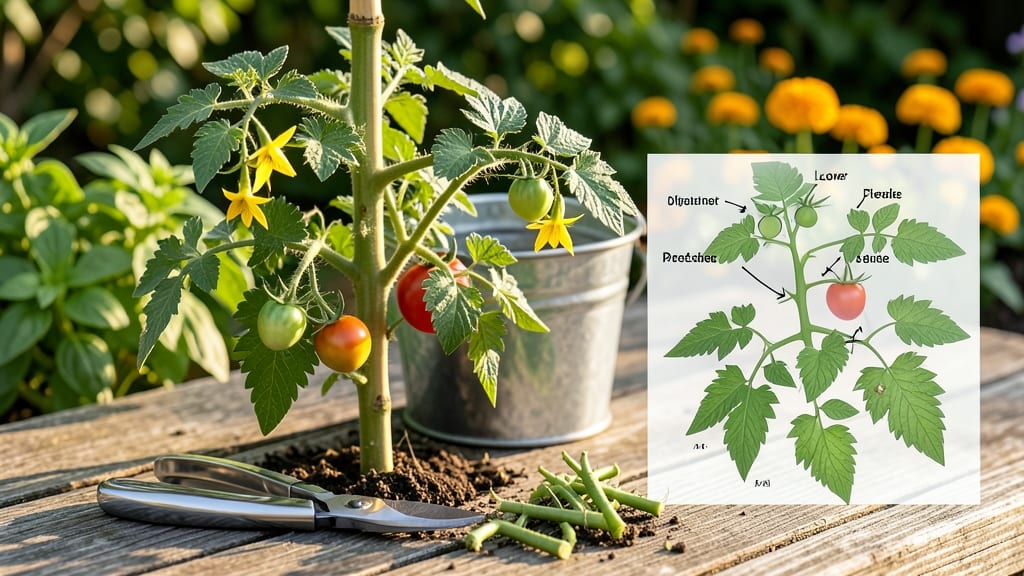
Mastering the proper way to prune tomato plants turns a wild tangle into a high-yielding powerhouse. ✂️ I learned the hard way—skipping pruning gave me fewer tomatoes but way more pests and disease. The key is timing, technique, and knowing your plant type (indeterminate vs. determinate).
You’ll need sharp pruners, gloves, and a sunny afternoon. Start by removing the lowest leaves up to 12 inches from the ground—that’s where soil-borne diseases lurk. Then focus on suckers (those little shoots between stems) to redirect energy to fruit production, not leaf growth.
By mid-season, your plants will look like bushy, sunlit sculptures instead of scraggly vines. The payoff? Bigger, redder tomatoes and plants that stay upright under their own weight. No more broken stems or hidden rot. Works for both backyard gardens and container growers—just adjust spacing.
Here’s how to do it without killing your plants (or your enthusiasm).
📚 In This Guide
- What you need
- Instructions
- Tips and common mistakes
- Wrapping up and next steps
What you need
- ● Pruning shears or sharp bypass pruners – Choose a pair with sterilized, sharp blades (1 pair). Avoid dull tools that can tear stems and invite disease.
- ○ Gloves (optional but recommended) – Wear gardening gloves to protect your hands from thorns and dirt (1 pair). Nitril-coated gloves work best for grip.
- ● Disinfectant (rubbing alcohol or bleach solution) – Keep a small bottle of 70% isopropyl alcohol or a 1:9 bleach-water mix to sterilize tools between cuts (small spray bottle or dropper).
- ● Garden twine or plant ties – Use soft, biodegradable twine (1-2 rolls) to secure stems to stakes or cages after pruning.
- ● Sturdy stakes or tomato cages – If your plants aren’t already supported, add 5-6 ft wooden stakes or heavy-duty cages (1-2 per plant) to prevent toppling.
- ● Hand pruners with long handles – For reaching tall indeterminate varieties without straining (1 pair).
- ● Garden kneeler or stool – To reduce back strain while working (1 unit).
- ● Compost bin or mulch – Collect pruned suckers to compost or use straw mulch to retain moisture and suppress weeds.
- ○ Plant growth regulator (optional) – For aggressive varieties, a low-dose seaweed extract (1 oz per gallon) can help manage growth post-pruning.
Step-by-step instructions for pruning tomato plants
Here's how I prune tomatoes to maximize fruit production while keeping plants healthy and strong.
✂️ Step 1: Identify the Main Stem and Suckers
Start by locating the main stem—the thick, central vine that grows directly from the base. This is your plant's backbone, and you'll never remove it. Look for the small shoots growing between the main stem and branches; these are suckers. They appear in the leaf axils (where leaves meet the stem) and grow at a 45-degree angle.
Use your fingers to gently feel for these tiny shoots—they're often hidden behind leaves. I like to prune in the morning when the plant is turgid (full of water), making suckers easier to spot. If you wait until afternoon, the plant may wilt slightly, making identification trickier.
✂️ Step 2: Remove Suckers at the Right Time
Pinch off suckers when they're about 1-2 inches long—this prevents them from draining energy from your main plant. Use clean pruners or your thumb and forefinger to snap them off cleanly at the base. Never leave stubs, as they can rot or attract pests. For determinate tomatoes (bush varieties), you can skip this step entirely—they produce fruit along the entire plant.
For indeterminate varieties (the vining types), I remove suckers weekly during the growing season. The key is consistency—if you let even one sucker grow large, it'll compete with your main fruit production. Watch for new suckers to appear after heavy rains or when the plant flushes with new growth.
☀️ Step 3: Prune for Airflow and Light Penetration
After removing suckers, focus on the plant's interior. Trim any branches growing inward or crossing over others to improve airflow and sunlight exposure. This reduces humidity inside the plant, which prevents fungal diseases like blight. Aim to leave an open, vase-like structure with branches spreading outward.
I never remove more than 30% of the plant's foliage at once—this keeps the plant from going into shock. If you're growing in a greenhouse or high-humidity area, open the structure even more to let air circulate. You'll notice healthier leaves and fewer yellowing spots when airflow is good.
✂️ Step 4: Support and Prune Lower Leaves
Once your plant reaches 3-4 feet tall, start removing the lower leaves—those below the first flower cluster. This improves airflow at the base and prevents soil-borne diseases from splashing onto fruit. Use clean pruners to make a clean cut just above a leaf node or branch. Never tear leaves, as this damages the plant.
For staked plants, I leave about 18 inches of bare stem below the first fruit cluster. This helps prevent cracking and makes harvesting easier. If you're growing in cages, you can be slightly more aggressive with pruning since the structure supports more foliage.
🌱 Step 5: Maintain and Monitor Throughout the Season
Continue pruning weekly as the plant grows, always focusing on removing suckers and improving airflow. In late summer, when fruit production slows, you can be more aggressive with pruning to encourage new growth. Stop pruning entirely when flowers appear on new growth—this signals the plant is preparing for dormancy.
Watch for signs of stress like yellowing leaves or wilting—these can indicate over-pruning. If you see new suckers appearing near the base in late season, leave them be. These late-season suckers can produce a second flush of fruit if your growing season is long enough.
Tips & tricks for precision tomato plant pruning
These straightforward techniques will help you prune like a seasoned gardener while keeping your tomato plants thriving.
Timing Tip: Morning is the absolute best time to prune—when plants are fully hydrated and suckers are easiest to spot. I've learned this the hard way after struggling to identify hidden shoots in the afternoon when plants wilt slightly. If you must prune later, do it after watering to restore turgidity. The 45-degree angle of suckers makes them easier to find when leaves are plump with water.
Tool Technique: Clean pruners are non-negotiable for healthy plants. I sterilize my tools with rubbing alcohol between plants to prevent disease spread. For small suckers, my thumb and forefinger work perfectly—just snap cleanly at the base. Never leave stubs, as they can rot or invite pests. Pro tip: Keep a small spray bottle of water nearby to clean tools quickly between cuts.
Airflow Strategy: The open vase-like structure we create in Step 3 isn't just about looks—it's disease prevention. When you remove inward-growing branches, you're creating a 30% reduction in foliage that actually strengthens the plant. In humid climates, I go even further by removing an extra 10% of leaves to ensure maximum airflow. You'll notice fewer yellowing leaves and healthier fruit when circulation is good.
Seasonal Adjustment: Late summer is when pruning gets tricky. When fruit production slows and you see new suckers near the base, leave them be—these can produce a second harvest if your season is long enough. I stop all pruning when I see flowers on new growth, as this signals the plant is preparing for dormancy. This simple observation has saved me from over-pruning in cool autumn weather.
Pro Tips for Proper Way To Prune Tomato Plants
- These straightforward techniques will help you prune like a seasoned gardener while keeping your tomato plants thriving.
- Timing Tip: Morning is the absolute best time to prune—when plants are fully hydrated and suckers are easiest to spot.
- Tool Technique: Clean pruners are non-negotiable for healthy plants.
Frequently asked questions
Got questions about pruning tomato plants? You’re not alone! Here are some of the most common concerns—plus clear, actionable answers to keep your plants thriving.
1. When is the best time to start pruning tomato plants?
Prune determinate (bush) tomatoes sparingly—only to remove diseased leaves or suckers early on. For indeterminate (vining) types, begin pruning once plants hit 12–18 inches tall and have 4–5 main stems. Wait until after flowering if you’re worried about yield—pruning too early can stress the plant.
2. How often should I prune my tomato plants?
Check your plants weekly for suckers (side shoots) and diseased leaves. Remove them as needed—especially during peak growing months (spring/summer). Over-pruning weakens the plant, so focus on quality over frequency. A quick 10-minute trim every 7–10 days keeps things manageable.
3. Will pruning reduce my tomato harvest?
Not if done correctly! Pruning indeterminate tomatoes boosts yields by directing energy to fewer, larger fruit and improving airflow (which prevents disease). Determinate varieties need minimal pruning—over-trimming can cut production. Think of it like giving your plant a haircut for better focus!
4. What should I do if I prune too much?
Don’t panic! If you’ve over-pruned, stop immediately and let the plant recover. Water deeply and fertilize lightly (with a balanced 10-10-10 or compost tea) to reduce stress. Avoid pruning for 2–3 weeks to let the plant rebound. Yellowing leaves or stunted growth? You may have gone too far—next time, prune less.
5. Can I use scissors or should I pinch suckers by hand?
Both work, but pinching by hand is gentler and reduces risk of spreading disease (sterilize scissors with rubbing alcohol if you use them). For larger stems, clean pruners are fine—just cut at a 45-degree angle (not too close to the main stem). Avoid tearing tissue, which invites pests and rot.
Wrapping up and next steps
Mastering the proper way to prune tomato plants is your ticket to a bountiful harvest—packed with juicy, flavorful tomatoes! 🍅 By following these steps, you’ll improve airflow, reduce disease risk, and channel energy into fruit production. Remember, consistency and patience are key, so don’t rush the process.
Now that you’re armed with the know-how, roll up your sleeves and give your tomato plants the care they deserve.
Grab your pruners, head to the garden, and watch your plants thrive! 🌱 For even more tips, check out our guide on identifying common tomato diseases to keep your garden healthy all season long.