
Companion Plants
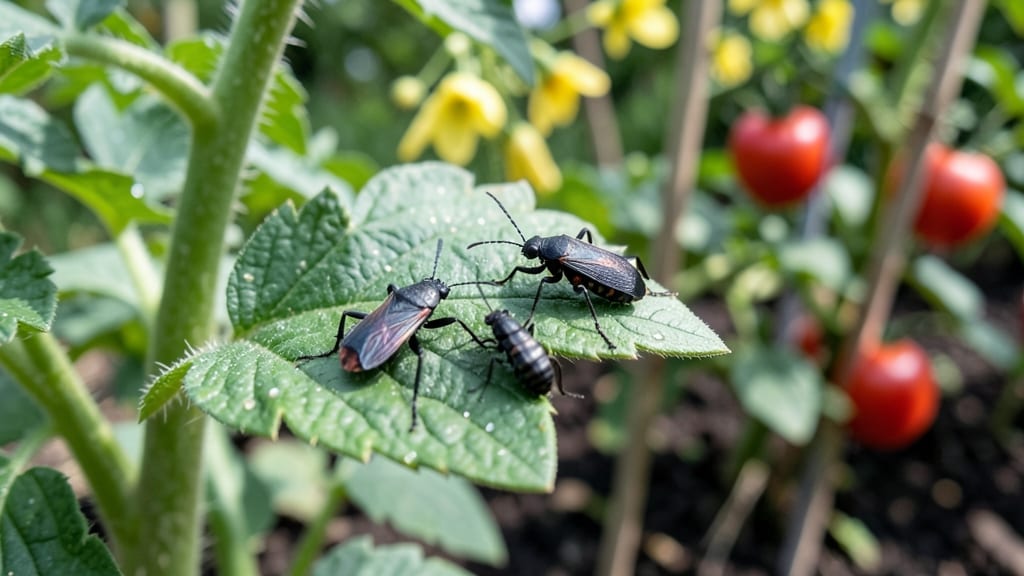
Black insects on tomato plants mean your harvest is under attack. 🌱 I've battled everything from tiny aphids to massive hornworms, and I'm sharing how to spot them, what damage they cause, and the fastest ways to stop them before your plants suffer.
The worst offenders—aphids, stink bugs, flea beetles, and hornworms—each leave distinct clues. Aphids cluster on undersides, stink bugs flatten leaves, flea beetles create Swiss-cheese holes, and hornworms strip plants bare overnight. Ignoring them leads to stunted growth, fruit damage, and even plant death.
With the right tools and timing, you can eliminate these pests in 24-48 hours without harsh chemicals. I'll show you how to use neem oil, insecticidal soap, and even homemade sprays that work faster than store-bought solutions.
Once you know what to look for, prevention becomes second nature—just like I did after my first tomato plant was devoured. Let's get those plants back to thriving!
Root Causes of Tiny Black Invaders
When you spot black insects swarming your tomato plants, it’s rarely just bad luck—it’s usually a mix of environmental cues, plant stress, and pest behavior. Understanding why these critters show up helps you disrupt their life cycle before they devour your harvest.
Let’s break down the science behind their arrival, from soil conditions to seasonal triggers.
Tomatoes thrive when they have space to breathe, but when plants are too close together, they compete for nutrients, water, and sunlight. This stress weakens their natural defenses, making them prime targets for pests like aphids (which can attract ants and other black insects) or thrips.
Additionally, poor air circulation creates a humid microclimate—ideal for fungal gnats (sciarid flies) and their larvae, which appear as tiny black specks in the soil.
💡 Pro Tip: Prune tomato plants regularly to improve airflow, and thin seedlings early to avoid overcrowding. If your garden beds are compacted, aerate the soil to reduce fungal gnat populations.
Black insects often arrive when your tomato plants are already thriving—because that means they’re also thriving for pests. Here’s what attracts them:
- Warm, moist soil: Fungal gnat larvae love damp, organic-rich soil. If your tomatoes are in containers or raised beds with poor drainage, excess moisture signals these pests to lay eggs.
- Fresh organic matter: Compost, mulch, or even overripe fruit on the ground can draw fruit flies and sowbugs (which appear black and may hide under leaves).
- Weakened plants: Nutrient deficiencies (like a lack of nitrogen or potassium) make tomatoes more vulnerable. Pests like stink bugs (which can leave black droppings) target stressed plants first.
🌡️ Key Insight: Most black insects are drawn to decay or stress. Healthy plants with balanced care are far less appealing.
In a balanced ecosystem, beneficial insects like ladybugs, lacewings, and ground beetles keep black pest populations in check.
But when their habitats are disrupted—by pesticide overuse, lack of diverse plants, or monoculture gardening—pests like aphids or spider mites (which may bring black ants as “bodyguards”) can explode in numbers.
🔥 Warning: Broad-spectrum insecticides don’t just kill pests—they wipe out their natural enemies too. This often leads to a worse infestation later.
While some plants repel pests (like basil deterring whiteflies), others can attract them. For example:
- Nightshade family plants (e.g., potatoes, eggplants): Some black insects, like hornworms (which can leave black frass), are drawn to the same family as tomatoes.
- Weedy hosts: Dandelions, clover, or wild mustard nearby can harbor aphids or flea beetles, which then migrate to your tomatoes.
- Lack of diversity: Gardens with only tomatoes (or other solanaceae) offer pests a buffet with no interruptions.
✨ Solution: Interplant tomatoes with marigolds (which repel nematodes), basil (deters flies), or carrots (attracts predatory wasps). Avoid planting tomatoes next to fennel or dill, which can attract spider mites.
Black insects often surge during specific weather patterns:
| Season/Weather | Likely Culprits | Why They Arrive |
|---|---|---|
| Early spring (cool, damp) | Fungal gnats, slugs | Moist soil and slow plant growth create ideal breeding conditions. |
| Late summer (hot, dry) | Stink bugs, aphids | Heat stress weakens plants, and pests seek out juicy, water-rich tomatoes. |
| After rain | Sowbugs, cutworms | Soft soil and high humidity make it easier for pests to move and reproduce. |
| Fall (cooling temps) | Hornworms, whiteflies | Pests seek shelter in dense tomato foliage before winter. |
🎯 Action Step: Monitor your garden weekly during these high-risk periods. Use row covers in early spring to block fungal gnats, and handpick stink bugs in late summer before they lay eggs.
Quick Fixes for Tomato Plant Pests
Black insects on your tomato plants can feel like a nightmare, but don’t worry—there are effective, easy-to-follow solutions to reclaim your garden. Below, we’ve matched common pests to their fixes, so you can act fast and keep your tomatoes thriving. Prevention tips are included to stop future invasions!
How to Fix It: 🔥 Handpick them early—Hornworms are large and slow-moving. Check leaves at dawn or dusk when they’re most active. Drop them into soapy water to eliminate them humanely.
🍳 Use Bacillus thuringiensis (Bt)—This organic bacteria kills hornworms by disrupting their digestive system. Spray it on leaves when young caterpillars appear.
👨🍳 Introduce natural predators—Ladybugs, parasitic wasps, and braconid wasps love hornworms. Plant dill, fennel, or marigolds nearby to attract them.
🌱 Prevention tip: 💡 Plant basil or thyme near tomatoes—hornworms avoid these strong scents!
How to Fix It: 🔥 Blast them off with water—A strong spray from the hose (especially in the morning) dislodges aphids and mites. Repeat every 2-3 days.
🍳 Neem oil spray—Mix 1 tsp neem oil + 1 tsp mild soap + 1 quart water. Spray undersides of leaves where pests hide.
👨🍳 Encourage beneficial insects—Lacewings and hoverfly larvae feast on aphids. Plant alyssum or dandelions to attract them.
🌱 Prevention tip: 🌡️ Keep plants healthy—Stressed tomatoes attract more pests. Water consistently and prune for airflow.
How to Fix It: 🔥 Knock them into soapy water—Stink bugs hide under leaves. Gently shake plants over a bucket of soapy water to drown them.
🍳 Diatomaceous earth (DE)—Sprinkle food-grade DE around the base of plants. It dehydrates insects but is safe for plants.
👨🍳 Yellow sticky traps—Place traps near plants to catch stink bugs before they lay eggs.
🌱 Prevention tip: ✨ Mulch with wood chips—This deters stink bugs from nesting near your tomatoes.
How to Fix It: 🔥 Cover young plants—Use floating row covers until plants are established (6+ weeks old).
🍳 Kaolin clay spray—This mineral forms a protective barrier. Mix 1 cup kaolin clay + 1 gallon water + 1 tsp soap. Spray leaves thoroughly.
👨🍳 Plant trap crops—Grow radishes or nasturtiums nearby to lure flea beetles away from tomatoes.
🌱 Prevention tip: 🎯 Start seeds indoors—Flea beetles target seedlings. Transplant only when plants are sturdy.
How to Fix It: 🔥 Check for damage at night—Cutworms feed after dark. Use a flashlight to spot them and squish them flat.
🍳 Collars around stems—Wrap cardboard or aluminum foil around young tomato stems to block cutworms from climbing up.
👨🍳 Beauveria bassiana fungus—This natural fungus kills cutworms. Sprinkle it around the base of plants.
🌱 Prevention tip: 🔥 Avoid overwatering at night—Moist soil attracts cutworms. Water in the morning instead.
Final Pro Tip: 🌿 Rotate crops yearly—This disrupts pest life cycles and keeps your garden balanced! Now go save those tomatoes! 🍅💪
Frequently asked questions
Why do I see tiny black specks in the soil around my tomato plants?
Those are likely fungal gnat larvae—they thrive in damp, organic-rich soil. These pests love overwatered containers or beds with poor drainage. Reduce watering and let the top inch of soil dry out between waterings to discourage them.
Are black insects on my tomatoes harmful to eat?
Most black insects (like aphids or stink bugs) aren't harmful to humans, but they can contaminate fruit. Always wash tomatoes thoroughly before eating. The real concern is what they leave behind—aphids excrete honeydew that attracts mold, while stink bugs can cause fruit to rot.
How do I tell if black insects are damaging my tomato plants?
Look for these signs: Yellowing leaves (aphids/stink bugs), tiny holes (flea beetles), or chewed foliage (hornworms). Check undersides of leaves for clusters of insects. Early detection means faster treatment—act before you see wilting or fruit deformities.
Can I use coffee grounds to get rid of black insects?
Coffee grounds can help deter some pests like slugs and ants, but they're not effective against most black insects. Instead, use them as mulch to improve soil health. For pests, focus on neem oil or insecticidal soap—these target the insects directly while being plant-safe.
Will my tomato plants recover if I remove the black insects?
Yes, but recovery depends on how severe the damage was. Remove pests immediately and support plants with proper watering and nutrients. If only a few leaves are affected, new growth will fill in. For heavy infestations, prune damaged foliage and monitor closely for 2 weeks.