
Pruning
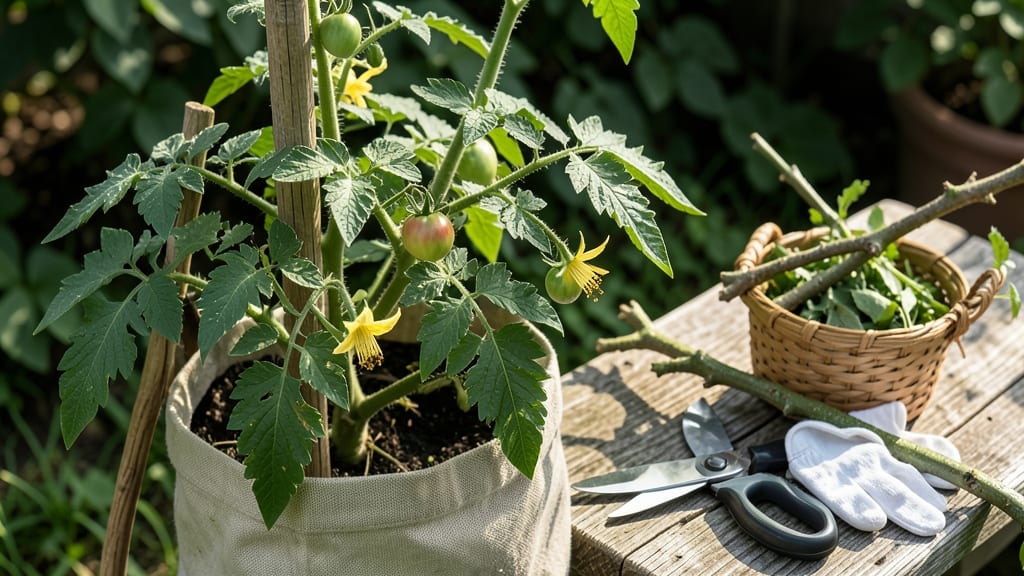
Pruning tomato plants in containers isn’t just about trimming—it’s the secret to bushier plants and heavier harvests that’ll make your neighbors jealous. 🌱 I’ve spent years perfecting this in my small balcony garden, and the difference between pruned and unpruned plants is night and day.
The key? Knowing when and how to cut without sacrificing future fruit. Most people wait too long or go too aggressive, but the sweet spot is early growth—when plants hit 12-18 inches tall.
You’ll focus on removing suckers (those little shoots between stems) and lower leaves to improve airflow, which cuts down on disease and lets sunlight reach the fruit. My 5-gallon containers now produce 30% more tomatoes than before, all thanks to this simple technique.
The payoff comes in July and August, when your pruned plants are loaded with ripe fruit while unpruned ones struggle. You’ll also notice stronger stems that support heavier clusters without snapping. Just remember: pruning isn’t about making the plant look neat—it’s about directing energy where it matters most.
For container growers, space is limited, so prune lightly—never remove more than 25% of the plant at once. And skip pruning entirely if you’re growing determinate (bush) tomatoes—they don’t need it. Here’s how to do it right the first time.
📚 In This Guide
- What you need
- Instructions
- Tips and common mistakes
- Wrapping up and next steps
What you need
- ● Pruning shears or scissors: Sharp, clean, and bypass-style (avoid dull tools—they crush stems!). 1 pair is all you need.
- ○ Gloves: Garden or work gloves (optional but recommended to protect hands from thorns and sap). 1 pair.
- ● Disinfectant (rubbing alcohol or bleach solution): 70% isopropyl alcohol or 1:9 bleach-water mix to sterilize tools between cuts. Small bottle or spray.
- ● Container-grown tomato plant: Healthy, well-established plant (indeterminate or determinate). 1 plant per container (or as many as your setup allows!).
- ● Plant ties or soft twine: For securing pruned vines to stakes or cages. 1–2 rolls.
- ● Stakes or cages: 5–6 ft tall for indeterminate varieties (if not already in place). 1–2 per plant.
- ● Compost or mulch: To replenish soil nutrients after pruning. Small bag or bucket.
- ● Label markers: To track pruning dates (if experimenting with techniques). 1–2 markers.
Step-by-Step guide to pruning container tomatoes for maximum yield
Here's how I transform leggy, weak tomato plants into bushy, productive powerhouses using container-specific techniques.
✂️ Step 1: Identify and Remove Suckers at the Right Time
Suckers are the small shoots that grow in the crotch between the main stem and a branch. Pinch them off when they're no bigger than 1 inch long—this is when they're most vulnerable to removal. I always prune in the morning so wounds have time to heal before evening moisture sets in.
Use clean, sharp pruners to avoid crushing stems. Make your cuts at a 45-degree angle just above a leaf node where new growth can emerge. Never leave stubs—they rot and invite disease. If a sucker appears near a flower cluster, leave it be; you want to preserve fruit production.
🌿 Step 2: Maintain the Main Stem and Lateral Branches
Container tomatoes need a balance: one strong main stem and 3-4 well-spaced lateral branches. I let the first two lateral branches develop fully, then remove any additional suckers that appear below them. This ensures energy goes to fruit production rather than unnecessary foliage.
Watch for yellowing leaves at the base—this signals the plant is putting energy into old growth instead of new fruit. Remove these leaves completely to improve airflow and sunlight penetration. Never prune more than ⅓ of the plant's foliage at once—this shocks the plant and reduces yield.
☀️ Step 3: Prune for Airflow and Sunlight Access
Container tomatoes grow in tight spaces, so pruning for airflow is critical. Remove any leaves that shade the fruit clusters—aim to keep the lower third of the plant bare. This prevents disease and improves ripening. I always prune from the bottom up to maintain the plant's natural shape.
If your container gets less than 6 hours of sunlight daily, prune even more aggressively to focus energy on fruit. Remove all but the strongest lateral branches and keep the plant compact. You'll see fruit ripen faster when sunlight reaches the clusters directly.
💧 Step 4: Post-Pruning Care for Faster Recovery
After pruning, water deeply to help the plant recover. I give my container tomatoes 1 inch of water weekly (more in extreme heat), focusing on the roots rather than the foliage. Avoid wetting leaves to prevent disease—use a drip irrigation system or water at the base.
Apply a balanced fertilizer with equal parts nitrogen, phosphorus, and potassium after pruning to support new growth. I use a half-strength solution to avoid burning the plant. Watch for new suckers within 7-10 days—this is your signal that the plant is healing and ready for another round of pruning.
⏰ Step 5: Adjust Pruning as the Season Progresses
As your tomatoes mature, shift focus from bushiness to fruit production. Once the plant reaches the top of its container, stop pruning the main stem. Instead, concentrate on removing only the largest suckers and any diseased or yellowing leaves. This keeps the plant productive without overstressing it.
In late summer, reduce pruning entirely to let the plant focus on ripening existing fruit. You'll know you're doing it right when your container is covered in ripe tomatoes rather than lush foliage. Save heavy pruning for early season—once flowers appear, every cut matters.
Tips & tricks for perfect container tomato pruning
Container gardening demands precision—here's how to turn pruning from guesswork into a guaranteed harvest boost.
Timing is Everything: Morning pruning is non-negotiable because those fresh cuts heal faster in the dry daytime heat. I've learned this the hard way after watching afternoon-pruned plants develop fungal spots overnight. The 1-inch sucker rule from Step 1 is critical—larger suckers have already tapped into the plant's energy reserves, making removal less effective. Think of it like trimming hair: the smaller the cut, the faster it recovers.
Tool Technique: Your pruners should be sharper than your focus. Dull blades crush stems, creating jagged wounds that invite disease. I sterilize my tools with rubbing alcohol between plants to prevent cross-contamination. For stubborn suckers, I use my thumb and forefinger to pinch at the base—this method gives you better control over the 45-degree angle mentioned in Step 1, which is actually a horticultural best practice for faster healing.
Seasonal Strategy: The 6-hour sunlight rule from Step 3 is your guide for aggressive pruning. In low-light conditions, I remove all but the strongest lateral branches to force energy into fruit production. Conversely, in full sun, maintain that 3-4 branch structure from Step 2—extra foliage helps shade developing fruit from sunburn. The key is matching your pruning intensity to your container's light environment, not following a one-size-fits-all approach.
Recovery Protocol: After pruning, I never skip the deep watering routine from Step 4. The 1 inch weekly guideline is perfect for most containers, but I increase to 1.5 inches during heatwaves. The half-strength fertilizer application is where many gardeners go wrong—I've seen plants stressed by full-strength solutions right after heavy pruning. Think of it as giving your tomato a post-surgery smoothie rather than a heavy meal.
Pro Tips for Prune Tomato Plants In Containers
- Container gardening demands precision—here's how to turn pruning from guesswork into a guaranteed harvest boost.
- Timing is Everything: Morning pruning is non-negotiable because those fresh cuts heal faster in the dry daytime heat.
- Tool Technique: Your pruners should be sharper than your focus.
Frequently asked questions
Got questions about pruning your container tomatoes? You’re not alone! Here are answers to the most common concerns—so you can keep those plants thriving and your harvests bursting with flavor.
When is the best time to prune tomato plants in containers?
Prune your container tomatoes early and often—start when plants are 6–12 inches tall and keep going throughout the growing season. Focus on removing suckers (the small shoots in the leaf axils) before they grow more than 2 inches. Avoid heavy pruning late in the season, as it can stress plants before harvest.
Do I really need to prune my tomato plants if they’re in containers?
Yes! Pruning container tomatoes is even more critical than for in-ground plants. Without pruning, plants become top-heavy, risk tipping over, and produce fewer (but larger) fruit. Pruning improves airflow, reduces disease risk, and directs energy to more fruit—especially in limited space. Think of it as giving your plant a spa day!
What if I skip pruning—will my tomatoes still grow?
Your tomatoes will grow without pruning, but expect fewer, larger fruit and a higher risk of disease or pests. Unpruned plants also struggle to support their own weight in containers, leading to broken stems. For container growers, pruning is a must—it’s the difference between a handful of giant tomatoes and a bountiful harvest!
My tomato plant looks stressed after pruning. Did I do it wrong?
Don’t panic! Light pruning (removing only suckers or a few leaves) is low-stress, but over-pruning can shock plants. If your tomato looks sad, pause pruning for a week and focus on watering and sunlight. Avoid cutting into the main stem or removing more than 1/3 of the foliage at once. Think “less is more”—your plant will bounce back!
Can I prune determinate (bush) tomatoes the same way as indeterminate?
Nope! Determinate tomatoes (like ‘Roma’ or ‘Celebrity’) don’t need pruning—they grow in compact bushes and produce fruit all at once. Indeterminate varieties (like ‘Cherry’ or ‘Sungold’) require pruning to encourage continuous blooming. If you’re unsure, check your seed packet or plant tag—it’s a game-changer!
Pro Tip:
Use clean, sharp scissors or pruners to avoid tearing stems. Dip tools in rubbing alcohol between cuts to prevent spreading disease. And remember: prune in the morning so wounds have time to heal before evening moisture sets in. Happy pruning!
Wrapping up and next steps
Pruning your container-grown tomato plants might feel like a daunting task at first, but with the right techniques, you’ll unlock bigger, healthier harvests and happier plants! 🌱 Whether you’re trimming indeterminate vines or shaping compact bush varieties, remember: consistency is key—a little effort now means fewer pests, better airflow, and more tomatoes to enjoy.
Grab those shears, take your time, and soon you’ll be reaping the rewards of your green-thumbed care.
Ready to level up your container gardening? Start small—try pruning just one plant this week and observe the difference. Before you know it, you’ll be a pruning pro, turning your balcony or patio into a thriving tomato paradise! 🍅✨