
Container Gardens
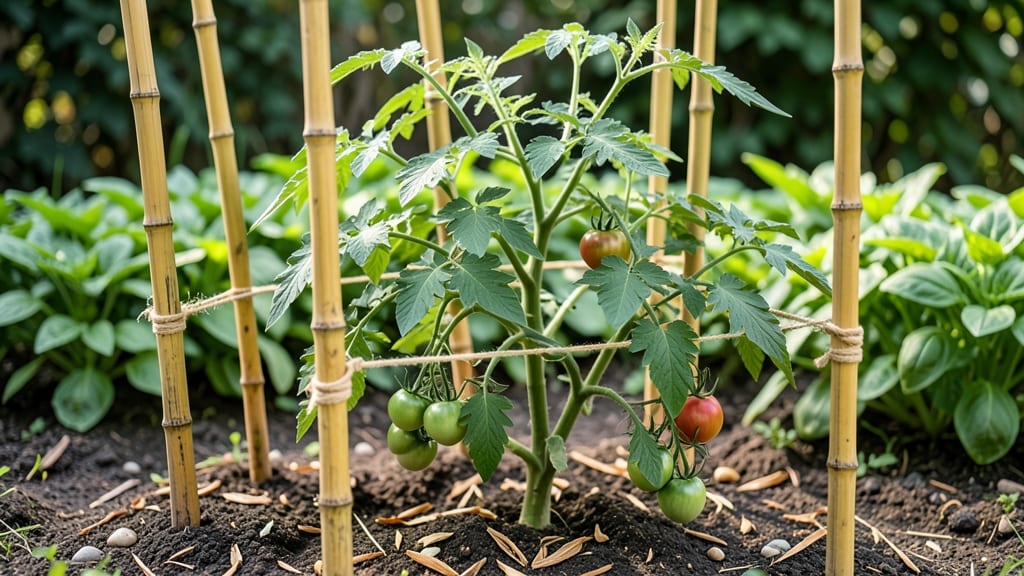
Bamboo tomato stakes turn floppy vines into sturdy towers holding 20-pound tomatoes without bending. 🌱 I’ve used them for five seasons now, and they’ve outlasted plastic stakes while costing a fraction—no more watching your harvest drag the plant to the ground mid-summer.
The secret lies in their natural flexibility: they bend but don’t snap under weight, and their hollow cores make them lightweight to drive into soil. Unlike flimsy wire cages, bamboo lets you adjust spacing as vines grow, giving you control over plant shape and airflow.
Plus, they’re 100% biodegradable, so you can leave them in the ground to decompose when you’re done. You’ll start with just three stakes per plant—one on each side and one center stake for heavy varieties like Beefsteak.
Tie vines loosely with soft twine (never wire) every 6-8 inches to avoid damaging stems. The first harvests will feel like a victory lap after those early-season tomatoes threaten to rip the plant apart.
Works for both in-ground and container tomatoes, and the same stakes double as trellises for cucumbers or peas. Here’s how to set them up without a single wobbly vine.
📚 In This Guide
- What you need
- Instructions
- Tips and common mistakes
- Wrapping up and next steps
What you need
- ● Bamboo stakes: 4–6 ft long (quantity depends on your garden size; 1 stake per plant is ideal). Choose thick, straight poles (at least 1-inch diameter) for maximum stability.
- ● Garden twine or soft plant ties: 1–2 rolls (biodegradable options are eco-friendly!). Aim for 10–15 ft per stake.
- ● Tomato plants: 2–6 plants (depending on your container or garden bed size). Opt for determinate varieties (bush-type) or indeterminate (vining) for best results.
- ● Potting soil or garden soil: High-quality, well-draining mix (enough to fill your containers or beds). Avoid heavy clay soil—amend with compost if needed.
- ● Container or garden bed: At least 5-gallon capacity per plant (larger is better for indeterminate varieties). Ensure drainage holes are present!
- ○ Optional but helpful: Garden gloves (to protect your hands while handling stakes and soil).
- ● Pruning shears (for trimming excess twine or stakes).
- ● Stake driver or mallet (to gently hammer stakes into the ground without damaging them).
- ● Watering can or hose (for post-planting hydration).
- ● Mulch (to retain moisture and suppress weeds—straw or shredded leaves work well!).
- ● 🔨 Pre-cut stakes: If using long bamboo poles, trim them to your desired height before planting to save time later.
- ● 🌡️ Soak bamboo stakes: Give them a quick soak in water for 10–15 minutes to prevent splitting when driven into the ground.
- ● ✨ Test stability: Before planting, gently push a stake into the soil to check if it wobbles—adjust depth or angle as needed.
Step-by-Step guide to installing bamboo tomato stakes
Here's how I set up sturdy bamboo stakes that support even the heaviest tomato vines without bending.
🪴 Step 1: Choose and Prepare Your Stakes
Select 4-6 foot long bamboo stakes—thicker than ½ inch in diameter holds up best. Split them lengthwise if needed to create two thinner stakes from one thick piece; this gives you more flexibility in positioning. Soak the stakes in water for 1-2 hours before planting to prevent them from wicking moisture from the soil once installed.
I like to sharpen the bottom 1 inch of each stake with a pocket knife for easier insertion into the soil. This isn't mandatory, but it saves time and effort when you're ready to plant. If your stakes are still green and flexible, bend them slightly to test their strength—you want them to bend but not snap under moderate pressure.
☀️ Step 2: Position Stakes at Planting Time
Install stakes when you transplant your tomato seedlings, placing them 2-3 inches away from the main stem and 6-8 inches deep in the soil. Angle them slightly toward the plant's expected growth direction to guide the vine upward naturally. For indeterminate varieties that grow continuously, drive the stake deeper—up to 12 inches—to ensure stability as the plant matures.
Real talk: Don't drive stakes in too close to the stem. You'll damage roots and create a moisture trap that invites disease. Instead, push them in at a 45-degree angle first, then straighten them up once they're at the right depth. This prevents soil from compacting around the stake and keeps it firm.
🌿 Step 3: Secure the Vine as It Grows
Start tying the main stem to the stake when it reaches 12-18 inches tall, using soft plant ties or strips of old fabric. I avoid wire or zip ties—they cut into stems as the vine thickens. Tie the vine loosely at first, then tighten slightly as it grows. The goal is to support the plant, not strangle it.
Watch for the first suckers (side shoots) that form in the leaf axils. Remove these early if you want a single main stem, or train them to grow upward as secondary stems if your variety benefits from branching. Never tie suckers directly to the stake—they'll break under the weight of fruit.
✂️ Step 4: Maintain and Reinforce Over Time
Check stakes weekly for stability, especially after heavy rain or wind. If a stake leans or wobbles, push it deeper into the soil or add a second stake on the opposite side of the plant. For especially top-heavy varieties, I tie three stakes together in a tripod formation around the plant for maximum support.
As the plant grows, adjust ties every 2-3 weeks to prevent them from digging into the stem. You'll know it's time when you see slight grooves in the vine from the ties. Always tie above a leaf node to encourage new growth below the tie point—this keeps the plant strong and productive.
💧 Step 5: Harvest with Support in Mind
When fruits begin to form, check the stake system regularly. Heavy clusters of tomatoes can bend even sturdy bamboo, so I add extra ties or a second stake if I notice leaning. Harvest fruits before they fully ripen if they're pulling the vine downward—this prevents stem breakage and extends your harvest season.
At season's end, remove stakes carefully to avoid disturbing next year's soil. If you're reusing them, clean them with a bleach solution (1 part bleach to 10 parts water) to kill any fungal spores that may have hitchhiked on the bamboo. Store them in a dry place until next planting season.
Tips & tricks for perfect tomato stake support systems
These practical pointers will help you avoid common pitfalls and get the most out of your bamboo tomato stakes.
Stake Selection: For indeterminate varieties like 'Sungold' or 'Brandywine', I always choose stakes that are at least ½ inch thick and 6 feet long. The extra length gives you room to adjust as the plant grows taller than expected. If you're working with limited space, split a thick stake lengthwise to create two thinner supports—this gives you more flexibility in positioning without sacrificing strength.
Soaking Strategy: That 1-2 hour soaking in Step 1 isn't just about preventing moisture wicking—it's also about making the bamboo more pliable. Soak them in warm water if possible, which helps the fibers soften faster. This makes them easier to sharpen and insert into the soil without splitting. Pro tip: If you're prepping stakes ahead of planting, store them in a bucket of water with a few drops of dish soap to prevent mold growth.
Positioning Precision: The 2-3 inch distance from the main stem in Step 2 is crucial for root health. Too close and you risk damaging the plant's vascular system, while too far means the stake won't provide adequate support. I like to make a small trench with my finger before inserting the stake—this helps maintain the proper spacing while preventing soil compaction around the stake.
Tie Technique: When you reach Step 3 and start tying the vine, remember that plant ties should be adjusted like guitar strings—tight enough to support but loose enough to allow growth. I use old T-shirts cut into strips because they're soft, breathable, and won't girdle the stem as it thickens. The key is to tie above a leaf node (where new growth emerges) so the plant continues growing upward rather than getting stuck at the tie point.
Pro Tips for Bamboo Tomato Stakes
- These practical pointers will help you avoid common pitfalls and get the most out of your bamboo tomato stakes.
- Stake Selection: For indeterminate varieties like 'Sungold' or 'Brandywine', I always choose stakes that are at least ½ inch thick and 6 feet long.
- Soaking Strategy: That 1-2 hour soaking in Step 1 isn't just about preventing moisture wicking—it's also about making the bamboo more pliable.
Frequently asked questions
Got questions about bamboo tomato stakes?
You’re not alone! Whether you’re a first-time gardener or a seasoned pro, these common queries will help you get the most out of your tomato plants—without the fuss. Let’s dive in!
How tall should bamboo tomato stakes be?
Choose stakes that are 6 to 8 feet tall for indeterminate tomato varieties (the ones that keep growing). For determinate (bush) tomatoes, 4 to 5 feet is plenty. Pro tip: Stakes should extend 1–2 feet above the plant’s expected height to secure vines as they grow. If your stakes are too short, vines may flop or snap under the weight of fruit!
When is the best time to install bamboo stakes?
Install stakes at planting time or within the first 1–2 weeks after transplanting seedlings. This gives roots a head start while stakes prevent early wind damage. Wait too long? No worries—just gently push stakes into the soil (about 6 inches deep) and tie vines as you go. Just avoid disturbing established roots later in the season!
Can I reuse bamboo stakes from last year?
Yes! Bamboo is biodegradable and reusable for 2–3 seasons if stored properly. Clean them with a 10% bleach solution (1 part bleach to 9 parts water) to kill pests or diseases, then dry them in the sun. Warning: If stakes are splintered or weakened, replace them—weak support can lead to broken vines or lost harvests.
What’s the best way to tie tomato vines to bamboo stakes?
Use soft plant ties, old T-shirts, or strips of fabric (avoid wire or tight plastic, which can damage stems). Loop the tie around the stake and vine, then gently twist or clip to secure. Key rule: Leave 1–2 inches of slack as the vine grows—retighten every 1–2 weeks to prevent constriction. For extra stability, weave vines through the stake’s slats instead of tying!
Are bamboo stakes better than metal or wooden stakes?
Bamboo stakes win for lightweight, rust-resistant, and affordable support—perfect for containers or windy spots. Metal stakes are durable but heavy (hard to handle in pots), while wooden stakes may rot or splinter over time. Bonus: Bamboo’s natural flexibility absorbs shock during storms, protecting your plants better than rigid alternatives!
Why are my tomato vines slipping or breaking near the stake?
This usually means ties are too loose or stakes aren’t deep enough. Re-tie vines every 1–2 weeks and check for loose soil around the stake base—watering can loosen it. If vines are heavy with fruit, add a second stake or trellis for extra support. Prevention tip: Bury stakes 6+ inches deep and stake early to avoid mid-season struggles!
Wrapping up and next steps
Investing in bamboo tomato stakes is a game-changer for container gardeners—offering eco-friendly durability, easy setup, and a boost to your harvest’s success. Whether you’re a beginner or a seasoned gardener, these stakes provide the perfect balance of strength and sustainability, ensuring your tomato plants thrive without the hassle. 🌱
Ready to elevate your garden? Grab your stakes, prep your containers, and watch your tomatoes reach new heights—literally! Start planting today and enjoy a bountiful, supported harvest this season. 🍅✨