
Vegetables
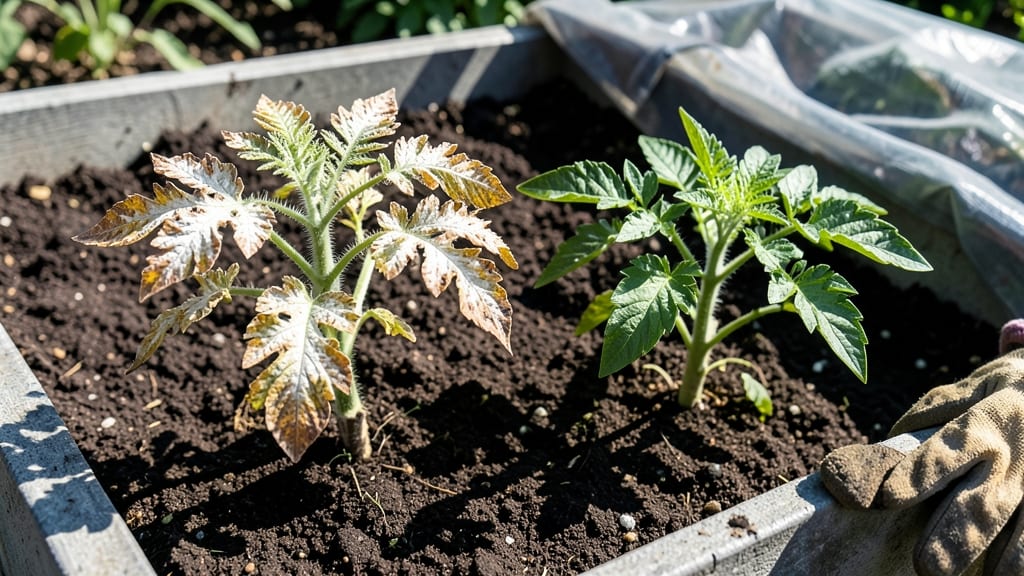
Sunburn tomato seedlings happen faster than you think—one bright afternoon turns crisp leaves to crispy paper. 🌱 I’ve nursed back dozens of scorched seedlings by acting fast, and the key is knowing exactly what to do in those first critical hours.
The damage might look permanent, but with the right moves, your plants can bounce back stronger than ever.
First, identify the damage: pale, papery leaves or white/yellow patches mean sunburn, not just heat stress. Move plants to partial shade immediately—even a sheer curtain or dappled shade from nearby plants helps.
Prune the worst-affected leaves (sterilize your scissors first!) to prevent rot, and water deeply at the base—not overhead—to avoid shocking the roots further.
Within 24-48 hours, you’ll see new growth pushing through if you’ve caught it early. Keep them shaded for 3-5 days, then gradually reintroduce morning sun. The real secret? Acclimate seedlings slowly before transplanting—harden them off over 7-10 days to avoid repeat burns.
Long-term, space your seedlings 12-18 inches apart and use reflective mulch (white gravel or straw) to deflect excess heat. If you’re in a hot climate, consider shade cloth for the first few weeks—it’s the difference between wilted plants and a thriving tomato patch by summer.
📚 In This Guide
- What you need
- Instructions
- Tips and common mistakes
- Wrapping up and next steps
What you need
- ● Sunburned tomato seedlings – Any variety (cherry, beefsteak, heirloom, etc.) showing signs of sun stress (yellowing, wilting, or crispy leaves).
- ● Well-draining potting mix – 5–10 gallons, enriched with compost or aged manure (avoid fresh manure—it burns!).
- ● Containers or trays – Shallow, wide pots (6–12 inches deep) or seedling trays with drainage holes. Pro tip: Use recycled containers with holes poked in the bottom!
- ● Misting bottle or spray nozzle – For gentle hydration (avoid soaking!).
- ● Shade cloth (30–50% coverage) – 1–2 square yards, to protect seedlings from direct sun for 3–7 days.
- ● Balanced liquid fertilizer – 1–2 tbsp of a 10-10-10 or 5-5-5 formula per gallon of water (diluted to half-strength).
- ● Pruning shears or scissors – Sterilized, for trimming severely damaged leaves.
- ● Hydrogen peroxide (3%) or neem oil – 1 tbsp per gallon of water, to prevent fungal infections from stress.
- ● Aspirin or ibuprofen – 1 crushed tablet per gallon of water (reduces stress hormones in plants!).
- ● Copper fungicide – For extra protection against blight if seedlings are weak.
- ● Grow lights or LED bulbs – If moving seedlings indoors temporarily for recovery.
- ● Mulch (straw or shredded leaves) – To retain moisture and protect roots.
- ● pH test kit – To ensure soil pH is between 6.0–6.8 (tomatoes thrive in slightly acidic soil!).
Quick revival tricks for sunburned tomato seedlings
Here’s how to nurse scorched seedlings back to health in just a few hours—no fancy tools needed.
💧 Step 1: Move to Shade Immediately
Tomato seedlings show sunburn as pale, crispy patches or yellowing leaves—this happens when exposed to direct midday sun without gradual hardening. The instant you spot damage, relocate them to a spot with dappled shade (like under a sheer curtain or 50% shade cloth). If you’re outside, move them to the north side of a building or under a tree canopy.
Don’t wait until evening—sunburned plants can’t recover overnight. You’ll see improvement within 24 hours if the leaves are only scorched, not completely dead. Watch for wilting as a sign they’re still stressed; this means they need more shade or water.
✂️ Step 2: Prune Damaged Foliage
Use clean, sharp scissors to trim away any leaves with crispy, brown edges—these won’t recover and will only drain energy from healthy growth. Cut just above the next healthy leaf node, where new growth can emerge. For severe cases, remove up to 30% of the foliage, but never take more than that in one session.
Here’s the thing—don’t panic if the plant looks skeletal after pruning. Tomato seedlings are resilient, and removing damaged leaves actually helps the plant focus its energy on new, healthy growth. You’ll notice fresh green shoots emerging from the stem within 3-5 days if the root system is still intact.
💧 Step 3: Hydrate Deeply and Evenly
Sunburned seedlings often suffer from dehydration, so water them deeply at the base using lukewarm water (cold water shocks stressed plants). Use a watering can with a narrow spout to avoid wetting the leaves, which can worsen damage. Aim for 1 inch of water per week, delivered in the early morning so the foliage dries quickly.
Check soil moisture by sticking your finger 1 inch deep—if it feels dry, water again. Overwatering now can lead to root rot, so let the top inch dry out between waterings. You’ll know hydration is working when the remaining leaves perk up and regain their firmness within 12-24 hours.
☀️ Step 4: Gradually Reintroduce Sunlight
After 3-4 days of shade recovery, begin acclimating seedlings to sunlight again by moving them to a spot with morning sun only for the first day. Gradually increase exposure by 1-2 hours daily over 5-7 days, always avoiding the harsh afternoon sun (12 PM–4 PM).
Watch for new growth at the stem’s base—this is your signal that the plant is healing. If leaves yellow again, it’s a sign of too much sun or stress; revert to shade for another day. With patience, your seedlings will bounce back stronger, with thicker stems and deeper green leaves within 2 weeks.
Tips & tricks for reviving sunburned tomato seedlings
Real talk: Sunburned tomato seedlings can look hopeless, but these quick tricks turn them around faster than you'd think.
Shade Strategy: When moving seedlings to shade in Step 1, prioritize locations that still receive indirect light—complete darkness stunts growth. A sheer white curtain provides perfect filtered light while protecting tender leaves. For outdoor setups, position them under the east side of structures to catch morning sun without afternoon intensity. This gradual light transition mimics natural hardening and prevents shock.
Pruning Precision: In Step 2, focus on removing only the most severely damaged leaves—those with crispy, brown edges that feel papery to the touch. Healthy leaves may have yellowed edges but should still feel firm. I've seen gardeners over-prune in panic, but tomato plants actually need some foliage to photosynthesize during recovery. Think of it like giving your seedlings a fresh start with just enough leaves to keep producing energy.
Hydration Hack: For Step 3, add a pinch of Epsom salt (1 teaspoon per gallon of water) to your lukewarm water during the first 24 hours of recovery. This magnesium boost helps stressed plants rebuild cell walls faster. Water at the soil line rather than overhead—this prevents fungal growth on damaged leaves while ensuring roots absorb moisture efficiently. You'll notice leaves standing taller within those critical 12-24 hours.
Sun Reintroduction: When gradually reintroducing sunlight in Step 4, create a "sun ladder" by moving seedlings 1 foot closer to direct light each day. Use a small stake to mark their starting position—this visual cue helps track progress. If you notice new growth appearing but existing leaves yellow again, you're moving too fast. Remember, tomato seedlings can handle morning sun best, so position them to catch those gentle rays first.
Pro Tips for Sunburn Tomato Seedlings
- Real talk: Sunburned tomato seedlings can look hopeless, but these quick tricks turn them around faster than you'd think.
- Shade Strategy: When moving seedlings to shade in Step 1, prioritize locations that still receive indirect light—complete darkness stunts growth.
- Pruning Precision: In Step 2, focus on removing only the most severely damaged leaves—those with crispy, brown edges that feel papery to the touch.
Frequently asked questions
Got questions about reviving sunburned tomato seedlings?
You’re not alone—here are the most common concerns with quick, actionable answers to get your plants back on track.
How do I know if my tomato seedlings have sunburn?
Look for white or bleached patches on leaves, stems, or fruits—these are classic signs of sunburn. Affected areas may feel dry, crispy, or leathery to the touch, and severe cases can cause wilting or stunted growth. Compare them to healthy green leaves to spot the damage.
How long does it take for sunburned tomato seedlings to recover?
Mild sunburn may show improvement in 3–7 days with proper care (shade, water, and recovery spray). Severe damage could take 2–4 weeks or longer, depending on the plant’s age and health. If new growth is slow or leaves keep browning, consider pruning damaged parts to redirect energy.
Can I prevent sunburn in tomato seedlings moving forward?
Yes!
Start by gradually hardening off seedlings (expose them to sunlight for 1–2 hours daily, increasing time over 7–10 days). Use shade cloth (30–50%) for young plants, and avoid planting in peak afternoon sun (12 PM–4 PM). Mulch around the base to keep roots cool.
Should I water sunburned tomato seedlings differently?
Water deeply but gently—aim for the soil (not leaves) to avoid spreading damage. Morning watering is best so leaves dry quickly. If roots are stressed, add a root booster (like diluted seaweed extract) to help recovery. Avoid overhead sprinklers, which can worsen sunburn.
What if my tomato seedlings don’t recover after trying these tricks?
If plants remain wilting, yellow, or mushy despite care, they may be beyond saving. Don’t waste resources—pull them and compost them (unless pests are suspected). Replace with new seedlings or start fresh indoors. Sometimes, mother nature just needs a reset!
Wrapping up and next steps
Don’t let sunburned tomato seedlings discourage you—with the right care, they can bounce back stronger than ever! 🌱 The key is acting fast with shade, hydration, and gentle recovery steps to prevent further stress.
Your green thumb is already proving its worth, so trust the process and give your plants the time they need to thrive.
Next up: Once your seedlings recover, consider hardening them off gradually before transplanting. Happy gardening! 🌞