
Companion Plants
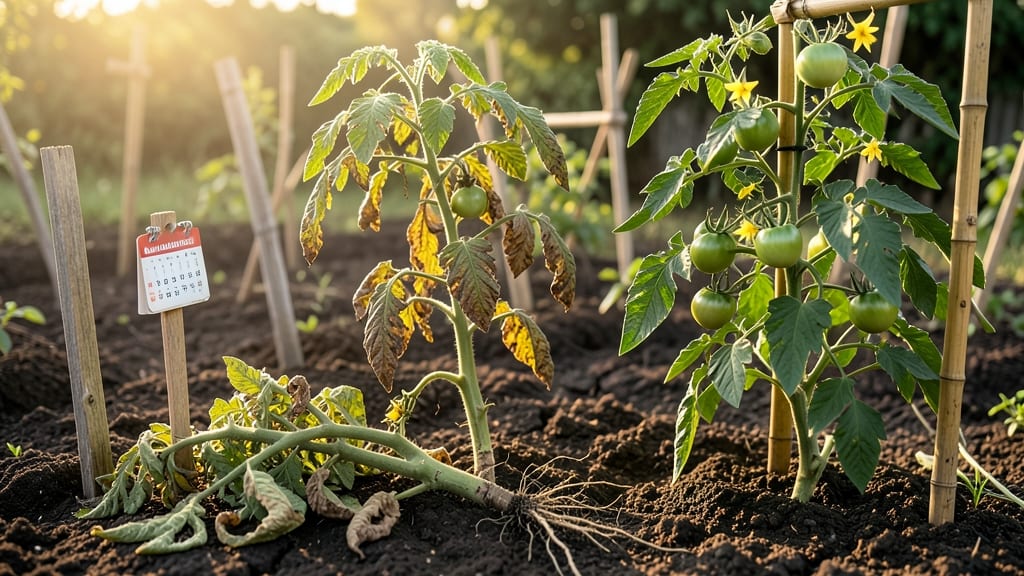
Tomato plants die at different stages—some fade after 60 days from disease, others collapse in heat waves, and a few simply age out by fall 🍅.
Watching your tomato plants wither is every gardener’s worst nightmare—but knowing the exact signs and stages of decline can mean the difference between losing your crop and saving it.
Whether it’s blossom end rot from calcium deficiency, fungal infections after heavy rain, or wilting from drought, each symptom comes with a critical window to act.
Here’s how to recognize when your plants are past saving, how to revive them at the last minute, and—most importantly—how to prevent it from happening in the first place.
5 Critical signs tomato plants are dying (and how late you can still save them)
Tomato plants are resilient, but when they start showing signs of distress, the clock is ticking. Early intervention can mean the difference between a thriving harvest and a sad pile of compost. The key is recognizing symptoms before they become irreversible.
Most gardeners lose their tomato crops due to three main causes: environmental stress, disease, or pest damage. Let’s break down the five critical warning signs and your window of opportunity to save your plants.
First, yellowing leaves are often the earliest sign of trouble. This chlorosis usually starts at the bottom and works upward. It can indicate nutrient deficiencies (like nitrogen or magnesium), overwatering, or even root rot.
If you catch this early, you have 2-4 weeks to correct the issue—whether by adjusting watering, amending soil, or pruning affected foliage. Ignore it, and the plant’s energy reserves will deplete faster than you can say "blight."
Next, wilting leaves that don’t perk up after watering signal a serious problem. Unlike normal midday wilting, this is a permanent droop caused by root damage, fungal infections, or extreme heat stress.
Your window to act shrinks to 3-7 days—after that, the roots may be too compromised to recover. Check the soil moisture and inspect roots for rot or pests immediately.
Here’s where things get tricky: blossom end rot (those dark, sunken spots on the fruit). This isn’t a leaf issue—it’s a calcium deficiency triggered by inconsistent watering or soil pH imbalances.
While existing fruit may be doomed, you can prevent further damage by applying calcium-rich amendments (like crushed eggshells or lime) and keeping soil evenly moist. Your window here is ongoing—new growth can still thrive if you act fast.
Don’t overlook brown or black spots on leaves, especially if they’re surrounded by yellow halos. This is a classic sign of fungal diseases like early blight or septoria leaf spot. Your window to act narrows to 1-2 weeks in early stages—after that, the fungus spreads too fast.
Remove infected leaves immediately and apply a copper-based fungicide to stop the spread. Pro tip: Water at the base in the morning to keep foliage dry and discourage fungal growth.
Pests are another silent killer. Holes in leaves or chewed stems mean trouble—likely from hornworms, aphids, or spider mites. The window to save your plant here is immediate. Handpick large pests like hornworms, spray neem oil for aphids, or blast spider mites off with water.
If the infestation is severe, you may need to prune heavily or even replace the plant if it’s too far gone. Prevention is key: Inspect leaves weekly and introduce beneficial insects like ladybugs.
Finally, stunted growth or no new leaves after flowering signals a deeper issue. This could be root-bound stress, poor soil quality, or even over-fertilizing. Your window to save depends on the cause—if it’s nutrient-related, you have 2-3 weeks to amend the soil.
If roots are circling in a pot, transplant into larger space immediately. For over-fertilized plants, flush the soil with water to leach excess salts.
Remember, tomato plants are tough—they can bounce back from mild stress if you act quickly. The earlier you intervene, the better the chances of recovery. My rule of thumb? If the plant is still green and producing new growth, there’s hope.
If it’s completely brown, mushy, or covered in mold, it’s time to pull and compost. Don’t waste resources on a lost cause—focus on saving the rest of your garden! 🌱
Natural lifespan of tomato plants: when to expect death vs. when to intervene
Tomato plants follow a predictable biological timeline from seedling to harvest, but their lifespan can be cut short by disease, pests, or environmental factors. Understanding this natural progression helps you distinguish between expected senescence and premature death.
Most varieties live 60-90 days from transplant to harvest, but some indeterminate types keep producing until frost. The key is recognizing when a plant is aging normally versus suffering from preventable stress.
At the seedling stage (0-30 days), tomato plants are most vulnerable to transplant shock or cold snaps. If leaves turn yellow or stems weaken during this phase, it’s often due to poor root establishment rather than natural aging.
Your goal here is to ensure consistent moisture and gentle hardening off before transplanting. Once established, healthy plants enter the vegetative growth phase (30-60 days), where they focus on leaf and stem development.
Here’s the critical breakdown of when tomato plants die naturally versus prematurely:
- 0-30 Days (Seedling): Death from transplant shock or damping off. Window to save: 3-5 days with proper care.
- 30-60 Days (Vegetative): Natural decline from overcrowding or nutrient exhaustion. Window to save: 2-3 weeks with pruning/fertilizer.
- 60-90 Days (Flowering/Fruiting): Premature death from blight or pests. Window to save: 1-2 weeks with fungicide.
- 90+ Days (Late Season): Natural senescence or frost damage. Window to save: None—harvest remaining fruit.
The flowering and fruiting phase (60-90 days) is when most gardeners see premature death—often from late blight or heat stress. If your plant suddenly drops leaves or fruits rot, check for fungal spores on undersides of leaves.
Remove infected foliage immediately and apply copper fungicide to extend the plant’s life by 1-2 weeks. During this stage, prune suckers to redirect energy to fruit production rather than new growth.
By late summer (90+ days), tomato plants naturally senesce—leaves yellow, stems weaken, and energy shifts to seed production. This is not preventable, but you can maximize harvest by pruning lower leaves to improve airflow and protecting plants from early frost with row covers.
If frost hits before harvest, focus on picking ripe fruit and composting the plant—no revival is possible at this stage.
Remember: Indeterminate varieties (like 'Sungold') can live 4-6 months with proper care, while determinate types (like 'Roma') often die after their first harvest. The difference?
Indeterminates keep producing new flowers, while determinates focus all energy on one fruiting cycle. Extend viability by staking plants, mulching heavily, and monitoring for pests weekly. With the right care, you can push harvests into late fall—just don’t expect miracles after frost! 🌿