
Plants
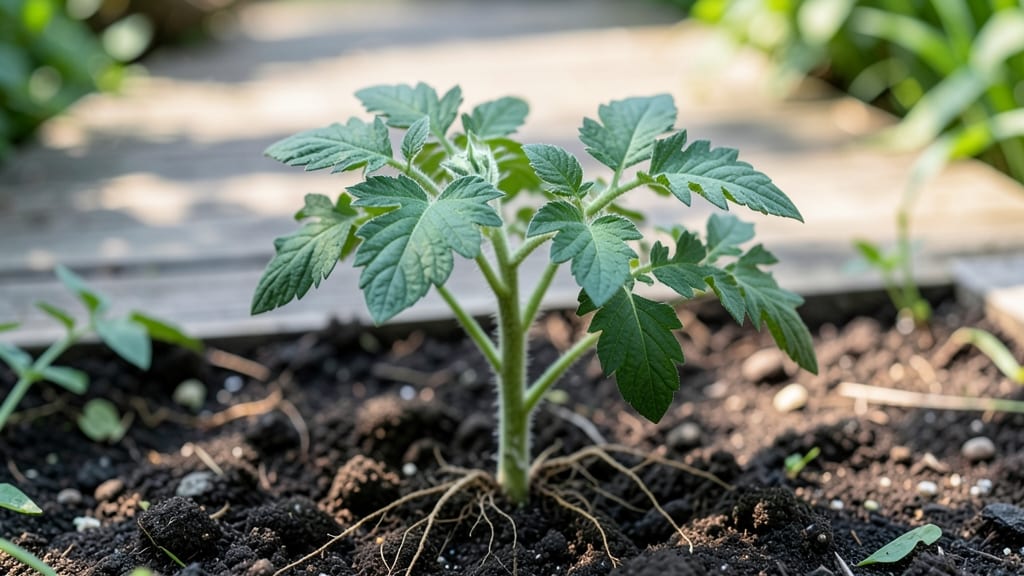
Tomato seedlings look like they start with two small, oval leaves called cotyledons, then develop jagged, serrated true leaves. Healthy ones stand upright with thick stems and deep green leaves, while weak seedlings show yellowing, stretching, or wilting.
Young tomato plants begin their life with those tiny cotyledons, which are the first leaves to emerge and provide energy through photosynthesis. 🌱 Once the true leaves appear—typically after 1-2 weeks—they'll have those distinctive jagged edges that set them apart from weeds or other seedlings.
I always check for this serrated pattern to confirm I'm not dealing with unwanted plants in my garden beds.
Beyond leaf shape, pay attention to stem thickness and leaf color. A robust seedling will have a sturdy, green stem with leaves that are vibrant, not pale or yellowing. If you notice seedlings stretching toward light or developing long, weak stems, they're likely not getting enough sunlight or are overcrowded.
Weak seedlings often show other red flags too, like blackened stems at the soil line (a sign of damping-off disease) or holes from pests. 🌿 Regularly inspecting your seedlings helps catch these issues early, giving you time to adjust light exposure, thin crowded plants, or treat fungal problems before they spread.
💡 In This Article
- Identifying Tomato Seedling Stages by Leaf Shape
- Signs of Healthy vs Unhealthy Tomato Seedlings
Identifying tomato seedling stages by leaf shape
The journey of a tomato seedling begins with its cotyledons—those first two oval leaves that emerge from the soil. These seed leaves are typically ½ to 1 inch long and have a smooth, rounded edge with visible veins running parallel.
They serve as the plant's first energy source, using photosynthesis to fuel early growth. 🌱 What's fascinating is how these cotyledons lack the complex structure of true leaves, which means they can't perform all the same functions—yet they're essential for the seedling's survival during this critical phase.
Once the cotyledons have done their job, the plant enters its next stage with the emergence of true leaves, which appear 1-2 weeks later. These leaves are immediately recognizable by their jagged, serrated edges and more complex vein patterns.
Unlike the simple cotyledons, true leaves have a deeper green color and a slightly rougher texture. The serrations help increase surface area for photosynthesis while reducing water loss—a clever adaptation that gives tomato seedlings their distinct look.
At this stage, you'll also notice the stem beginning to thicken as the plant prepares for more vigorous growth.
As seedlings mature, their leaves develop even more complexity. The serrations become more pronounced, and you'll see compound leaves with multiple leaflets connected by a central stem.
These mature leaves can grow 2-6 inches long, depending on the variety, and often have a slightly waxy coating that helps repel water and pests. The vein patterns become more intricate, forming a network that supports the leaf's structure and nutrient transport system.
This is when tomato seedlings truly start to resemble their adult counterparts, making them easier to identify among other plants in your garden.
One common point of confusion is distinguishing tomato seedlings from weeds or other young plants. Look for these key differences: tomato seedlings have alternate leaf arrangement (leaves grow in a spiral pattern along the stem), while many weeds have opposite or whorled leaves.
Additionally, tomato leaves often have a slightly hairy texture, especially along the veins, which helps deter some pests. The presence of these trichomes (tiny hair-like structures) is another visual clue that sets tomato seedlings apart from their weed counterparts.
For gardeners who prefer visual confirmation, consider keeping a reference chart with images of each growth stage. I've found that comparing seedlings to photos helps me quickly identify problems or confirm healthy development.
The transition from cotyledons to true leaves is particularly important—this is when seedlings become more vulnerable to environmental stressors, so monitoring their leaf shape and health becomes even more critical. 🌿 Understanding these stages helps you provide the right care at each phase of growth.