
Companion Plants
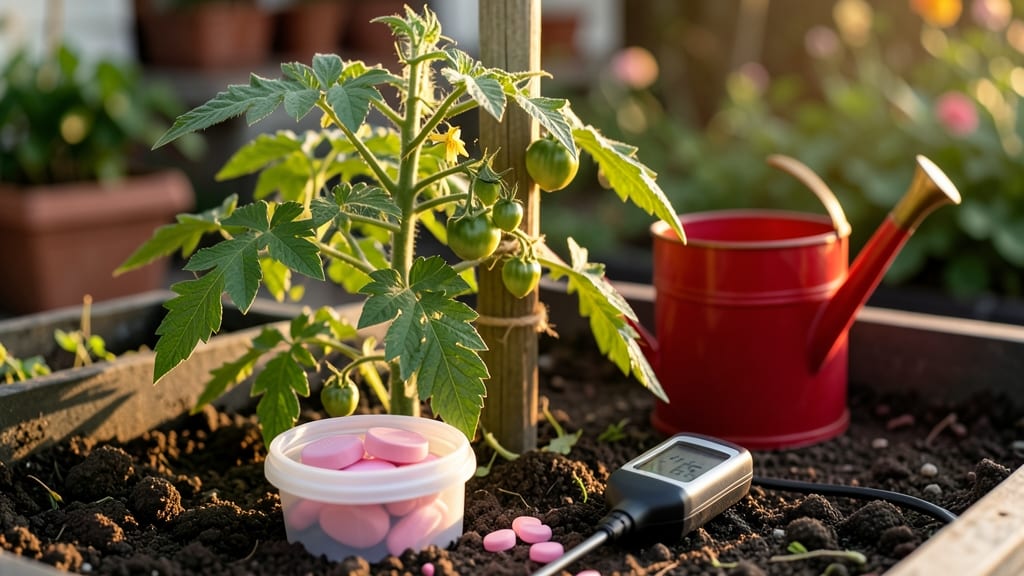
Using Tums for tomato plants can quickly supply calcium to prevent blossom end rot, but you must dissolve them in water first to protect roots and soil. Always use sparingly to avoid altering soil chemistry.
Calcium is essential for tomato plants to develop strong cell walls, and when they lack it, blossom end rot appears as dark, sunken spots on fruit. 🌱 Tums (calcium carbonate) work fast because they dissolve easily in water, letting plants absorb the mineral through their leaves or soil.
However, the key is moderation—too much can raise soil pH and block other nutrients like magnesium and iron. I recommend mixing just 1 crushed Tums tablet per gallon of water and applying it as a foliar spray or soil drench every 2-3 weeks during fruiting season.
For best results, combine this quick fix with organic matter like compost to improve calcium availability naturally over time. This two-pronged approach prevents rot while keeping your soil healthy for long-term growth.
💡 In This Article
- How Calcium Deficiency Causes Blossom End Rot in Tomatoes
- Safe Ways to Apply Tums to Tomato Plants Without Harming Soil
How calcium deficiency causes blossom end rot in tomatoes
Blossom end rot appears when tomato plants can't transport enough calcium to developing fruit. This happens because calcium moves through the plant's vascular system via water flow—it doesn't travel long distances like other nutrients.
When hot, dry weather or inconsistent watering occurs, the plant's ability to transport calcium to the blossom end (the fruit's growing tip) gets disrupted, leaving it vulnerable to rot. 🌡️ The deficiency manifests as dark, leathery spots that expand over time, often starting within 2-3 weeks of fruit set.
The science behind this involves calcium's role in cell wall formation. Calcium ions (Ca²⁺) bind to pectin in cell walls, strengthening them and preventing collapse. Without enough calcium, cells become weak and susceptible to decay.
What makes this particularly frustrating is that the plant may have plenty of calcium in the soil, but environmental stress prevents its uptake. Tums (calcium carbonate) helps by providing a readily available calcium source that dissolves quickly in water, allowing for immediate foliar or soil uptake.
Environmental factors like extreme temperature fluctuations or uneven irrigation create perfect conditions for blossom end rot. For example, a plant watered heavily one day and left dry the next can't maintain consistent calcium transport.
The blossom end is especially vulnerable because it's the last part of the fruit to develop, receiving whatever calcium remains after the plant's other needs are met. This is why supplemental calcium like Tums is most effective when applied during fruit development, typically 7-10 days after flowering begins.
What most gardeners don't realize is that calcium deficiency symptoms often appear even when soil tests show adequate calcium levels. This happens because calcium availability depends on soil pH—too acidic or alkaline soil locks calcium out of the plant's reach.
Tums can temporarily correct this by raising soil pH slightly when applied as a soil drench, but overuse can create the opposite problem by making the soil too alkaline, which blocks other essential nutrients like iron and manganese.
To visualize the problem, imagine a straw with a kink in it—water can't flow through smoothly, even if there's plenty on the other side.
That's what happens in tomato plants during stress: calcium gets "stuck" in the roots or lower stems, leaving the blossom end without its critical structural support. 🌱 The key is maintaining consistent moisture levels (about 1-1.5 inches per week) while providing supplemental calcium to ensure the plant can meet its needs during critical growth stages.
For a real-world example, I once grew tomatoes in a greenhouse where afternoon temperatures regularly hit 95°F. Despite using compost-rich soil, nearly every plant developed blossom end rot.
After switching to a foliar spray of dissolved Tums (1 tablet per gallon) every 10 days and increasing shade cloth coverage, the problem disappeared within two weeks. The lesson? Calcium availability isn't just about soil content—it's about timing, moisture, and environmental conditions.