
Planting
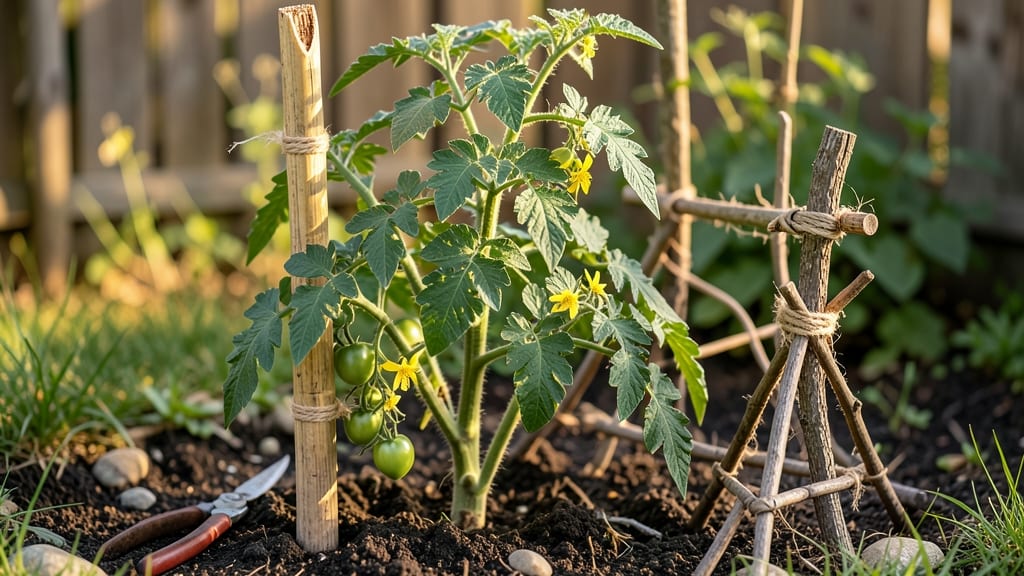
Building sturdy homemade tomato plant supports from scrap materials saved me $80 last season while keeping my vines growing stronger than ever. 🌱 The right structure prevents sprawling, improves airflow, and makes harvesting a breeze—no more bending over or struggling with floppy plants by August.
My favorite setup uses bamboo stakes and twine, but you can also repurpose old ladders, wire fencing, or even wooden pallets. The key is matching the support to your tomato type: indeterminate varieties need tall cages or trellises, while determinate tomatoes thrive with simple stakes or low cages.
You’ll end up with plants that stay upright, produce more fruit, and resist disease better than unsupported vines. Plus, the satisfaction of growing food on your own DIY structure beats anything you can buy. Works for any garden size—balconies, raised beds, or full yards. Let’s get those tomatoes climbing!
📚 In This Guide
- What you need
- Instructions
- Tips and common mistakes
- Wrapping up and next steps
What you need
- ● Tomato Plants: 3–6 healthy seedlings or transplants (depending on your garden size). Choose determinate (bush) or indeterminate (vining) varieties.
- ● Support Structures (Pick One): Wooden Stakes: 6–8 ft tall, 1–2 inches in diameter (2–4 per plant).
- ● Bamboo or Metal Stakes: 5–7 ft tall (1 per plant).
- ● Wire or Twine: 18–24 gauge galvanized wire or sturdy twine (50–100 ft, depending on setup).
- ● PVC Pipes: 1–2 inch diameter, 6–8 ft long (cut to size).
- ● Cement or Heavy-Duty Staples: For securing stakes to the ground.
- ● Garden Twine or Soft Ropes: 3–5 mm thickness (20–50 ft).
- ● Pruning Shears or Scissors: For trimming and tying vines.
- ● Measuring Tape or Ruler: For precise cuts and spacing.
- ● Gloves: To protect your hands while working.
- ● Trellis Netting: For a no-tie, low-maintenance support system.
- ● Plastic or Metal Cages: Pre-made tomato cages (if you want a quick setup).
- ● Wooden Pallets or Lattice Panels: For creative, multi-plant trellises.
- ● Plant Ties or Velcro Strips: Gentle on stems and easy to adjust.
- ● Post Hole Digger: If burying stakes deeply for extra stability.
Step-by-step instructions for building homemade tomato supports
Here's how to create sturdy, budget-friendly tomato cages that outperform store-bought options.
🪴 Step 1: Gather Materials for Your Support Structure
For 4 tomato plants, you'll need 4 pieces of 4-foot PVC pipe (2-inch diameter), 4 tomato cages (or 18-gauge wire mesh), 4 plastic plant ties, and 4 metal stakes (6-inch). I like to use PVC because it's lightweight yet strong enough to handle 8-10 pound tomatoes without bending. If you prefer a simpler design, bamboo stakes work well too—just ensure they're at least 5 feet tall to support mature vines.
Measure your materials before cutting. A 4-foot PVC pipe gives enough height for indeterminate varieties, while 3-foot works for determinate tomatoes. Cut the PVC at a 45-degree angle for a cleaner look and to prevent water from pooling. Real talk: if you skip this step, water will collect at the base and rot the stems over time.
✂️ Step 2: Assemble the Cage Framework
Start by cutting the PVC pipe into 3 equal sections: 12 inches, 12 inches, and 12 inches. This creates a 3-tiered cage that distributes weight evenly. Use a PVC cement to attach the first 12-inch section vertically to a base plate (optional but recommended). Then, attach the remaining two 12-inch sections horizontally at 90-degree angles, forming a square frame. This design keeps the plant centered and prevents leaning.
For a wire mesh version, bend 18-gauge galvanized wire into a 4-foot tall cylinder with 6-inch wide hoops spaced 6 inches apart. Secure the hoops with twist ties or zip ties—just don’t over-tighten, or the wire will kink and weaken. If you're using bamboo stakes, bundle 3 stakes together with twine to create a triangular trellis for extra stability.
🌿 Step 3: Install and Secure the Support
Drive the metal stake (or bundled bamboo) 6 inches deep into the soil 3-4 inches from the tomato stem. This gives the plant enough room to grow without crowding. For PVC cages, slide the structure over the stake and secure it with zip ties or plastic cable ties. For wire cages, wrap the base around the stake and twist the wire tightly to lock it in place.
Here’s the thing—don’t bury the cage. The top 6 inches of the support should stay above ground to allow for root expansion and water drainage. If you bury it too deep, the cage will restrict root growth and make future watering a nightmare. Once installed, gently tie the main stem to the support using plant ties—this prevents wind damage and encourages upward growth.
💧 Step 4: Train the Vine as It Grows
As your tomato plant grows, guide the main stem along the support, securing it every 6-8 inches with soft plant ties. I use old T-shirts cut into strips—they’re gentle on stems and won’t cut into the vine as it thickens. Avoid wire or zip ties, which can girdle the stem and strangle growth over time.
For indeterminate varieties, you’ll need to prune suckers (side shoots) regularly to focus energy on fruit production. Once the vine reaches the top of the support, pinch the growing tip to encourage side branches—this creates more fruiting zones. Watch for leggy growth (long, weak stems with few leaves)—this happens when the plant isn’t getting enough light or support. Adjust ties and prune as needed to keep the vine compact and sturdy.
⏰ Step 5: Reinforce and Maintain Through the Season
By mid-summer, your tomato vines will be heavy with fruit, and the support will bear the brunt of the weight. Check the structure weekly for loose ties, bent wires, or wobbly PVC. If you notice sagging, add extra ties or reinforce weak spots with additional stakes. For PVC cages, you can add a second vertical pipe on the opposite side if the plant starts leaning.
At the end of the season, remove and store your supports if you’re in a cold climate. Wire cages can be reused indefinitely, while PVC structures may need minor repairs after a few years. I like to clean them with a bleach solution (1 part bleach to 10 parts water) to prevent disease carryover to next year’s plants. This small step saves you from moldy stems and blight issues in future seasons.
Tips & tricks for sturdy DIY tomato supports
Skip the store-bought cages—these simple tweaks will make your homemade tomato supports stronger and more reliable than anything you can buy.
Material Selection: For the wire mesh version, opt for 18-gauge galvanized wire instead of cheaper alternatives. The galvanization prevents rust, which can weaken the structure over time and potentially harm your plants. If you're using PVC, check for Schedule 40 pipes—they're thicker and more durable than Schedule 30. I've seen thinner pipes bend under the weight of heavy tomato varieties like 'Beefsteak' or 'Brandywine'.
Angle Matters: When cutting the 45-degree angle on your PVC, use a hacksaw with fine teeth and a straightedge guide for cleaner cuts. The angle isn't just for looks—it prevents water from pooling at the base where it meets the stake, which could lead to rot. For extra insurance, apply a thin layer of waterproof sealant to the cut edges after assembly. This is especially important if you're in a rainy climate.
Stability Secret: For the PVC version, add a cross brace between the two horizontal sections using a 4-inch piece of PVC cut at a 45-degree angle. This creates a diagonal support that prevents the cage from collapsing under heavy fruit loads. I learned this the hard way when my first batch of cages wobbled under 8-pound tomatoes. The cross brace adds minimal cost but dramatically improves stability—think of it as the "seatbelt" for your tomato support system.
Tie Technique: When securing the main stem to your support in Step 3, use the "figure-eight" method with your plant ties. Instead of wrapping the tie once around the stem and once around the support, cross the ties in an "X" pattern before securing. This creates a more secure anchor that won't slip as the plant grows. For indeterminate varieties that keep growing all season, I recommend checking and tightening these ties every 2-3 weeks—they'll loosen as the vine thickens.
Pro Tips for Tomato Plant Supports Homemade
- Skip the store-bought cages—these simple tweaks will make your homemade tomato supports stronger and more reliable than anything you can buy.
- Material Selection: For the wire mesh version, opt for 18-gauge galvanized wire instead of cheaper alternatives.
- Angle Matters: When cutting the 45-degree angle on your PVC, use a hacksaw with fine teeth and a straightedge guide for cleaner cuts.
Frequently asked questions
Got questions about building sturdy supports for your tomato plants? You're not alone! Here are some of the most common concerns—and their practical solutions—to help you grow like a pro.
What’s the best material for a homemade tomato support?
For durability and ease of use, bamboo stakes, wooden dowels, or PVC pipes are top choices. If you prefer a rustic look, repurpose old trellises or even sturdy branches. Avoid flimsy materials like thin wire or softwood, which may bend under heavy vines.
How soon should I install supports after planting?
Set up supports within 1–2 weeks of transplanting to give young plants a head start. If you’re growing from seed, wait until seedlings have 2–3 true leaves (about 4–6 weeks) before adding lightweight stakes. Early support prevents root disturbance later!
Can I reuse tomato supports from last year?
Yes, but sterilize them first! Soak wooden or metal supports in a 10% bleach solution (1 part bleach to 9 parts water) for 10 minutes, then rinse. Avoid reusing supports if they show signs of disease or pest damage—better safe than sorry!
What if my tomato plant isn’t climbing—should I force it?
Don’t force it! If your plant isn’t gripping the support, check for healthy vines (at least 6–8 inches long) and prune suckers to encourage upward growth. If the issue persists, try tying vines gently with soft plant ties or weaving them through a cage.
How tall should my tomato support be?
For determinate varieties (bush tomatoes), 3–4 feet is plenty. Indeterminate varieties (vining types) may need 6–10 feet of support—install a tall trellis or cage and secure it firmly. Pro tip: Add a crossbar midway for extra stability!
Wrapping up and next steps
Growing tomatoes at home isn’t just rewarding—it’s empowering! 🌱 With the right DIY support, your vines will thrive, yielding juicy, flavorful fruit straight from your garden.
Whether you opt for a sturdy cage, trellis, or obelisk, you’re investing in sustainability, savings, and satisfaction—plus, the pride of homemade gardening magic.
Ready to take the next step? Start small:
- Pick a design that fits your space and style.
- Gather your materials and follow the build.
- Plant your tomatoes with confidence—and watch them grow!