
How To
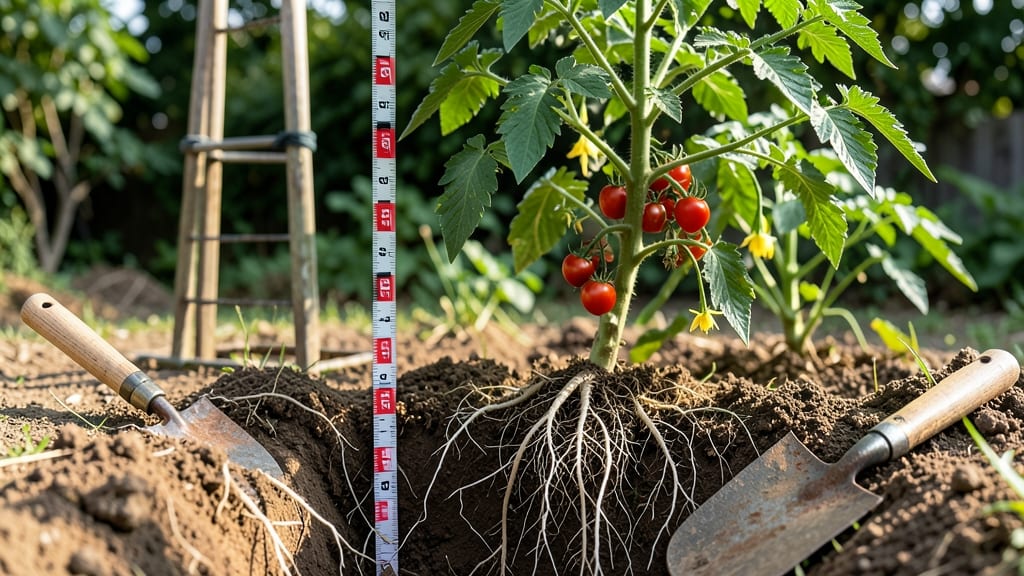
Tomato plant roots grow 12 to 24 inches deep—depending on variety—because that’s how they access the water and nutrients needed for heavy fruit production.
Ever notice your 🍅 tomato plants wilting midday or producing small, underripe fruit? Those are classic signs the roots aren’t reaching deep enough. Shallow roots can’t anchor the plant or absorb moisture efficiently, leading to stress and poor yields—even when you’re watering and fertilizing like clockwork.
In this guide, I’ll break down the exact soil depth your tomato roots need to thrive, how to adjust for different soil types, and proven techniques to encourage deeper growth. Whether you’re planting seedlings or transplanting, these insights will help you avoid common mistakes and grow stronger, more productive plants.
You’ll also learn how to spot shallow-root issues early, the best soil amendments to use, and when to intervene with deep watering or mulching. By the end, you’ll know exactly how to set your tomatoes up for a bountiful harvest from day one.

How deep tomato roots grow: ideal soil depth for maximum stability
Tomato plants are heavy feeders, and their root systems must reach deep enough to support fruit production and water absorption.
Most gardeners assume planting deeper is always better, but the truth is more nuanced. Determinate varieties (bush types) typically develop roots 12-18 inches deep, while indeterminate varieties (vining types) can send roots 24+ inches deep for stability. Understanding this difference is key to maximizing your harvest.
The depth of tomato roots directly impacts a plant’s ability to access water and nutrients during dry spells. Shallow roots struggle in hot climates or sandy soils, leading to wilting or blossom-end rot.
Meanwhile, deep roots improve soil aeration and reduce competition from weeds. Proper soil preparation—like loosening compacted layers—can encourage roots to grow deeper naturally.
Root depth also affects a plant’s stability, especially for tall indeterminate varieties. Without adequate support, heavy fruit loads can snap stems at the soil line. The solution? Prepare the soil before planting by amending it with compost or aged manure to create a loose, nutrient-rich zone where roots can expand freely.
Here’s how tomato root depth breaks down by variety and soil type:
| Tomato Type | Root Depth | Soil Needs | Key Benefit |
|---|---|---|---|
| Determinate (Bush) | 12-18 inches | Loose, well-drained | Compact root zone for stability |
| Indeterminate (Vining) | 24+ inches | Deep, aerated | Supports heavy fruit loads |
| Cherry Tomatoes | 18-24 inches | Moderately loose | Balances yield and stability |
| Heirloom Varieties | 20-30 inches | Rich, organic matter | Enhances flavor and size |
To encourage deeper roots, start by testing your soil for compaction. Use a trowel or soil probe to check how easily roots can penetrate. If the soil feels like packing clay, mix in 2-3 inches of compost or sand to improve aeration.
For container-grown tomatoes, choose pots at least 12 inches deep—shallow containers restrict root growth and reduce yields.
Another pro tip: Deep watering trains roots to grow downward. Instead of frequent shallow watering, give your tomatoes a slow, deep soak 2-3 times per week. This mimics natural rainfall and encourages roots to seek moisture below the surface.
Pair this with a 2-3 inch layer of mulch to retain moisture and cool the soil, which is especially helpful in hot climates.
For indeterminate varieties, consider deep planting at transplant time. Bury the stem up to one-third of the plant’s height—this triggers additional root growth along the buried stem.
Just avoid planting too deep, as this can cause stem rot or stress. Aim for a depth where the lowest leaves sit just above the soil line.
If your soil is sandy or rocky, add organic amendments like leaf mold or peat moss to improve water retention. These materials help roots explore deeper layers while keeping the soil loose.
For clay-heavy soils, incorporate gypsum or perlite to break up compaction and create channels for root expansion.
Remember, root health isn’t just about depth—it’s also about consistent care. Avoid over-fertilizing with nitrogen, as this promotes leafy growth at the expense of roots. Instead, use a balanced fertilizer (like 5-10-10) to support both foliage and root development.
With the right soil depth and conditions, your tomato plants will thrive—and so will your harvest!
Signs your tomato roots aren’t getting enough depth (and how to fix it)
Your tomato plants might look healthy above ground, but if their roots aren’t deep enough, they’ll struggle to support heavy fruit loads. Shallow roots mean poor water absorption and nutrient uptake, leading to stunted growth and smaller harvests.
Even with perfect sunlight and watering, root depth is the foundation of a thriving tomato plant.
First, check for visual clues like yellowing leaves or wilting during heatwaves. These are classic signs your plant can’t access moisture deep in the soil. Another red flag? Fruits cracking or blossoms dropping—both often stem from inconsistent water or nutrient supply caused by shallow roots.
If your tomatoes stop growing despite ideal conditions, the issue is likely underground.
⚠️ Root Depth Crisis: Critical Warning Signs
If your tomato plants show 3+ of these signs, your roots need deeper soil ASAP:
- Wilting midday despite regular watering (roots can’t reach moisture)
- Stunted growth (plants <2 ft tall after 6 weeks)
- Leaf scorch (brown edges on lower leaves)
- Fruits stay small (<1 inch diameter for heirlooms)
- Plants topple easily (no deep anchor roots)
Action: Dig gently around the base—if roots are only 4-6 inches deep, they’re not deep enough for tomato varieties needing 12-24 inches of root zone.
To fix shallow roots, start with deep planting. Bury the stem up to 1/3 of the plant’s height—this encourages roots to grow downward. For example, a 6-inch seedling should be planted 2 inches deep in loose soil.
Add compost or worm castings to the planting hole to loosen compacted soil and attract beneficial microbes that boost root growth.
Next, use organic mulch like straw or shredded leaves to keep soil cool and moist. This encourages roots to grow deeper in search of water. Pair this with deep watering—aim for 1-1.5 inches of water per week, delivered slowly to penetrate 12+ inches deep.
A soaker hose or drip irrigation system works best to avoid surface runoff.
For stubborn cases, try companion planting with deep-rooted friends like basil or marigolds. These plants improve soil structure and attract earthworms, which aerate the soil naturally. Avoid planting near corn or fennel, which compete for nutrients and stunt root development.
Instead, place tomatoes near beans or peas to fix nitrogen in the soil.
Monitor progress by gently lifting a plant every 2-3 weeks to check root depth. If roots still aren’t deep enough after 4 weeks, consider transplanting to a raised bed with loose, amended soil.
With these fixes, your tomatoes will develop a stronger root system and reward you with bigger, healthier fruit all season.