
Planting
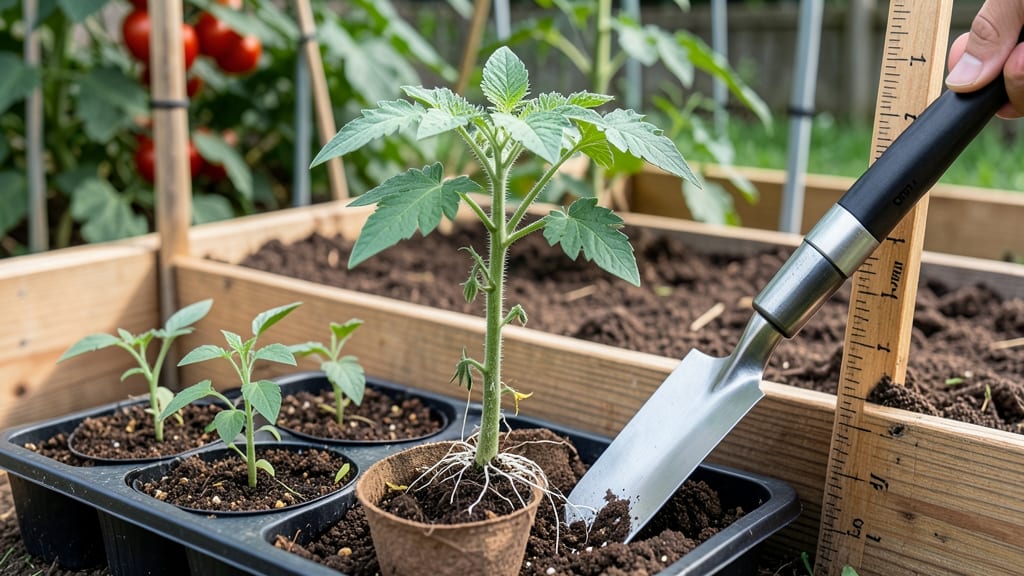
Planting your tomato plant at the right depth—just 1/4 inch for seeds or 1-2 inches for seedlings—sets the stage for stronger stems and bigger yields all season.
Here’s the catch: too shallow, and your tomato seedlings struggle to anchor; too deep, and they rot before they even sprout. I’ve seen both mistakes firsthand—wilted plants one year, explosive growth the next—all because of a few extra inches in the dirt.
This isn’t just about guessing. Soil type, seedling age, and even your local climate play a role in getting the depth perfect. Below, I’ll break down the exact measurements, common pitfalls, and pro tips to ensure your tomatoes thrive from day one.
Ready to plant with confidence? You’ll learn how to measure depth like a pro, spot early signs of stress, and adjust for containers or ground planting—so you can skip the trial-and-error and head straight to harvest time.

The ideal tomato planting depth by variety (with exact inches)
Getting the tomato planting depth right isn't just about burying the seedling—it's about creating a strong foundation for your plant's entire life cycle. Too shallow, and your tomato struggles to anchor itself, leading to weak stems and poor yields.
Too deep, and you risk suffocating the roots or encouraging disease. The key lies in understanding how variety type (determinate vs. indeterminate) and stem thickness dictate the perfect depth for each plant.
Most gardeners assume "deeper is better," but that's a myth. The root flare—where the roots meet the stem—must always be exposed above soil level. This ensures proper airflow and prevents rot. For transplants, this means digging a hole deep enough to accommodate the roots without burying the flare.
For seeds, the rule changes slightly: you'll plant them much shallower, just 1/4 inch deep, to encourage quick germination.
Let’s break down the exact planting depths for different tomato varieties, including how to adjust for container growing and heavy clay soils. These guidelines will help you avoid common mistakes that lead to leggy plants or disease-prone stems.
🌱 Pro Tip: Always water your tomato seedlings thoroughly before transplanting. This helps settle the soil around the roots and reduces air pockets that can stress the plant.
| Tomato Type | Planting Depth (Transplants) | Seed Depth | Root Flare Exposure | Key Adjustments |
|---|---|---|---|---|
| Determinate (Bush) | 1–1.5 inches | 1/4 inch | Fully exposed | Compact roots; use deeper holes for heavy soil |
| Indeterminate (Vining) | 1.5–2 inches | 1/4 inch | Fully exposed | Deeper roots; add compost to hole for support |
| Cherry Tomatoes | 1–1.5 inches | 1/4 inch | Fully exposed | Lightweight stems; avoid over-burying |
| Heirloom Varieties | 1.5–2 inches | 1/4 inch | Fully exposed | Thicker stems; deeper planting for stability |
| Container-Grown | 1 inch (shallower) | 1/4 inch | Fully exposed | Limited root space; use well-draining mix |
For determinate tomatoes—like the classic Roma or Celebrity varieties—the ideal planting depth is 1–1.5 inches. These compact plants have shallower root systems, so burying them too deep can lead to stem rot or weak growth above the soil line.
Think of them like a small tree: you want the roots spread out but the trunk exposed to air and light.
On the other hand, indeterminate tomatoes, such as Sungold or Brandywine, need a slightly deeper hole: 1.5–2 inches. Their vining habit means they’ll grow taller and heavier, so a deeper planting helps anchor them.
Imagine a vine climbing a trellis—you’d want a sturdy base to support the weight. Plus, indeterminate varieties benefit from the extra soil contact, which encourages stronger root development.
When planting seeds, the depth is far less dramatic but equally critical. Seeds should go in just 1/4 inch deep, no matter the variety. This shallow placement ensures they germinate quickly and don’t rot from sitting too deep in damp soil.
Use your finger or a small stick to mark the depth—it’s easier than you think!
💧 Watering Tip: After planting, give your tomatoes a deep watering to help the soil settle around the roots. This reduces air pockets and encourages the roots to spread outward quickly.
One of the biggest mistakes I see in gardens is burying the root flare too deep. The flare is the swollen area where the roots meet the stem, and it should always be above soil level.
If you bury it, the plant can’t breathe, and the stem may rot. To check, gently pull back the soil after planting—you should see the flare clearly visible.
For container-grown tomatoes, adjust your depth slightly shallower (1 inch max). Containers dry out faster and have limited space, so you don’t want to crowd the roots. Use a high-quality potting mix with added compost to give your plant the nutrients it needs without overpacking the soil.
Finally, consider your soil type. In heavy clay soils, tomatoes need extra depth to prevent waterlogging. Amend the planting hole with compost or sand to improve drainage.
In sandy soils, you might need to water more frequently, but the planting depth stays the same—just add mulch to retain moisture.
By following these exact planting depths, you’ll set your tomatoes up for success: stronger stems, better disease resistance, and a bumper crop. And remember, the key
5 Common planting depth mistakes that kill tomato plants (and how to fix them)
Even experienced gardeners can accidentally sabotage their tomato plants by getting the planting depth wrong. I’ve seen rotting stems from burying too deep and top-heavy seedlings that fall over from planting too shallow.
These mistakes might seem small, but they can cut your harvest by 50% or more if left unchecked.
The good news? Most of these errors are easy to spot—and fix—once you know what to look for. Below, I’ll walk you through the five most common mistakes, how to diagnose them in your own garden, and the simple corrections that will save your plants.
Think of this as your tomato plant emergency guide for depth-related disasters.
🚨
The #1 killer of tomato plants isn't pests or disease—it's burying the root flare. This swollen area where roots meet the stem should always stay above soil level. If buried, it suffocates, causing stem rot and collapse. Fix it now: Gently scrape soil away to expose the flare. If already buried, carefully dig around the stem and mound soil below the flare to create a slight slope.
Mistake #1: Planting seeds too deep (or too shallow). Seeds need just 1/4 inch of coverage to germinate properly. Planting them deeper than this delays sprouting and risks rot, while planting too shallow can dry them out. Fix: Use your finger to mark the depth—it’s the width of a dime.
For heavy clay soils, add a pinch of sand to the planting hole to improve drainage.
Mistake #2: Burying seedlings by their lower leaves. When you tuck those bottom leaves into the soil, they rot instead of photosynthesizing. This weakens the plant and creates entry points for soil-borne diseases. Fix: Only bury the stem up to the first leaf node (where leaves attach).
Remove any leaves touching the soil before planting.
Mistake #3: Ignoring soil type adjustments. Sandy soils dry out faster, while clay holds too much moisture—both require depth tweaks. In sandy soil, plant 1/2 inch deeper to help roots anchor.
In clay, add compost to the hole to improve drainage before planting. Fix: Test your soil’s drainage by digging a 6-inch hole and filling it with water. If it drains in under 30 minutes, it’s too sandy; if it takes hours, amend with organic matter.
Mistake #4: Using the wrong depth for containers. Container-grown tomatoes need shallower planting (1 inch max) because their root space is limited. Burying them deeper crowds roots and causes root bound conditions. Fix: Use a high-quality potting mix with perlite to improve aeration.
Choose containers at least 12 inches deep for standard varieties.
Mistake #5: Not adjusting for seedling age. Older seedlings with woody stems need deeper holes (up to 2 inches) to support their weight, while young, tender seedlings should go in 1 inch or less. Fix: Before planting, gently squeeze the stem.
If it feels soft and bendy, plant it shallower. If it’s firm and woody, go deeper for support.
To avoid these mistakes, I recommend keeping a planting depth checklist nearby. Before you dig, ask yourself:
- Is the root flare visible above soil?
- Are lower leaves staying above ground?
- Does my soil type need amendments?
- Is my container deep enough?
- Does the seedling stem feel woody or tender?
When you get the planting depth right, your tomatoes will reward you with thicker stems, better disease resistance, and heavier yields. And the best part? These fixes take just minutes to implement—so you can save your plants before it’s too late. 🌱