
Vegetables
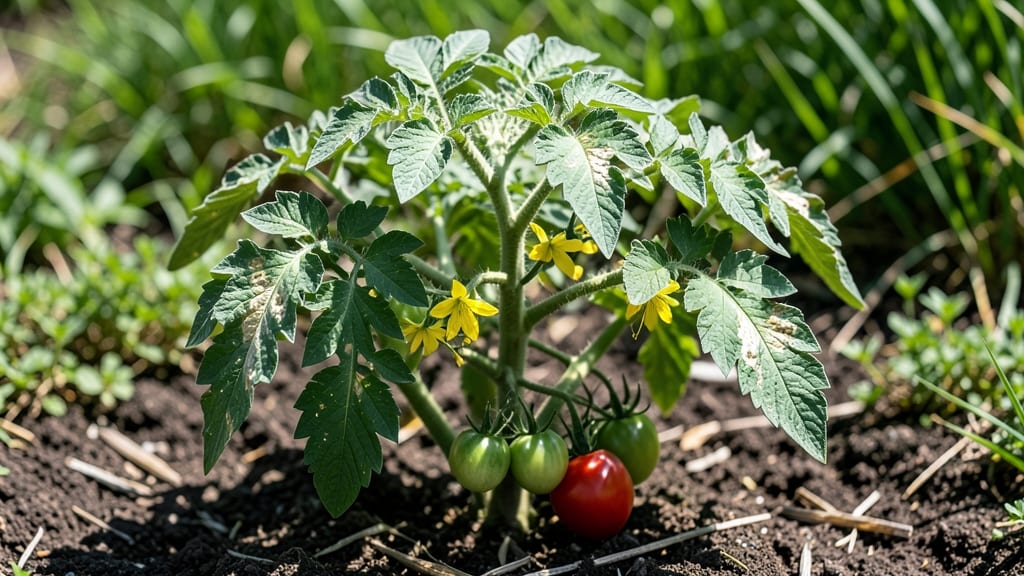
Your tomato plants are sending up a distress signal—white, papery patches on leaves that look like they’ve been kissed by the sun. 🌞 That’s tomato leaf sunscald, and it’s more common than you think, especially when hot afternoons meet tender new growth.
The good news? This isn’t a disease, and it’s 100% preventable with the right adjustments.
The culprit is usually sudden exposure—think moving plants from shade to full sun too fast, or young leaves getting fried before they harden. Even gradual sun can cause issues if temperatures spike above 90°F without enough water to cool the foliage.
The damage might look like pests or disease, but it’s purely environmental stress.
Fix it by shading young plants with shade cloth (30-50% coverage works best) or pruning lower leaves to improve airflow. Water deeply in the late afternoon to help leaves recover overnight, and avoid fertilizing during heatwaves—plants under stress can’t handle extra nutrients.
Within a week, you’ll see fresh, green growth pushing out.
This works for container tomatoes too—just move pots to dappled shade midday if your balcony gets brutal afternoon sun. The key is consistency: once your plants adjust, they’ll bounce back stronger. No chemicals needed, just smart timing and a little patience.
The Hidden Triggers Behind Leaf Damage
When your tomato plants start showing signs of brown, crispy patches on their leaves—especially on the upper surfaces—you’re likely dealing with a classic case of sunburn. But why does this happen? The culprit isn’t just the sun itself; it’s a perfect storm of environmental factors that leave your plants vulnerable.
Understanding these triggers is the first step to protecting your tomatoes. Let’s break down the science behind the damage.
Tomato leaves are designed to absorb sunlight for photosynthesis, but they have limits. When plants receive too much direct sunlight too quickly, their cells can’t dissipate the excess heat efficiently. This causes:
- Rapid water loss: The sun’s heat accelerates transpiration (water evaporation from leaves), leading to dehydration and cell collapse.
- Oxidative stress: Excess light energy creates harmful reactive oxygen species (ROS), which damage cell membranes and chlorophyll, turning leaves white or brown.
- Heat shock proteins malfunction: Plants produce protective proteins to handle heat, but if the stress is sudden or extreme, these defenses fail.
Actionable insight: Tomatoes thrive in 6–8 hours of sunlight daily, but high-intensity midday sun (10 AM–4 PM) is the riskiest. If your plants are in a greenhouse or hot climate, shade cloth (30–50% coverage) can reduce damage by up to 70%.
Water acts as a natural coolant for plants, but inconsistent irrigation creates the perfect conditions for sunburn. Here’s how:
- Drought stress: Underwatered plants close their stomata (pores) to conserve moisture, trapping heat inside leaf tissues. This makes them 3x more susceptible to sun damage.
- Uneven moisture: Dry soil on one side of the plant while the roots are saturated on the other causes hydraulic stress, weakening the plant’s ability to regulate temperature.
- Overnight watering: Wet leaves at dawn or dusk can magnify sunburn risk because water droplets act as tiny lenses, focusing sunlight and creating localized heat spots.
Actionable insight: Aim for 1–1.5 inches of water per week, delivered deeply at the soil level (not the leaves). Use drip irrigation or soaker hoses to avoid wetting foliage, and water early in the morning to allow leaves to dry before peak sun.
Tomatoes are sensitive to abrupt temperature changes. If you move plants from a shaded or cool environment (like a seedling tray indoors) directly into full, hot sunlight, their leaves lack time to adjust. This leads to:
- Chlorophyll breakdown: The green pigment degrades under sudden UV exposure, causing bleaching or necrotic spots.
- Reduced stomatal control: Young leaves haven’t developed efficient water-regulation systems, making them prone to overheating.
- Root shock: If transplanted too early, roots struggle to absorb enough water, compounding the sunburn risk.
Actionable insight: Hardening off seedlings is critical—gradually expose them to outdoor conditions over 7–10 days, increasing sunlight by 20% daily. For container-grown tomatoes, move them to a partially shaded spot for the first week after transplanting.
Ever noticed your tomatoes near a white wall, pavement, or even snow? These reflective surfaces can double the heat intensity hitting your plants. Here’s why:
- Albedo effect: Light-colored surfaces reflect up to 80% of sunlight upward, creating a heat blanket over leaves.
- Ground heat radiance: Dark soil or concrete absorbs heat during the day and re-radiates it at night, keeping plants in a persistent warm state that stresses them.
- Greenhouse traps: Plastic or glass greenhouses act like ovens, with temperatures soaring 10–20°F higher than outdoor air.
Actionable insight: Position your tomato plants at least 3 feet away from reflective surfaces. Use mulch (straw or grass clippings) to insulate soil and reduce heat reflection. In greenhouses, ventilation fans or shade cloth can lower temperatures by 5–10°F.
Pro tip: 💡 Monitor your plants’ microclimate with a soil thermometer. Ideal leaf temperatures should stay between 75–85°F—anything above 90°F increases sunburn risk dramatically.
Fixing Scorched Tomato Leaves
When your tomato plants show signs of sunburned or crispy leaves—those telltale white, yellow, or brown patches—don’t panic. With the right approach, you can nurse them back to health and even prevent future damage. Below, we break down cause-specific fixes and prevention tips to keep your plants thriving.
Fix: Gradually acclimate plants and provide shade relief.
- 🌿 Move Plants Strategically
- If your tomatoes are in full, intense sunlight (especially in hot climates), relocate them to a spot with partial afternoon shade (2–4 hours of relief).
- Use dappled shade (like under a sheer cloth or tree canopy) to filter harsh rays while still allowing light penetration.
- 🧴 Apply Protective Mulch
- Spread a 2–3 inch layer of organic mulch (straw, wood chips, or grass clippings) around the base to insulate soil and reduce heat stress.
- Pro tip: 💡 White mulch (like crushed limestone) reflects sunlight, lowering soil temps by up to 10°F.
- 🌧️ Boost Moisture Retention
- Water deeply in the morning (1–1.5 inches per week) to keep soil cool and roots hydrated.
- Use drip irrigation or soaker hoses to avoid wetting leaves, which can magnify sun damage.
Fix: Establish a consistent hydration routine to stabilize leaf moisture.
- 📅 Stick to a Watering Schedule
- Tomatoes thrive on regular, deep watering (every 2–3 days in heatwaves). Avoid soaking-and-drying cycles, which stress leaves.
- Pro tip: ✨ Drip irrigation on timers automates this—set it for early morning (6–8 AM) to prevent evening evaporation.
- 🍅 Prune for Better Airflow
- Trim overcrowded foliage to improve airflow, reducing leaf moisture loss.
- Remove lower leaves touching the soil to prevent disease and sun scorch.
- 🌿 Use Shade Cloth (Temporarily)
- If leaves are already crispy, drape 30–50% shade cloth over plants for 1–2 weeks to recover.
- Gradually reduce shade as new growth hardens off.
Fix: Buffer plants from heat shock and cold snaps.
- 🏡 Extend the Growing Season
- Use row covers or low tunnels to moderate temps during sudden heatwaves or cold snaps.
- For container tomatoes, move pots to shadier spots during peak afternoon sun.
- 🌱 Choose Heat-Tolerant Varieties
- Swap susceptible varieties (like ‘Early Girl’) for heat-resistant tomatoes like:
- ‘Solar Fire’ (disease-resistant, heat-loving)
- ‘Heatmaster’ (performs well above 90°F)
- ‘Cherokee Purple’ (tolerates fluctuations)
- Swap susceptible varieties (like ‘Early Girl’) for heat-resistant tomatoes like:
- 💦 Increase Humidity Nearby
- Place a shallow tray of water near plants or use a mist system (lightly) to raise humidity without drowning roots.
- Warning: ⚠️ Avoid wetting leaves at night—this promotes fungal issues.
Fix: Strengthen plants from the ground up.
- 🌿 Amend Soil for Retention
- Mix in compost or aged manure to improve moisture retention and nutrient availability.
- Add hydrated lime (if soil is acidic) or gypsum (for heavy clay) to balance pH and drainage.
- 🍄 Feed with Potassium-Rich Fertilizer
- Sunscald-stressed plants often lack potassium, which helps regulate water use.
- Use a balanced fertilizer (10-10-10) or banana peel tea (rich in potassium) every 2 weeks.
- 🚫 Avoid Over-Fertilizing with Nitrogen
- Too much nitrogen = soft, sun-sensitive leaves. Switch to a low-nitrogen, high-phosphorus formula (e.g., 5-10-10) for root strength.
To keep your tomatoes lush and resilient, follow this sun-scald-proofing guide:
| Step | Action | When to Do It |
|---|---|---|
| 🌱 Planting | Choose a west-facing spot (gentler afternoon sun) or east-facing. | At transplant time |
| 💧 Watering | Water deeply 2x/week (more in heat). Avoid overhead sprinklers. | Morning only |
| 🌿 Mulching | Apply 3 inches of mulch within 2 weeks of planting. | Early season |
| 🌡️ Monitoring | Watch for white/yellow patches—act fast with shade if seen. | Weekly checks |
| 🍅 Pruning | Remove suckers and lower leaves to improve airflow. | Every 2–3 weeks |
| 🌡️ Heatwaves | Use shade cloth (30–50%) if temps exceed 90°F for 3+ days. | As needed |
Final Tip: 🎯 Harvest promptly! Ripe tomatoes are less prone to sun stress—pick them as soon as they’re ready to reduce plant burden.
By addressing the root cause (literally and figuratively) and adjusting your care routine, your tomato plants will bounce back—and stay sunburn-free for the season. 🍅☀️
Frequently asked questions
Can tomato leaf sunscald spread to other parts of the plant?
No, it won’t spread like a disease—but the damage can worsen if left untreated. The affected leaves will eventually die, but the plant’s roots and stems remain healthy. The real risk is that weakened leaves can’t support fruit production, leading to smaller yields. Focus on protecting new growth to prevent further scorch.
How can I tell if my tomato leaves are sunburned vs. diseased?
Sunburned leaves show white, papery patches (like sun-bleached paper) on upper surfaces, often with crispy edges. Disease spots usually appear brown or black, may have fuzzy growth, and often show up on lower leaves first. Hold a leaf up to light—sunburn is usually one-sided, while disease affects both sides.
Will pruning damaged leaves help my tomato plant recover?
Yes! Prune away severely scorched leaves to redirect the plant’s energy to healthy growth. Remove only the most damaged foliage—don’t over-prune, as this stresses the plant further. Focus on improving airflow by trimming crowded branches, which helps prevent future sun stress.
Can I still harvest tomatoes from plants with sunburned leaves?
The fruit itself won’t be affected—only the leaves show damage. In fact, harvesting ripe tomatoes promptly reduces stress on the plant. Just be extra vigilant about watering and shading to protect remaining leaves while fruits develop.
How long does it take for tomato plants to recover from sunscald?
With proper care, you’ll see new growth in 5–7 days. Full recovery depends on how severe the damage was and your climate. If you’ve addressed shade, watering, and mulching, healthy leaves should emerge within 2–3 weeks. Monitor for pests or disease that might exploit stressed plants during recovery.