
Vegetables
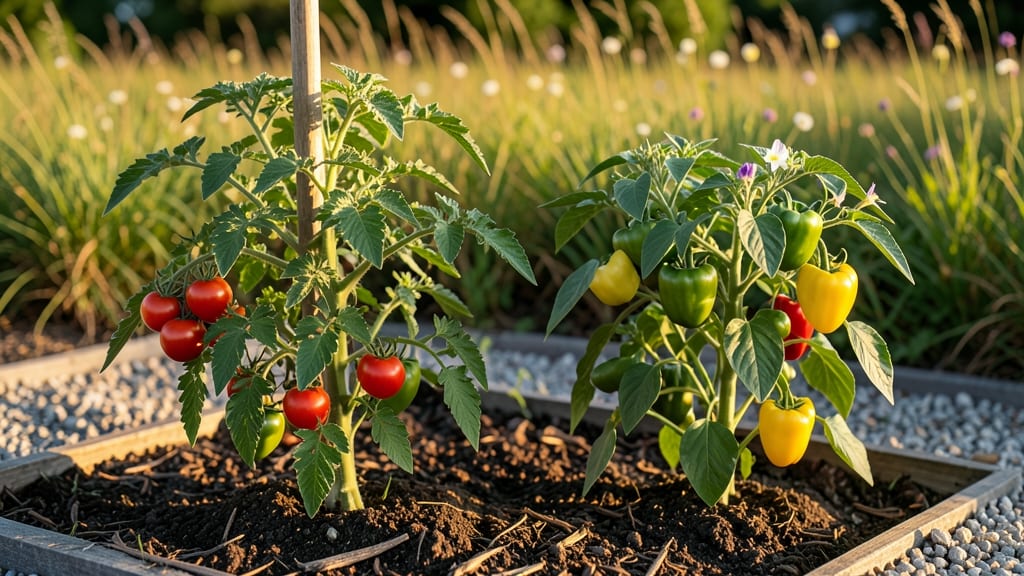
Growing tomatoes and peppers together is a game-changer for your garden. 🌱 These sun-loving plants thrive side by side, and once you master their care, you'll be swimming in fresh produce by midsummer.
The secret lies in matching their needs—rich soil, consistent water, and plenty of sunlight—while keeping pests and diseases at bay.
You'll need a spot with at least 6-8 hours of direct sun, well-draining soil mixed with compost, and sturdy supports for tomatoes. Peppers prefer slightly warmer soil, so wait until after the last frost to plant them.
Start seeds indoors 6-8 weeks before transplanting, or grab healthy nursery starts for a quicker harvest.
By mid-July, you'll be picking glossy red tomatoes and crisp, colorful peppers straight from the vine. The flavor difference from store-bought is shocking—sweet, juicy, and packed with summer goodness. Just remember: consistent watering (1-2 inches per week) and regular pruning keep them productive all season.
This combo works for containers, raised beds, or in-ground gardens—just adjust spacing. Tomatoes need 18-24 inches between plants, while peppers thrive 12-18 inches apart. Here's how to make it work for your space!
📚 In This Guide
- What you need
- Instructions
- Tips and common mistakes
- Wrapping up and next steps
What you need
- ● Tomato Seeds or Seedlings: Determinate (bush) or indeterminate (vining) varieties—choose based on your space (e.g., Roma, Cherry, or Beefsteak for tomatoes).
- ● Quantity: 4–6 plants per person (or 1–2 plants per pot if container gardening).
- ● Pepper Seeds or Seedlings: Hot (e.g., Jalapeño, Cayenne) or sweet (e.g., Bell, Banana) varieties. Start indoors 8–10 weeks before last frost.
- ● Quantity: 2–4 plants per variety (peppers thrive in clusters!).
- ● Potting Soil or Garden Soil: Well-draining, organic-rich soil (pH 6.0–6.8 for tomatoes; 6.0–7.0 for peppers).
- ● Quantity: 1–2 cubic yards for in-ground gardens or 5–10 gallons per container.
- ● Fertilizer: Balanced fertilizer (e.g., 10-10-10) or tomato/pepper-specific blends.
- ○ Compost or worm castings (optional but highly recommended for nutrient boost!).
- ● Garden Tools: Trowel or transplanting spade
- ● Garden gloves (to protect your hands from prickly stems!)
- ● Pruners (for trimming and harvesting)
- ● Containers (if not in-ground): 5-gallon pots or larger (tomatoes need depth; peppers prefer 12"+ pots).
- ● Drainage holes (non-negotiable!)
- ● Support Structures: Cages, stakes, or trellises for indeterminate tomatoes.
- ○ Optional: String or twine for tying vines.
- ● Mulch: Straw, wood chips, or black plastic (to retain moisture and suppress weeds).
- ● Full sun exposure: 6–8+ hours of direct sunlight daily (tomatoes and peppers are sun-hungry!).
- ● Warm soil: Wait until after the last frost (soil temp should be at least 60°F (15°C) for peppers, 55°F (13°C) for tomatoes).
- ● Watering readiness: A hose with a gentle spray nozzle or drip irrigation system.
- ● Patience! Tomatoes take 60–85 days to fruit; peppers range from 60–120 days.
- ● Soil moisture meter (to avoid over/under-watering).
- ● Row covers or shade cloth (for early-season protection from pests or heat).
- ● Epsom salt (for magnesium boost, especially for tomatoes).
- ● Coffee grounds (adds nitrogen and deters pests—peppers love it!).
Step-by-Step instructions for growing tomato and pepper plants
Here’s how I grow robust tomato and pepper plants that produce bountiful harvests—no guesswork involved.
🌱 Step 1: Prepare Planting Beds or Containers
Tomatoes and peppers thrive in loose, fertile soil with excellent drainage. If planting in the ground, choose a spot with full sun exposure (6-8 hours daily) and amend the soil with 2-3 inches of compost mixed into the top 12 inches. For containers, use a high-quality potting mix blended with perlite or vermiculite to improve aeration.
I like to test soil pH before planting—tomatoes and peppers prefer a range of 6.0-6.8. If your soil is too acidic, add lime; if too alkaline, mix in sulfur. Work the amendments into the soil at least 2 weeks before planting to let them integrate fully. Avoid fresh manure, which can burn tender roots.
☀️ Step 2: Plant Seeds or Transplants at the Right Time
Start seeds indoors 8-10 weeks before your last frost date or purchase healthy transplants from a nursery. When transplanting outdoors, wait until nighttime temperatures stay consistently above 50°F—peppers are especially sensitive to cold. Space tomato plants 18-24 inches apart and peppers 12-18 inches apart, depending on variety.
Dig holes slightly deeper than the root ball and place each plant so the top of the roots sits 1 inch below soil level. This encourages strong root growth. Water deeply after planting to settle the soil and remove any air pockets. Mulch around the base with 2-3 inches of straw or shredded leaves to retain moisture and suppress weeds.
💧 Step 3: Water and Fertilize for Maximum Growth
Water tomato and pepper plants at the base 1-2 inches per week, aiming for deep, infrequent watering rather than shallow daily doses. Wet leaves encourage disease, so avoid overhead watering. Use a soaker hose or drip irrigation to deliver water directly to the roots. In containers, water when the top 1 inch of soil feels dry.
Feed plants every 2-3 weeks with a balanced fertilizer (10-10-10 or 5-5-5) or a tomato/pepper-specific formula. Once flowers appear, switch to a low-nitrogen, high-phosphorus fertilizer (like 5-10-10) to promote fruiting. I also add a handful of compost around each plant mid-season for a nutrient boost without risking over-fertilization.
✂️ Step 4: Prune and Support for High-Yield Harvests
Prune tomato plants by removing suckers—the small shoots that form in the leaf axils. For indeterminate varieties (like Roma or Beefsteak), prune aggressively to focus energy on fruit production. Determinate varieties (like Bush Early Girl) need minimal pruning. Peppers don’t require pruning but benefit from removing any diseased or yellowing leaves to redirect energy.
Stake tomato plants or use cages to support heavy fruit loads. I tie stems to stakes with soft plant ties every 10-12 inches as they grow. Peppers typically don’t need support unless they’re large varieties like Banana or Poblano. Harvest regularly to encourage continuous production—ripe tomatoes and peppers won’t ripen further once picked, so stay on top of it!
🌿 Step 5: Monitor for Pests and Diseases
Watch for common pests like aphids, hornworms, and whiteflies. I inspect plants weekly and handpick larger pests or treat with neem oil for organic control. Early signs of disease include yellowing leaves, spots, or wilting. Remove affected foliage immediately and avoid overhead watering to prevent fungal issues like blight.
Rotate crops yearly to prevent soil-borne diseases from building up. If you notice powdery mildew or bacterial spots, apply a copper fungicide or baking soda spray (1 tablespoon baking soda + 1 quart water + a drop of dish soap) as a preventive measure. Healthy plants with good airflow resist most problems, so prune for airflow and water consistently.
Tips & tricks for thriving tomato and pepper plants
These sun-loving varieties demand precision—but once you master these game-changers, your harvests will be legendary.
Soil Prep Pays Off: The 2-week wait for soil amendments in Step 1 isn't just about patience—it's about microbial activity. Compost breaks down more effectively when mixed thoroughly into that top 12 inches. I like to use a soil probe to check drainage after amending: if water pools after 30 minutes, add more perlite. For containers, blend that potting mix with 20% perlite by volume to prevent compaction.
Timing is Everything for Transplants: Those 8-10 weeks indoors for seeds might seem arbitrary, but it's calculated based on tomato and pepper sensitivity to cold. Use a seedling heat mat (70-75°F) to speed germination if your space runs cool. When transplanting outdoors, I wait until morning soil temps hit 60°F—peppers will thank you with fewer blossom-end rot issues. The 1-inch root depth placement creates that critical root flare you see on healthy plants.
Watering Wisdom: The 1-2 inches weekly guideline works for most climates, but check soil moisture with your finger—top 1 inch dry is your trigger for containers. I've learned the hard way that drip irrigation at dawn prevents fungal issues better than evening watering. For peppers, I add a splash of fish emulsion to my watering can every 2 weeks during fruiting to boost calcium levels naturally.
Pruning Precision: When removing suckers on indeterminate tomatoes, aim for clean cuts with sharp pruners—don't tear the stem. I prune aggressively on my Beefsteak plants, removing everything below the first flower cluster to focus energy upward. For peppers, that weekly inspection for yellowing leaves pays dividends—early removal prevents energy drain that could reduce fruit production.
Pro Tips for Tomato And Peppers
- These sun-loving varieties demand precision—but once you master these game-changers, your harvests will be legendary.
- Soil Prep Pays Off: The 2-week wait for soil amendments in Step 1 isn't just about patience—it's about microbial activity.
- Timing is Everything for Transplants: Those 8-10 weeks indoors for seeds might seem arbitrary, but it's calculated based on tomato and pepper sensitivity to cold.
Frequently asked questions
Got questions about growing tomatoes and peppers together? You’re not alone! Here are some of the most common queries—plus quick, practical answers to help you grow a thriving garden.
Can tomatoes and peppers be grown together in the same garden?
Both thrive in similar conditions—full sun, warm soil, and well-draining soil. Planting them together is efficient, but space them apart (18–24 inches for tomatoes, 12–18 inches for peppers) to prevent disease spread. Pro tip: Rotate crops yearly to avoid soil-borne issues.
How long does it take for tomatoes and peppers to mature?
Timing varies by variety, but generally:
- Tomatoes: 60–85 days (cherry tomatoes may mature faster).
- Peppers: 60–90 days (hot peppers often take longer than bell peppers).
What if my peppers aren’t ripening?
Peppers need consistent warmth and sunlight to ripen. If they’re staying green:
- Check for cool nights (below 55°F/13°C)—they’ll stall.
- Ensure full sun exposure (6+ hours daily).
- Fertilize with low-nitrogen, high-phosphorus feed (like 5-10-10) to boost fruiting.
Are there any companion plants that help tomatoes and peppers?
Yes! Plant these near your tomatoes and peppers to deter pests and improve growth:
- Basil – Repels pests and enhances tomato flavor.
- Marigolds – Deter nematodes and aphids.
- Onions/garlic – Confuse pests like aphids.
- Avoid: Fennel (can stunt growth) and brassicas (compete for nutrients).
What should I do if my tomato or pepper plants get pests or diseases?
Act fast! Common issues include:
- Blight (tomatoes): Remove affected leaves, space plants for airflow, and apply copper fungicide.
- Aphids/spider mites: Spray with soapy water or introduce ladybugs.
- Blossom end rot (peppers/tomatoes): Add calcium (crushed eggshells) and keep soil moist.
Can I grow tomatoes and peppers in containers?
Yes! Use large pots (at least 5-gallon for tomatoes, 3–5 gallons for peppers) with drainage holes. Ensure they get 6+ hours of sun and use a balanced fertilizer (like 10-10-10). Dwarf or bush varieties (e.g., ‘Tiny Tim’ tomatoes, ‘Jalapeño M’ peppers) work best.
Wrapping up and next steps
Growing your own tomatoes and peppers is a rewarding journey that brings vibrant flavors and fresh produce right to your doorstep! 🌱 With the right sun-loving varieties, soil prep, and care, you’ll enjoy a bountiful harvest that rivals store-bought—and often tastes even better.
Whether you’re a beginner or seasoned gardener, the key is patience, consistency, and a little creativity.
Now that you’re armed with tips and answers, it’s time to roll up your sleeves and plant those seeds! Start small, experiment with varieties, and don’t forget to share your progress (or harvest) with fellow gardeners. Happy growing—your future meals will thank you! 🍅🌶️