
Planting
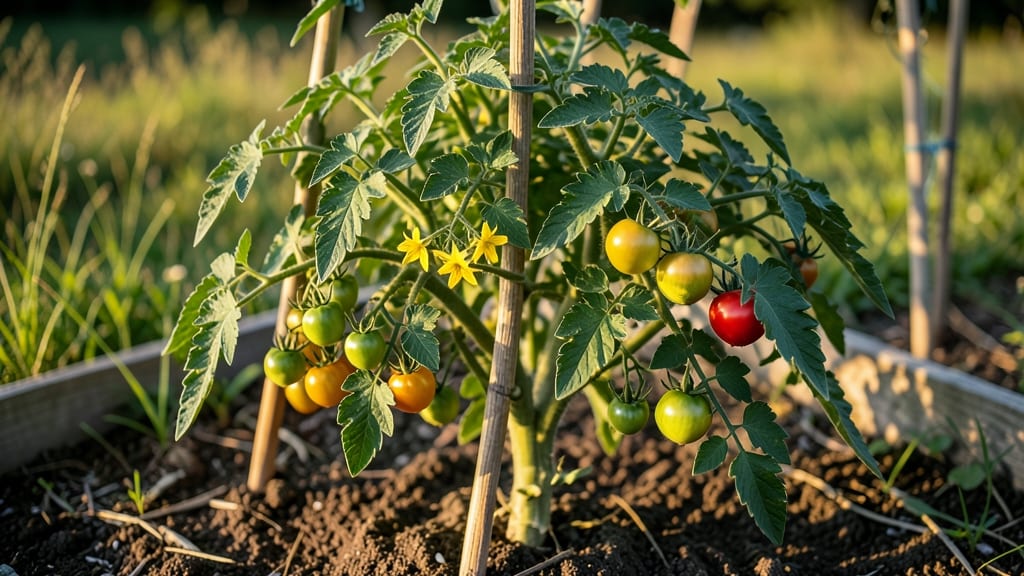
The Rutgers tomato plant size you’re working with can make or break your harvest—this classic 4- to 6-foot variety needs space to shine, but not as much as you’d think.
If you’re growing Rutgers tomatoes in a small garden, balcony, or container, knowing their mature size is critical to maximizing yield without overcrowding. This classic heirloom variety thrives in tight spaces—but only if you plan correctly.
What sets Rutgers apart is its indeterminate growth, meaning it keeps reaching skyward until frost stops it. Without proper spacing or support, those 6-foot vines can flop, leading to fewer tomatoes and more frustration.
In this guide, I’ll break down exactly how tall and wide Rutgers plants grow, how to prune them for smaller spaces, and the spacing rules that keep your harvest bountiful—no guesswork involved.

Rutgers tomato plant size: mature height, spread, and growth habits explained
If you're planning to grow Rutgers tomatoes, understanding their mature size and growth habits is essential for maximizing your harvest. This indeterminate variety is famous for its compact size compared to other heirlooms, making it perfect for small gardens, containers, and urban spaces.
Without proper spacing and support, however, even this variety can become unruly.
The Rutgers tomato plant size typically reaches 4 to 6 feet tall with a spread of 2 to 3 feet when grown in ideal conditions.
Unlike determinate varieties that stop growing once they flower, Rutgers tomatoes keep producing new leaves and branches throughout the growing season, which means they need ongoing care to stay productive.
Here’s what you need to know about their growth habits and how to manage them for the best results. The summary table below breaks down key dimensions and care requirements at a glance.
| Metric | Rutgers Tomato | Notes |
|---|---|---|
| Growth Habit | Indeterminate | Grows continuously until frost |
| Mature Height | 4–6 feet | Taller in cages/trellises |
| Spread (Width) | 2–3 feet | Wider without pruning |
| Pruning Needs | Moderate | Remove suckers to control size |
| Space Requirement (In-Ground) | 18–24 inches apart | Tighter spacing in containers |
| Container Size | 5-gallon minimum | Larger pots = better yield |
| Support Needed | Yes (trellis/cage) | Prevents sprawling and disease |
One of the biggest advantages of Rutgers tomatoes is their compact stature compared to other heirlooms like Brandywine or Cherokee Purple, which can reach 6 to 8 feet tall.
This makes them ideal for small-space gardens or balcony containers. However, their indeterminate growth means they’ll keep growing taller and bushier if not pruned regularly.
When growing in containers, choose a pot that’s at least 5 gallons to accommodate their roots. If you’re planting in ground beds, space them 18 to 24 inches apart to allow airflow and reduce disease risk.
Without proper spacing, you risk overcrowding, which leads to poor fruit production and fungal issues like blight.
Pruning is key to managing Rutgers tomato plant size. Since they’re indeterminate, they produce suckers (small shoots in the leaf axils). Removing these every 2–3 weeks encourages the plant to focus energy on fruit production rather than excessive foliage.
Aim to leave 2–3 main stems for optimal airflow and sunlight penetration.
For vertical growth control, install a trellis or tomato cage early in the season. This not only saves space but also makes harvesting easier. Without support, the plant can sprawl 3–4 feet wide, which is impractical for most home gardens.
A 5-foot-tall cage or sturdy trellis will keep the plant upright and contained.
If you’re comparing Rutgers tomatoes to other compact varieties, note that they’re slightly taller than dwarf tomatoes like Tiny Tim (1–2 feet) but more manageable than standard slicing tomatoes like Celebrity (4–5 feet).
Their moderate size and high yield make them a favorite for gardeners with limited space who still want heirloom-quality tomatoes.
To summarize, the Rutgers tomato plant size is 4–6 feet tall and 2–3 feet wide, but with proper pruning and support, you can keep it even smaller.
Whether you’re growing in a container on a patio or a small garden bed, planning for their growth habits will ensure a bountiful harvest without sacrificing space.
How to manage Rutgers tomato plant size in small spaces: pruning and support guide
Rutgers tomatoes are indeterminate varieties, meaning they grow continuously until frost. Without control, they can reach 6-8 feet tall and sprawl widely, making them tricky for small gardens.
The key to managing their size lies in pruning and support systems—both of which I’ve perfected in my own 5x5-foot balcony garden.
Pruning isn’t just about size control—it also improves air circulation, reducing disease risk and boosting fruit production. For Rutgers tomatoes, I focus on three main pruning techniques: suckering, topping, and selective branch removal.
Each serves a purpose, from shaping the plant to directing energy toward fruit development. Let’s break it down step by step.
Step-by-Step Rutgers Tomato Pruning & Support Guide
- 1 Remove suckers (shoots in leaf axils) when they’re 2-3 inches long to prevent overcrowding. Use clean pruning shears to avoid damaging the main stem. I do this weekly during the growing season.
- 2 Install a support system early—use a 6-foot tomato cage or wooden trellis to guide vertical growth. Secure the main stem with soft garden ties to prevent snapping. I add mine at transplanting to avoid root disturbance later.
- 3 Prune lower leaves up to 12 inches from the ground to improve airflow and reduce soil-borne diseases. Remove leaves with yellowing or spots immediately. I do this every 2-3 weeks in humid climates.
- 4 Top the plant at 5-6 feet tall to stop excessive height growth. Cut just above a leaf with a bud to encourage lateral branching. I do this in late summer to redirect energy to ripening fruit.
- 5 Use containers wisely: For balconies, choose 5-gallon pots with drainage holes. Place plants 18-24 inches apart to avoid competition. I add compost-rich potting mix to support root growth in confined spaces.
One common mistake I see is over-pruning Rutgers tomatoes, which stresses the plant and reduces yield. Never remove more than 20-30% of the foliage at once. Another pitfall is ignoring support systems—without them, indeterminate varieties flop and fruit rots.
I’ve had to replace collapsed cages mid-season, so I now reinforce mine with stakes for extra stability.
For container gardening, I’ve found that dwarf Rutgers varieties (like ‘Tiny Tim’) are better suited for 3-gallon pots, but standard Rutgers can thrive in 7-gallon containers with proper care.
Always water deeply and fertilize every 3-4 weeks to compensate for limited root space. My balcony plants produce just as much as in-ground ones!
With these techniques, you can keep your Rutgers tomatoes compact, productive, and healthy—even in the smallest spaces. Start pruning early, monitor growth closely, and don’t hesitate to adjust your approach as the season progresses. Happy gardening! 🌱