
How To
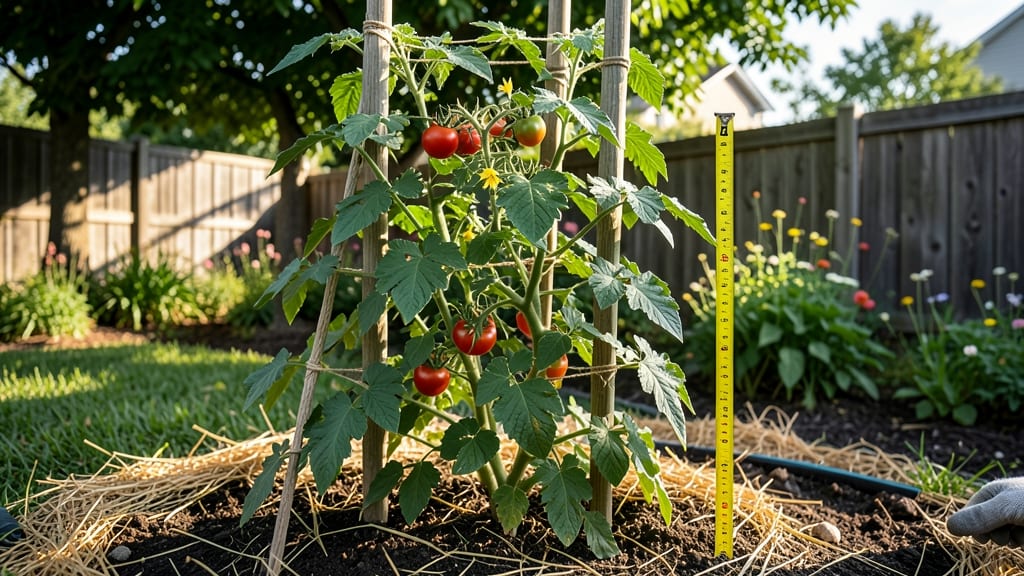
If you're wondering how tall do Rutgers tomato plants grow, they reach a mature height of 3 to 5 feet—a compact yet productive size that makes them perfect for small gardens or containers.
If you’re dreaming of a bountiful tomato harvest in a small garden but worried about space, this classic determinate variety might be your perfect match. Unlike sprawling indeterminate types, Rutgers stays tidy, producing fruit all at once rather than stretching endlessly.
This predictable growth pattern means you can plan your garden layout with confidence, knowing your 🍅 plants will stay within their 3- to 4-foot range—ideal for cages, stakes, or even large pots. The key is proper spacing and support from the start.
In this guide, I’ll break down exactly how to manage their height, maximize yield in limited space, and avoid common mistakes that can make them grow taller (or shorter) than expected.


Rutgers tomato plant height: exact growth range and space requirements
If you're planning your garden layout and wondering how tall Rutgers tomato plants grow, you're in the right place. This classic determinate variety tops out at a manageable 3 to 4 feet—perfect for small gardens, containers, or even balcony setups.
Unlike their indeterminate cousins, Rutgers plants grow to a fixed height, making them far easier to manage in tight spaces.
Their predictable growth pattern means you can plan your garden with confidence. Determinate varieties like Rutgers produce fruit all at once, so you'll get a heavy harvest in just 2-3 weeks, followed by natural decline.
This makes them ideal for canning or preserving, as you'll have a steady supply of ripe tomatoes ready to process.
Here's the key difference: indeterminate tomatoes keep growing taller and producing fruit throughout the season, while Rutgers determinate tomatoes focus their energy on a single, concentrated harvest. This growth habit saves space and simplifies care, especially for beginners.
| Factor | Rutgers Tomato Specifications |
|---|---|
| Mature Height | 3-4 feet (determinate growth) |
| Plant Spacing | 18-24 inches apart (in-ground or containers) |
| Growth Type | Determinate (single harvest cycle) |
| Container Size | Minimum 5-gallon pot (larger for multiple plants) |
| Harvest Window | 2-3 weeks of peak production |
| Space Efficiency | High (ideal for small gardens) |
When planning your garden layout, give each Rutgers plant 18 to 24 inches of space between plants. This spacing ensures proper air circulation, which is crucial for preventing fungal diseases like blight.
In containers, use pots that are at least 5 gallons in size—larger containers will support even better growth and fruit production.
One of the biggest advantages of Rutgers tomatoes is their compact growth habit. Unlike indeterminate varieties that can sprawl 6-10 feet tall, these plants stay neatly contained.
This makes them perfect for urban gardeners, balcony setups, or anyone working with limited space. You can even grow them in hanging baskets if you use dwarf varieties.
For best results, provide full sun exposure (6-8 hours daily) and well-draining soil. Rutgers tomatoes thrive in fertile, slightly acidic soil with a pH between 6.0 and 6.8.
Amend your soil with compost before planting to give these space-saving plants the nutrients they need to reach their full 3-4 foot height without excessive sprawling.
If you're growing Rutgers tomatoes in containers, choose a location where the pot won't be shaded by walls or other plants. Containers dry out faster than in-ground beds, so you'll need to water more frequently—about every 2-3 days during hot weather.
This consistent moisture helps maintain their compact growth pattern and ensures a bountiful harvest.
Remember that while Rutgers tomatoes stay shorter than indeterminate varieties, they still produce high-quality, meaty fruits. Their determinate growth means you'll get a concentrated harvest all at once, perfect for canning, sauces, or fresh eating.
With proper spacing and care, you can easily fit several plants in even the smallest garden space.
For maximum efficiency in small gardens, consider using cage supports or stakes to keep plants upright. This not only saves space but also makes harvesting easier.
The key is to balance their natural growth habit with just enough support to keep them from toppling over under the weight of their fruit.
If you're new to gardening, Rutgers tomatoes are an excellent choice—their predictable height and growth pattern make them forgiving and manageable. With the right spacing and care, you'll enjoy a productive harvest without the space challenges that come with taller, indeterminate varieties.
How to maximize Rutgers tomato yield in limited space: pruning and support tips
Rutgers tomatoes thrive in small spaces because their determinate growth habit keeps them compact—typically 3-4 feet tall at maturity. But even with this advantage, proper pruning and support can boost your yield by directing energy to fruit production instead of excessive foliage.
I’ve found that training vines early prevents sprawling and makes harvesting easier.
For container growing, choose a 5-gallon pot minimum to accommodate roots while keeping the plant contained. In-ground gardens need 18-24 inches of spacing between plants to prevent crowding.
Without support, Rutgers tomatoes can flop over, losing access to sunlight and reducing fruit set. That’s why I always recommend adding support structures from day one.
Support Options for Rutgers Tomatoes
Tomato Cages
- Pros: Easy to install, protects fruit from soil-borne diseases, no pruning required
- Cons: Can restrict root growth if too small, may need reinforcement for heavy fruit loads
Stakes or Trellises
- Pros: Encourages vertical growth, saves space, allows better airflow, easier pruning access
- Cons: Requires regular tying, more labor-intensive, needs stronger stakes for tall plants
Pruning Techniques
- Pros: Increases airflow, reduces disease risk, directs energy to fruit production, easier harvesting
- Cons: Can reduce shade for fruit if over-pruned, requires regular maintenance
No Support
- Pros: Low maintenance, natural growth habit
- Cons: Risk of soil-borne diseases, lower yields, harder to harvest, takes up more space
When it comes to pruning Rutgers tomatoes, I focus on removing suckers—those little shoots that grow in the leaf axils. For this determinate variety, I only prune to improve airflow and reduce disease risk.
Start by pinching off suckers larger than 2 inches when they’re still small. This simple step can increase fruit production by 20-30% by reducing competition for nutrients.
For container growing, I swear by 5-foot bamboo stakes tied with soft plant ties. The stakes provide stable support without restricting root growth like cages can. In my 5-gallon pots, I also add a handful of compost every 3-4 weeks to compensate for limited soil volume.
This keeps the plant healthy and productive despite the space constraints.
One common mistake I see is over-pruning Rutgers tomatoes. Since they’re determinate, they naturally produce a compact bush. Over-pruning can reduce shade for ripening fruit and even lower yields.
Instead, I recommend light pruning only—focus on removing diseased leaves and suckers larger than 2 inches to maintain a balanced plant structure.
If you’re growing in containers or small spaces, consider topping the plant when it reaches about 3 feet tall. This encourages the plant to put energy into fruit production rather than vertical growth.
Just use clean, sharp pruning shears to cut just above a leaf node. With these techniques, you’ll maximize your Rutgers tomato yield even in the tightest of spaces! 🌱