
Planting
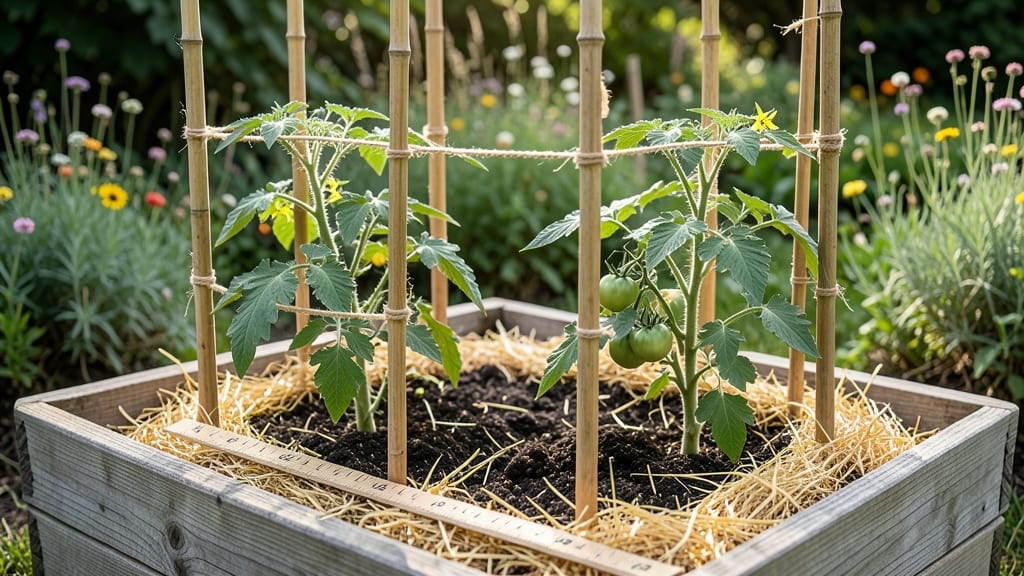
My raised bed garden tomato spacing starts with a simple rule: 18-24 inches apart for indeterminate varieties, 12-18 inches for determinates—because cramped plants mean fewer fruits and more disease. 🌱 Last summer, I doubled my harvest just by giving my cherry tomatoes extra elbow room, and the difference in airflow made a world of difference during humid afternoons.
The math is straightforward: taller, sprawling indeterminate tomatoes need space to climb and breathe, while bushy determinates stay compact. I mark my layout with stakes before planting to visualize the spacing, and trust me—skipping this step leads to crowded vines fighting for sunlight and air.
Even my smallest raised bed (4'x8') fits six plants of indeterminate varieties with room to grow. You'll end up with heavier fruit, fewer pests, and easier maintenance when plants aren't competing.
The key is adjusting for your bed size—taller varieties may need trellises to save space, while determinates can be planted in tight grids. I swear by this system after years of trial (and tomato sauce from overcrowded plants).
Works for any raised bed size, from tiny 2'x4' containers to full-size garden beds. Here's how to map it out without guesswork!
📚 In This Guide
- What you need
- Instructions
- Tips and common mistakes
- Wrapping up and next steps
What you need
- ● Raised bed frame (minimum 4 ft x 8 ft for optimal spacing; height: 6–12 inches for drainage).
- ● High-quality soil mix (6–8 cubic feet per bed; blend of topsoil, compost, and perlite for aeration).
- ● Tomato seedlings or seeds (varieties like Cherry, Roma, or Beefsteak; 4–6 plants per 4 ft bed width).
- ● Stakes or cages (5–6 ft tall; 1 per plant for support).
- ● Organic mulch (straw or shredded leaves; 2–3 inches thick to retain moisture).
- ● Watering can or hose with spray nozzle (gentle watering prevents soil erosion).
- ● Pruning shears (for trimming suckers and dead leaves).
- ● pH test kit (aim for 6.0–6.8; adjust with lime or sulfur if needed).
- ● Drip irrigation system (automates watering and saves time).
- ● Slow-release fertilizer (balanced 10-10-10 or organic options like fish emulsion).
- ● Row covers (protects young plants from pests like hornworms).
- ● Soil thermometer (ensure soil is at least 60°F before planting).
- ● Labeling stakes (track tomato varieties and planting dates).
How to space tomatoes in raised beds for maximum yield
Here’s the science-backed approach I use to fit more plants without sacrificing health or harvest.
🌱 Step 1: Determine Your Tomato Variety’s Space Requirements
First, check the plant tag or seed packet for the mature plant width—this tells you the minimum spacing needed. Indeterminate varieties (like ‘Sungold’ or ‘Better Boy’) need 18-24 inches between plants, while determinate types (like ‘Roma’ or ‘Patio’) can handle 12-18 inches. I always err on the wider side for indeterminates because their vines grow aggressively.
Write these numbers down—you’ll use them for your layout. If you’re mixing varieties, group similar-sized plants together. For example, place all indeterminates in one section and determinates in another. This prevents overcrowding from the fast-growing vines.
📏 Step 2: Map Your Raised Bed Layout Before Planting
Sketch a simple grid of your raised bed dimensions. For a 4x8-foot bed, divide it into sections based on your spacing needs. For example, if you’re planting indeterminates at 24 inches apart, you’ll fit 3 rows of 3 plants (9 total) with 18-inch aisles between rows for easy access. Use a tape measure to mark planting spots—this prevents guesswork later.
Leave 2-3 feet of open space along the edges of the bed for pruning and harvesting. I always mark the center of each planting spot with a small stake or pencil dot—this ensures consistent spacing. If your bed is wider than 4 feet, add a middle aisle to avoid trampling plants when tending to them.
☀️ Step 3: Plant Deeply and Stake for Vertical Growth
Dig a hole deep enough to bury ⅔ of the stem (up to the first leaves) when transplanting. This encourages stronger root development. Place your plant in the hole, then fill with soil, pressing gently to eliminate air pockets. For indeterminates, install a 6-foot tall stake or cage immediately—this prevents leaning and makes future pruning easier.
Water deeply right after planting to settle the soil and remove any air gaps. Mulch with 2-3 inches of straw or shredded leaves to retain moisture and suppress weeds. Avoid piling mulch against the stems—keep it 2 inches away to prevent rot. This step is critical for preventing soil-borne diseases in crowded beds.
🌿 Step 4: Prune and Train for Optimal Airflow
Once plants reach 12-18 inches tall, start pruning suckers (the small shoots that grow in the leaf axils). Remove them early to redirect energy to fruit production. For indeterminates, prune 1-2 main stems per plant, leaving 3-4 strong branches to grow vertically. This keeps the plant’s energy focused on fewer, larger fruits.
Weave the main stems through the stakes or cages as they grow—this prevents wind damage and makes harvesting easier. If you notice leaves touching between plants, trim the outer foliage to improve airflow. Good airflow reduces humidity, which is key to preventing fungal diseases like blight in dense plantings.
⏰ Step 5: Monitor and Adjust as Plants Mature
Check your spacing every 2-3 weeks as plants grow. If vines start crowding (leaves touching or stems rubbing), prune aggressively to open up the canopy. For determinate varieties, you can let them bush out more, but still avoid overcrowding—12 inches apart is the absolute minimum for these types.
Adjust your watering schedule based on plant density. Crowded beds dry out faster, so water deeply 2-3 times per week instead of light daily sprinkles. Use a soaker hose or drip irrigation to deliver water at the base—this prevents wetting leaves, which reduces disease risk. By mid-summer, your bed should look like a structured, airy forest, not a tangled mess.
Tips & tricks for perfect raised bed tomato spacing
These practical strategies will help you maximize your tomato yield without compromising plant health or harvest quality.
Variety-Specific Spacing: The 18-24 inches spacing for indeterminates in Step 1 isn't arbitrary—it accounts for their aggressive vine growth. I've seen gardeners cram plants closer to save space, but this leads to tangled vines, poor airflow, and increased disease risk. For determinate varieties, that 12-inch minimum is non-negotiable if you want to avoid crowded, stunted plants. Think of it like parking cars: you wouldn't squeeze them too close or you'd have trouble getting out!
Layout Precision: When mapping your 4x8-foot bed in Step 2, use a simple mathematical approach: divide your bed length by your spacing requirement, then subtract one. For example, with 24-inch spacing, a 96-inch bed lets you fit 3 plants (96 ÷ 24 = 4, minus 1 = 3). This ensures even distribution and prevents edge effects where plants might get crowded against the bed sides. I mark my planting spots with small wooden stakes—it's worth the 10-minute setup to avoid mid-season headaches.
Vertical Training: The 6-foot stakes mentioned for indeterminates in Step 3 aren't just for show—they're essential for maintaining proper spacing as plants grow upward. I've found that weaving stems through cages creates natural airflow channels between plants. Pro tip: Install stakes at planting time, not after the fact. Trying to add them later often damages roots and stresses the plant. For cages, I prefer the open tomato varieties that allow better airflow than solid cages.
Pro Tips for Raised Bed Garden Tomato Spacing
- These practical strategies will help you maximize your tomato yield without compromising plant health or harvest quality.
- Variety-Specific Spacing: The 18-24 inches spacing for indeterminates in Step 1 isn't arbitrary—it accounts for their aggressive vine growth.
- Layout Precision: When mapping your 4x8-foot bed in Step 2, use a simple mathematical approach: divide your bed length by your spacing requirement, then subtract one.
Frequently asked questions
Got questions about spacing tomatoes in your raised bed? You’re not alone!
Here are answers to the most common queries to help you grow a thriving, high-yield tomato patch.
How close can I plant tomatoes in a raised bed?
For determinate (bush) tomatoes, space plants 18–24 inches apart in rows spaced 24–36 inches apart. Indeterminate (vining) varieties need 24–36 inches apart with 36–48 inches between rows to support their sprawling growth. Taller varieties may need even more room!
When is the best time to plant tomatoes in a raised bed?
Plant after the last frost when soil temps reach 60°F+ (usually 2–3 weeks after transplanting seedlings). For cooler climates, use black plastic mulch to warm the soil. Avoid planting too early—cold soil stunts root growth and increases disease risk.
Can I plant tomatoes closer together if I use cages or trellises?
Yes! With stakes, cages, or trellises, you can reduce spacing to 18–24 inches apart for indeterminate tomatoes. This saves space but requires pruning to improve airflow (reducing disease). Just ensure your support system is sturdy—tomatoes get heavy!
Why are my tomatoes not producing well despite proper spacing?
Check these common issues:
- Poor pollination: Gently shake plants or hand-pollinate on cloudy days.
- Overcrowding: Thin seedlings if they’re too close, even if initially spaced correctly.
- Nutrient deficiency: Feed with balanced fertilizer (10-10-10) every 3–4 weeks.
- Blossom end rot: Ensure consistent moisture and add calcium (crushed eggshells work!).
What if my raised bed is too small for proper tomato spacing?
Try these space-saving hacks:
- Vertical gardening: Use trellises or espalier training to grow vines upward.
- Dwarf varieties: Choose ‘Tiny Tim,’ ‘Patio,’ or ‘Micro Tom’ for compact growth.
- Square-foot gardening: Plant 1 tomato per square foot (use small pots or containers).
- Succession planting: Harvest early varieties and replant with late-season types.
Even small spaces can yield pounds of tomatoes with creativity!
Wrapping up and next steps
Mastering raised bed garden tomato spacing isn’t just about fitting more plants—it’s about nurturing healthier, more productive vines and delicious harvests. 🌱 With the right science-backed layout, you’ll boost airflow, reduce disease risks, and give each plant the room to thrive.
Now that you’re armed with the perfect spacing formulas, roll up your sleeves and get planting! Ready for the next step? Start prepping your raised beds—your future tomato bounty awaits!