
Watering
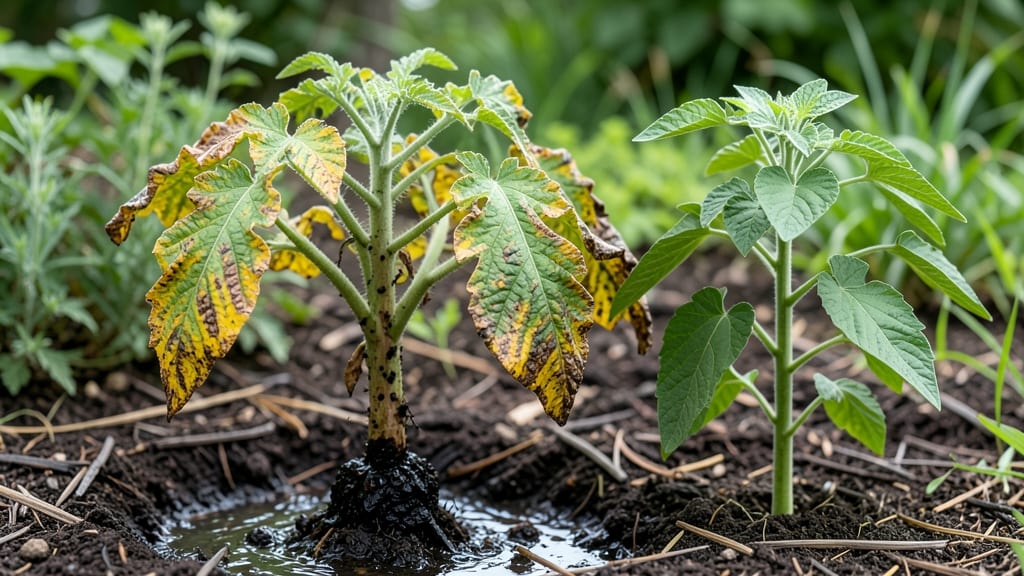
Your tomato plants are drowning in their own water, and those sad, yellowing leaves are a dead giveaway. 🌱 Overwatered tomato plants don’t just wilt—they develop fungal diseases, rot at the roots, and struggle to produce fruit, no matter how much you hope for a comeback.
The good news? With the right adjustments, you can nurse them back to health and prevent future disasters.
First, stop watering until the top inch of soil feels dry to the touch. Then, improve drainage by adding compost or perlite to the soil and consider repotting if the current container lacks drainage holes.
Prune any blackened or mushy stems immediately—they’re past saving and will only spread rot. You’ll see new growth within 1-2 weeks if the roots are still alive.
Prevention starts with a watering schedule that matches your climate: deep watering 2-3 times per week in hot weather, less in cooler months. Mulch helps retain moisture without drowning the roots, and always check the soil before watering—stick your finger in first.
The goal is soil that’s damp but never soggy, so your plants stay strong and productive.
This method works for both container-grown and in-ground tomatoes, and the same principles apply to peppers and eggplants too. With a little TLC, your plants will bounce back better than ever—just give them time to dry out and breathe. Let’s turn those leafy comebacks into a harvest-worthy reality.
Root Causes of Water Woes
When your tomato plants look more like soggy sponges than thriving vines, the blame often falls on excessive moisture. But why does this happen? Overwatering isn’t just about pouring too much water—it’s a chain reaction of environmental, soil, and even human factors.
Let’s break down the real culprits behind your leafy letdown.
Tomatoes hate "wet feet," and if your pots or garden beds don’t drain properly, water pools around the roots instead of flowing away. This creates anaerobic conditions—a root’s worst nightmare. Without oxygen, roots suffocate, struggle to absorb nutrients, and become susceptible to Fusarium or Phytophthora fungi.
Why it matters: Clay or compacted soil, missing drainage holes, or a high clay content can trap water like a sponge. Even raised beds can suffer if the underlying soil is impermeable.
Actionable fix:
- Test drainage: Fill a container with water, then time how long it takes to drain. If it’s slower than 30 minutes, amend the soil with perlite, coarse sand, or compost.
- For pots, ensure holes at the bottom and use a cache pot liner (like a plastic bag with drainage holes) to prevent clogging.
- In garden beds, mix in organic matter (like aged manure or coconut coir) to improve aeration.
Tomatoes thrive on consistency. Skipping a watering day followed by a deep soak can confuse the plant, leading to alternating drought and flood stress. This disrupts the plant’s ability to regulate moisture, causing roots to swell and burst or rot.
Why it matters: Uneven watering weakens the plant’s vascular system, making it harder to transport nutrients. It also attracts pests like blossom end rot (caused by calcium deficiency) or early blight (a fungal infection that loves damp leaves).
Actionable fix:
- Stick to a schedule: Water deeply 2–3 times per week (adjust for climate—hotter days may need daily checks).
- Use the "finger test": Stick your finger 1–2 inches into the soil. If it’s dry, water; if damp, wait.
- Mulch heavily (2–3 inches of straw or wood chips) to lock in moisture and reduce evaporation.
High humidity slows evaporation, keeping soil wet longer than it should. Combine that with cool nights (below 60°F) or hot days (above 90°F), and your tomatoes are stuck in a moisture trap. Roots can’t "breathe," and fungal diseases like powdery mildew or root rot move in fast.
Why it matters: Tomato roots prefer warm, oxygen-rich soil (ideal temp: 70–85°F). If soil stays cold or soggy, microbial activity slows, cutting off the plant’s nutrient supply.
Actionable fix:
- Monitor humidity: Use a hygrometer to keep levels below 60%. Improve airflow with pruning or spacing plants 18–24 inches apart.
- Adjust watering for weather: Reduce frequency in rainy seasons or high-humidity climates. In heatwaves, water early morning to prevent rapid evaporation.
- Choose fast-draining soil mixes (like 60% potting soil, 20% perlite, 20% vermiculite) for containers.
When tomato plants compete for space, their roots tangle and struggle to access oxygen. Overcrowding also traps moisture between stems, creating a humid microclimate that invites disease. Even planting too deep (burying stems) can encourage rot at the soil line.
Why it matters: Roots need space to spread (aim for 18–24 inches between plants). Poor airflow and compacted roots lead to waterlogging, even if you’re not "overwatering" by volume.
Actionable fix:
- Thin seedlings: Keep only the strongest stem per plant, pruning weaker shoots at the base.
- Space properly: Use cages or stakes to guide vertical growth and improve airflow.
- Avoid deep planting: Bury stems only up to the first set of leaves—never deeper than 1–2 inches.
Not all watering is equal. Overhead sprinklers wet leaves (inviting fungal spores), while drip irrigation or soaker hoses deliver water directly to the roots. Even watering at the wrong time (like late evening) can leave foliage damp overnight, promoting rot.
Why it matters: Wet leaves create a perfect petri dish for early blight or Septoria leaf spot. Roots also can’t absorb water efficiently if the soil surface is crusty or hydrophobic (common in clay soils).
Actionable fix:
- Water at the base using drip lines or a watering wand with a narrow stream.
- Avoid wetting leaves: Use shallow basins around plants to direct water.
- Water in the early morning (before 10 AM) to allow foliage to dry quickly.
Pro tip: 💡 Yellowing leaves? Check the soil first—it’s often a sign of overwatering, not underwatering. Gently squeeze a handful of soil; if it’s damp like a wrung-out sponge, hold off on watering.
Revive Your Tomatoes Now
If your tomato plants are drowning in excess water, don’t panic—there’s still hope! The key is acting fast to drain the soil, improve airflow, and prevent root rot. Below, we’ll break down the fixes by cause, so you can target the problem and bring your plants back to life.
Plus, we’ll share simple prevention tips to keep your tomatoes thriving.
Signs: Yellowing leaves, mushy stems, or waterlogged soil that stays soggy for days.
Step 1: Stop Watering Immediately
🚰 Pause all irrigation—including rainwater if possible. Let the soil dry out naturally.
Step 2: Improve Drainage Fast
🔥 Dig a trench around the plant (6–12 inches deep) to help excess water escape. 🌱 Add organic matter like compost or coconut coir to break up compacted soil and improve aeration.
Step 3: Elevate the Roots (If Needed)
👨🍳 Mound soil around the base of the plant (like a small hill) to lift roots slightly, encouraging faster drying.
Prevention Tip:
✨ Use raised beds or containers with drainage holes to avoid water pooling.
Signs: Black spots on leaves, white mold, or a foul smell near the roots.
Step 1: Trim the Damage
✂️ Prune affected leaves with sterilized scissors to prevent spread.
Step 2: Apply Fungicide (Natural or Store-Bought)
🍄 Spray with neem oil or copper fungicide (follow label instructions). 🌿 Boost airflow by spacing plants farther apart or using stakes to prop up vines.
Step 3: Adjust Watering Habits
💡 Water deeply but less often—aim for 1–1.5 inches per week (check soil moisture with your finger).
Prevention Tip:
🎯 Water at the base in the morning to reduce humidity and fungal growth.
Signs: Wilting despite wet soil, dark/brown roots, or stems that easily pull from the ground.
Step 1: Remove the Plant (Gently!)
🌱 Dig up the tomato and rinse the roots to assess damage.
Step 2: Trim Rotten Roots
🔪 Snip off black/mushy roots with clean shears, leaving only firm, white roots.
Step 3: Repot in Fresh, Dry Soil
🏺 Plant in a new container with sterile potting mix (avoid garden soil). 💧 Hold off on watering for 3–5 days to let roots recover.
Prevention Tip:
🌡️ Monitor soil moisture—stick your finger in the soil before watering. If it’s damp, wait!
No matter the cause, these steps will help your tomatoes bounce back:
- 🌞 Give them sunlight (6–8 hours daily) to speed up recovery.
- 🍽️ Feed lightly with a balanced fertilizer (like 10-10-10) once new growth appears.
- 🌿 Mulch (but not too close) to retain moisture without suffocating roots.
With these fixes, your tomato plants should perk up in 1–2 weeks. Keep an eye on them, adjust watering, and soon you’ll be harvesting juicy, homegrown tomatoes again! 🍅🔥
Frequently asked questions
How can I tell if my tomato plant is overwatered vs. underwatered?
Check the soil first—stick your finger 1-2 inches deep. Overwatered plants have soggy soil that stays damp for days, yellowing leaves (especially lower ones), and mushy stems. Underwatered plants have dry, cracked soil, wilting leaves that stay crispy even when watered, and dry, brown edges. Pro tip: Gently tug on the plant—if it pulls out easily, roots are rotting from overwatering.
Can I save a tomato plant with root rot?
Yes, but act fast! Remove the plant, rinse the roots, and trim away any black/mushy sections with clean shears. Repot in sterile potting mix (avoid garden soil) and hold off on watering for 3-5 days to let roots recover. Keep the soil dry but not bone-dry—water only when the top inch feels dry. Success depends on how much root damage exists.
Why do my tomato leaves turn yellow when I water them?
Yellow leaves are a classic overwatering sign, but they can also mean nutrient deficiencies or fungal infections. Start by checking soil moisture—if it’s damp, you’re overwatering. If dry, yellowing may signal nitrogen deficiency (feed with balanced fertilizer) or early blight (prune affected leaves and improve airflow). Always check the soil first before assuming water is the issue.
How often should I water tomato plants in containers?
Containers dry out faster than garden beds, so water when the top 1 inch of soil feels dry. In hot weather, this could be daily, while cooler months may only need every 2-3 days. Use your finger as a guide—never water on a schedule. Containers also need drainage holes and well-draining soil (mix potting soil with perlite or vermiculite).
Will mulch help prevent overwatering?
Mulch actually helps prevent overwatering by locking in moisture and reducing evaporation. Use 2-3 inches of organic mulch (straw or wood chips) but keep it 2 inches away from stems to avoid trapping moisture against the plant. This creates a drier microclimate around the base while keeping roots consistently moist—perfect for preventing both underwatering and overwatering.