
Watering
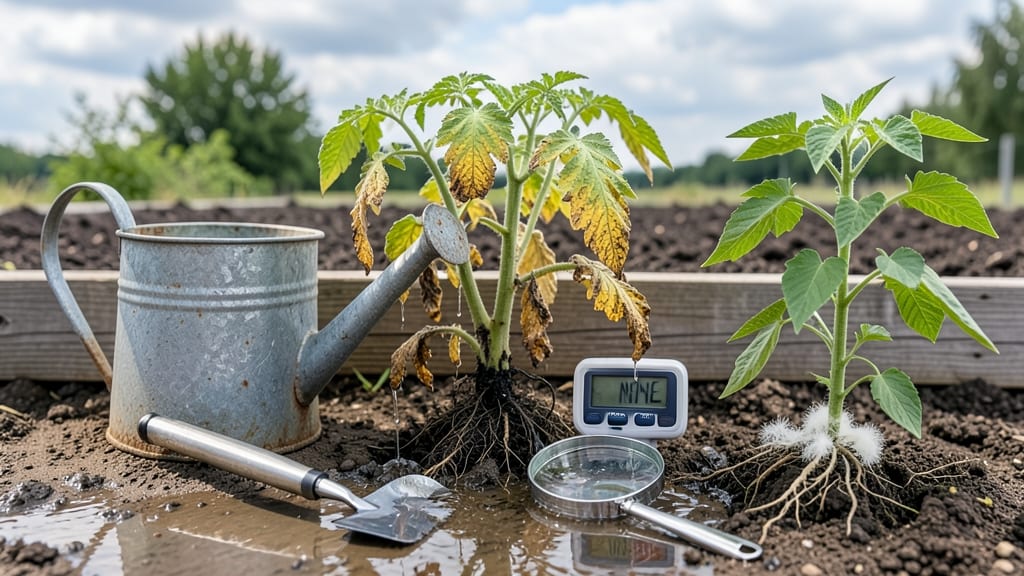
Overwatered tomato seedlings can turn your green thumb into a soggy mess—but recovery is simpler than you think. 🌱 I’ve nursed back more than a dozen wilting starts, and the key is acting fast before fungal rot takes over.
The first sign? Yellowing leaves that feel mushy when you touch them, or seedlings that flop like overcooked noodles.
Here’s the game-changer: stop watering immediately and let the top inch of soil dry out completely. Most gardeners drown seedlings by keeping them "constantly moist"—tomatoes hate soggy roots. Once the soil is dry, repot into fresh, well-draining mix (cactus/succulent blend works great) and place in bright, indirect light.
Within 3-5 days, you’ll see new growth pushing through.
Long-term, the fix is easy: water only when the top inch is bone-dry, and use containers with drainage holes. I swear by 50/50 potting mix and perlite to keep roots happy.
Your seedlings will bounce back stronger than ever—just don’t let them get soggy again. Prevention is the real secret weapon.
This method works for peppers, herbs, and even basil too. The only rule? Act fast—the sooner you adjust, the faster they recover. No more wilted disappointments—just sturdy, thriving plants ready for transplanting.
Root Causes Of Soggy Seedlings
Overwatering tomato seedlings is a common mistake that can stifle growth, invite disease, and even kill young plants before they reach maturity. But why does it happen so often? The answer lies in a mix of human behavior, environmental factors, and the delicate biology of seedlings.
Let’s break down the key reasons your tomato seedlings might be drowning in their own care—and how to avoid repeating them.
New gardeners (and even seasoned pros) often fall into the trap of thinking “more water = better growth.” But seedlings have tiny, underdeveloped root systems that can’t handle excess moisture. When soil stays soggy for too long, oxygen is crowded out, suffocating roots and preventing them from absorbing nutrients efficiently.
Here’s the science:
- Oxygen depletion: Roots need oxygen to respire and grow. Water fills soil pores, displacing air and triggering anaerobic conditions—which produce toxic byproducts like ethanol and acetaldehyde.
- Fungal feast: Damp soil is a buffet for pathogens like Pythium and Phytophthora, which cause damping-off (a fungal disease that rots stems at the soil line, killing seedlings).
- Nutrient lockout: Excess water leaches essential nutrients (like nitrogen and phosphorus) beyond the root zone, starving your plants.
Pro tip: 💡 Use the finger test—stick your index finger 1–2 inches into the soil. If it’s damp but not wet, your seedlings are happy. If it’s muddy, hold off on watering!
Not all pots are created equal. Seedlings in containers without drainage holes are prime candidates for overwatering because water has nowhere to escape. Even “well-draining” soil mixes can compact over time, trapping moisture against the roots.
Key culprits:
- Clay or plastic pots without holes: These act like water traps, especially in humid climates. Roots in these containers can rot within 48 hours of overwatering.
- Compacted or heavy soil: Mixes with high clay or peat content hold water like a sponge. Lightweight, airy blends (like 60% potting soil + 30% perlite + 10% vermiculite) prevent this.
- Overcrowded seedlings: Too many plants in one pot create a microclimate where humidity lingers, slowing evaporation and promoting rot.
Fix it: ✨ Always use containers with drainage holes, and elevate pots on saucers or trays to catch excess water. If repotting isn’t an option, add a layer of coarse sand or gravel at the bottom to improve drainage.
Tomato seedlings don’t need a daily shower—they need water based on their environment. High humidity, rain, or even morning dew can trick growers into thinking the soil is dry when it’s not.
Environmental triggers:
- Humid climates: Air already saturated with moisture means soil stays damp longer. In these conditions, seedlings may only need water every 5–7 days.
- Cloudy or rainy days: Natural rainfall can deliver enough moisture for seedlings, especially in starter trays. Overwatering on top of this doubles the risk of rot.
- Cold soil temperatures: Cool soil (<60°F) slows water absorption, making roots more susceptible to rot. If your seedlings are in a chilly greenhouse or unheated garage, they’re at higher risk.
Adjust your routine: 🌡️ Use a hygrometer to monitor humidity. Aim for 40–60% relative humidity around seedlings. If your space is humid, reduce watering frequency and ensure airflow with a small fan.
Skipping water one day and then drowning seedlings the next creates a rollercoaster of moisture stress. Roots struggle to adapt, leading to uneven growth or rot. Even worse? Automatic watering systems (like drip irrigation or misting set on timers) can overdo it if not calibrated properly.
Why this backfires:
- Fluctuating moisture levels: Roots expand and contract with water availability. Frequent soaking followed by drying causes root cell damage.
- Surface crusting: Heavy watering can create a hard top layer of soil, blocking oxygen and trapping heat—like a plastic wrap effect.
- Altered soil chemistry: Sudden water surges dilute soil nutrients or trigger salt buildup (from fertilizers), stressing delicate seedlings.
Solution: ⏰ Stick to a consistent light watering schedule—think bottom-watering (placing trays in shallow water for 10–15 minutes) or using a spray bottle for a fine mist. Aim for 1–2 times per week unless the soil is bone-dry.
Understanding these root causes is the first step to saving your seedlings. The good news? Once you recognize the signs of overwatering (yellowing leaves, mushy stems, or mold), you can act fast to revive them. Next up: how to diagnose and fix soggy seedlings before it’s too late.
Revive & Prevent Drowning Tomatoes
Overwatered tomato seedlings can feel like a gardener’s worst nightmare—but don’t panic! With the right steps, you can nurse them back to health and keep future seedlings thriving. Below, we’ll match common causes of overwatering to practical fixes, plus pro tips to avoid soggy soil disasters.
Cause: Too much water cuts off oxygen, suffocating roots and causing yellow leaves. Solution:
- Stop Watering Immediately 🚰
- Let the soil dry out completely before watering again. Stick your finger 1–2 inches deep—if it’s damp, wait.
- Repot in Fresh, Well-Draining Soil 🏺
- Gently remove the seedling from its current pot and check for mushy roots. Trim any black or slimy roots with sterilized scissors.
- Fill a new pot (with drainage holes!) with a mix of potting soil + perlite or vermiculite (50/50 ratio) to improve aeration.
- Bottom-Water Sparingly 💧
- Place the repotted seedling in a tray of water for 10–15 minutes, then remove excess. Avoid top-watering for 3–5 days to let roots recover.
💡 Pro Tip: If repotting isn’t an option, fluff the soil with a fork to break up compaction and encourage airflow.
Cause: Overwatering creates the perfect damp, dark environment for fungi like Botrytis or Fusarium. Solution:
- Prune Infected Leaves ⚔️
- Snip off yellow, brown, or moldy leaves below the damage with clean shears. Dispose of them in the trash (not compost).
- Apply Fungicide 🛡️
- Spray with a copper-based fungicide (like Bonide Copper Fungicide) or a baking soda solution (1 tsp baking soda + 1 quart water + a drop of dish soap). Reapply every 7–10 days.
- Improve Air Circulation 🌬️
- Space seedlings 12–18 inches apart or use a small fan on low for 1–2 hours daily to dry foliage faster.
🌡️ Prevention: Water in the early morning so leaves dry by evening, and avoid overhead watering.
Cause: Waterlogged roots turn black and mushy, starving the plant. Solution:
- Emergency Root Rescue 🩹
- Remove the seedling and rinse roots gently in water to remove excess soil. Soak in a hydrogen peroxide solution (1 tbsp 3% H₂O₂ per cup of water) for 10 minutes to kill pathogens.
- Root Hormone Boost 💊
- Dip healthy roots in rooting hormone powder before replanting in fresh, sterile soil.
- Adjust Watering Habits ⏰
- Water only when the top 1–2 inches of soil are dry. Use a moisture meter or your finger as a guide.
✨ Prevention: Use self-watering pots with reservoirs (like those with wicks) to regulate moisture without overdoing it.
- Upgrade Your Containers 🏗️ - Ensure pots have drainage holes and are made of terracotta (breathable) or plastic with aeration (like slotted pots).
- Amend Heavy Clay Soil 🪓 - Mix in compost, coconut coir, or sand to improve drainage.
Avoid garden soil—it compacts easily. 3. Mulch Strategically 🌿 - Apply a 1-inch layer of straw or pine needles around seedlings (but not touching stems) to retain just enough moisture while preventing soggy soil.
🎯 Prevention Checklist:
- [ ] Water deeply but infrequently (better to underwater slightly than drown).
- [ ] Monitor weather—reduce watering during rain or high humidity.
- [ ] Rotate pots weekly to ensure even sunlight exposure (prevents uneven drying).
Remember: Tomatoes are resilient! With these fixes, your seedlings should perk up in 3–7 days. Keep an eye on them, and soon you’ll be harvesting juicy, homegrown tomatoes instead of dealing with a soggy mess. 🍅🌱
Frequently asked questions
What do overwatered tomato seedlings look like?
Watch for yellowing leaves (especially lower ones), mushy stems when touched, or seedlings that flop like wet noodles. You might also spot white mold on soil or black, slimy roots. These are red flags that roots are drowning.
Can I save tomato seedlings with black roots?
Yes, but act fast! Trim the black/mushy roots with clean scissors, then replant in fresh, dry potting mix with perlite. Soak roots in hydrogen peroxide (1 tbsp per cup of water) for 10 minutes to kill fungus before replanting. Most seedlings bounce back in 3-5 days if roots aren't completely rotted.
How often should I water tomato seedlings?
Water only when the top 1-2 inches of soil are completely dry. For most climates, this means every 5-7 days—check with your finger! In humid weather, wait even longer. Bottom-watering (placing pots in trays of water) is gentler than top-watering and reduces overwatering risks.
Why do my tomato seedlings wilt after watering?
This usually means root damage from overwatering or compacted soil. Let the soil dry out completely, then repot in fresh mix with perlite or vermiculite. Avoid watering again for 3-4 days to let roots recover. If wilting persists, check for fungal infections (like damping-off) and treat with copper fungicide.
What's the best soil mix to prevent overwatering?
Use a lightweight blend like 60% potting soil + 30% perlite + 10% compost. This improves drainage while retaining enough moisture. Avoid garden soil—it compacts and holds too much water. For extra insurance, add a 1-inch layer of gravel at the pot's bottom before adding soil.