
How To
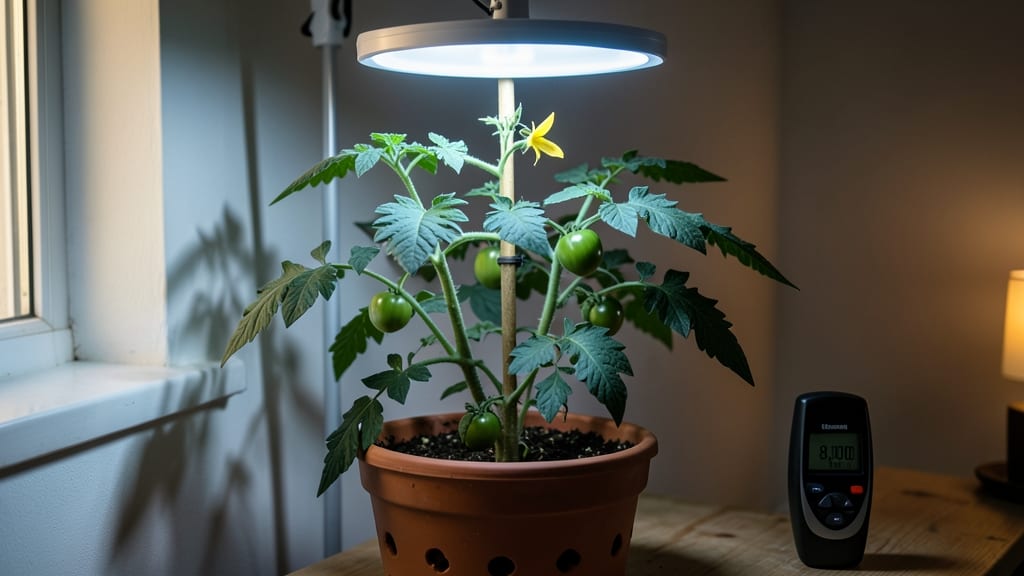
A tomato plant needs 6 to 8 hours of bright light daily indoors to grow strong and produce fruit—without it, your plants will stretch toward windows or grow lights like they’re reaching for salvation.
Picture this: leggy stems, pale leaves, and tiny, tasteless tomatoes—all because your indoor setup didn’t deliver enough light. The good news? You don’t need a greenhouse to fix it.
With the right lighting tricks, you can give your 🍅 the power it craves, whether you’re working with natural light or grow lights.
Indoor tomatoes thrive when they get light that mimics the sun’s spectrum, especially blue and red wavelengths. Too little light, and your plants will tell you with weak growth; too much heat from poor placement, and you’ll scorch them instead. The key is balancing intensity, duration, and placement—no guesswork required.
In this guide, I’ll break down exactly how much light your tomato plants need at each stage (seedlings vs. fruiting), the best grow lights for your budget, and how to spot light deficiency before it’s too late. Let’s get those indoor tomatoes flourishing!
 Best Window Placement
Indoor tomato plant light requirements: hours and intensity explained
Tomatoes are sun-worshippers—they crave 6 to 8+ hours of direct sunlight daily to produce flavorful fruit and strong vines. Indoors, replicating this light intensity becomes the biggest challenge for container growers.
Without enough light, your plants will stretch toward windows, develop weak stems, and produce small, tasteless tomatoes—or worse, no fruit at all.
Natural sunlight provides the full spectrum of light, including blue and red wavelengths that tomatoes need for photosynthesis and flowering. Blue light (shorter wavelengths) promotes leafy growth and compact stems, while red light (longer wavelengths) triggers flowering and fruit set.
Indoors, you’ll need to supplement with grow lights or maximize natural light exposure to mimic these conditions.
Here’s the critical breakdown of what your indoor tomato plants truly need to thrive:
| Requirement | Specification | Notes |
|---|---|---|
| Daily Light Hours | 6–8+ hours | Seedlings need 12–16 hours initially; mature plants thrive at 6–8 hours. |
| Light Spectrum | Full-spectrum (blue + red wavelengths) | Blue light (400–500nm) for growth; red light (600–700nm) for flowering. |
| Light Intensity | 10,000–15,000 lux | Direct sunlight = ~100,000 lux; indoor grow lights should match this. |
| Distance from Light Source | 6–12 inches | Closer for seedlings; farther for mature plants to prevent leaf burn. |
| Light Cycle Adjustments | 14–16 hours (seedlings), 10–12 hours (mature) | Use timers for consistency; tomatoes need darkness to rest. |
If your tomatoes aren’t getting enough light, watch for these red flags: elongated stems (called etiolation), pale yellow leaves, and weak growth. These signs mean your plants are stretching toward light sources, a clear indicator of deficiency. Without intervention, they’ll struggle to support fruit or produce quality tomatoes.
For low-light spaces, consider these solutions: Place plants near south-facing windows (the brightest indoors) and rotate containers weekly for even growth. If natural light is insufficient, supplement with LED grow lights positioned 6–12 inches above the plants.
These lights are energy-efficient and mimic sunlight’s spectrum, making them ideal for indoor tomato growing.
Pro tip: Use a light meter or observe your plants’ response to adjust placement. If leaves turn yellow or stems become leggy, move the plant closer to the light source or increase the duration.
Tomatoes are forgiving, but they demand light—skimp on it, and you’ll sacrifice flavor, yield, and plant health.
Remember, indoor tomatoes need consistent light throughout their lifecycle. Seedlings require more light (up to 16 hours) to prevent stretching, while mature plants thrive with 6–8 hours. Balance is key—too little light stunts growth, but too much can scorch leaves.
Start with 12–14 hours for young plants, then taper to 10–12 hours as they mature.
🌱 With the right light setup, your indoor tomatoes can produce just as well as outdoor varieties—sometimes even better, since you control the environment. Start with these guidelines, monitor your plants closely, and adjust as needed. Your harvest will thank you!
Best lighting solutions for indoor tomatoes: grow lights vs. natural sun
Indoor tomato growing hinges on replicating 6-8 hours of full sunlight daily. While natural light is ideal, most homes lack sufficient south-facing windows or bright light exposure for optimal growth. This creates a dilemma: Should you rely on grow lights or maximize natural light with creative solutions?
The answer depends on your space, budget, and willingness to adjust humidity and temperature.
Natural sunlight provides the full-spectrum light tomatoes crave, but indoor conditions often fall short. Even a sunny south-facing window may only deliver 4-6 hours of direct light, causing stretched stems and poor fruit set.
Grow lights solve this by delivering consistent blue and red wavelengths—critical for photosynthesis—but require proper positioning and timing to avoid heat stress.
How Much Light Does a Tomato Plant Need Indoors?
Natural Sunlight
- Pros: Free, full-spectrum, no electricity
- Cons: Limited hours, seasonal changes, weak intensity
LED Grow Lights
- Pros: Energy-efficient, adjustable spectrum, low heat
- Cons: Higher upfront cost, requires positioning
Fluorescent Lights
- Pros: Affordable, full-spectrum options, low heat
- Cons: Requires frequent bulb changes, less efficient
For small spaces (under 5 ft²), LED grow lights are the gold standard. They deliver full-spectrum light with minimal heat, perfect for 6-inch pots on a windowsill. Position lights 6-12 inches above plants and run them for 14-16 hours daily to mimic summer sunlight.
Brands like Spectrum or Mars Hydro offer affordable options starting at $50.
In larger rooms (10+ ft²), combine natural light boosters with reflective surfaces. Place a white reflective panel behind your plants to redirect 20-30% more light toward foliage.
Rotate pots weekly to ensure even growth. If using south-facing windows, pair them with a sunlight tracker to maximize exposure during peak hours (10 AM–4 PM).
Humidity and temperature become critical when balancing light. Tomatoes thrive at 70-80°F and 60-70% humidity. Grow lights can raise temperatures, so use fans for airflow and avoid placing lights too close.
In winter, a humidifier near your setup prevents blossom end rot caused by dry air. Monitor plants for yellowing leaves—a sign of either overheating or insufficient light.
Start with a light meter ($20) to measure your space’s foot-candles. Aim for 5,000-10,000 foot-candles at plant level. If readings are low, supplement with CFL grow bulbs (cheaper than LEDs) or move to a sunroom.
Remember: consistency matters more than intensity. A steady 12-hour light cycle beats erratic bright flashes.