
Companion Plants
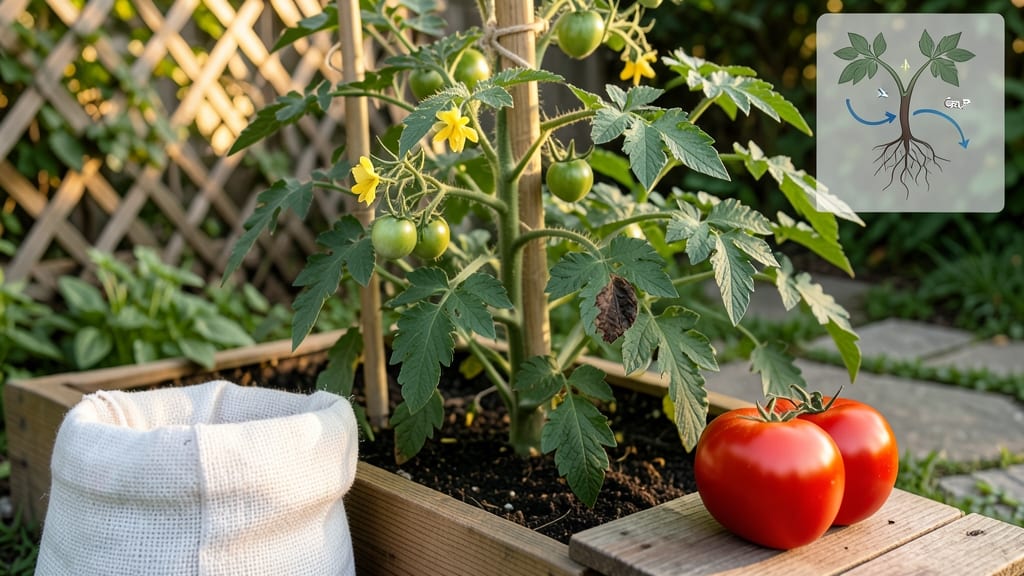
Tomato plants absolutely need calcium to prevent blossom-end rot and maintain strong cell walls, especially when they're producing fruit. Without enough calcium, you'll see dark, sunken spots on the blossom ends and noticeably weaker stems. The good news? You can easily boost calcium levels by adding crushed eggshells, lime, or compost rich in calcium to your soil.
Calcium acts like a structural glue for tomato plants, helping them develop firm cell walls that support healthy growth and fruit development. 🌱 When your plants lack calcium, they can't properly transport nutrients to developing fruits, leading to that classic blossom-end rot.
I've seen gardeners completely turn around their tomato harvests just by adding calcium-rich amendments to their soil—it's one of those simple fixes that makes a huge difference.
What's interesting is how quickly plants show signs of deficiency. Within just a few days of calcium shortage, you'll start noticing those telltale dark spots on the bottoms of your tomatoes.
The good news is that calcium doesn't move easily through plant tissues, so adding it to the soil is more effective than trying to apply it directly to the leaves.
For best results, I recommend working crushed eggshells or lime into the soil before planting, or mixing them into the top few inches of soil during the growing season.
💡 In This Article
- Why Calcium Deficiency Weakens Tomato Plants
- Natural Calcium Sources for Healthy Tomato Growth
Why calcium deficiency weakens tomato plants
Calcium plays a structural role in tomato plants by stabilizing cell walls through a process called calcium pectate formation. When calcium binds with pectin (a natural polymer in plant cell walls), it creates a rigid framework that supports the plant's structure and helps fruits maintain their shape.
During fruiting, tomatoes demand 20-30% more calcium than during vegetative growth, making deficiency symptoms most apparent when flowers turn into fruit. Without enough calcium, the cell walls become weak and prone to collapse, which is why you see those classic sunken spots on blossom ends.
The science gets even more interesting when you consider how calcium moves through plants. Unlike mobile nutrients like nitrogen, calcium doesn't travel easily from older leaves to younger growth.
This immobility means deficiency symptoms appear first in new growth and developing fruits rather than spreading throughout the plant. 🔥 What's particularly damaging is how calcium deficiency disrupts the plant's calcium-oxalate crystal formation in fruit tissues, leading to that characteristic rot pattern.
The dark, water-soaked spots you see are actually areas where cell membranes have broken down due to calcium starvation.
Here's where it gets practical: calcium deficiency often shows up when plants experience stress conditions like rapid growth spurts, extreme temperature fluctuations, or inconsistent watering. For example, tomatoes growing in hot, dry conditions (above 85°F) have reduced calcium uptake because their roots struggle to absorb nutrients efficiently.
Even slight water stress can cause calcium to become "locked" in the soil, unavailable to the plant roots. This is why consistent moisture - keeping soil evenly damp but not soggy - is crucial for calcium availability.
What most gardeners don't realize is how calcium deficiency affects more than just fruit quality. Weak cell walls make stems more susceptible to splitting when heavy fruits develop, and leaves may develop blossom-end rot on their margins.
The good news is that calcium works synergistically with other nutrients: adequate magnesium and potassium levels help calcium function properly in the plant's metabolic processes.
For instance, a soil pH between 6.0 and 6.8 optimizes calcium availability - outside this range, calcium becomes chemically bound in the soil and unavailable to plant roots.
Consider this visual comparison: a calcium-deficient tomato fruit might weigh 50-60 grams but have a 30% higher incidence of rot compared to a healthy fruit of the same size.
The structural integrity difference is dramatic when you slice them open - healthy tomatoes have crisp, firm flesh while deficient ones develop a mushy, discolored core. This isn't just about aesthetics; calcium-deficient fruits also have 20-30% reduced shelf life due to accelerated decay.
The most critical window for calcium supplementation is during the flowering and fruiting stages, when demand peaks. At this point, roots need to absorb 0.5-1.0 pounds of calcium per 100 pounds of dry plant matter to support healthy development.
This is why many organic gardeners swear by weekly applications of calcium-rich amendments during these growth phases rather than relying on a single pre-planting treatment.