
Companion Plants
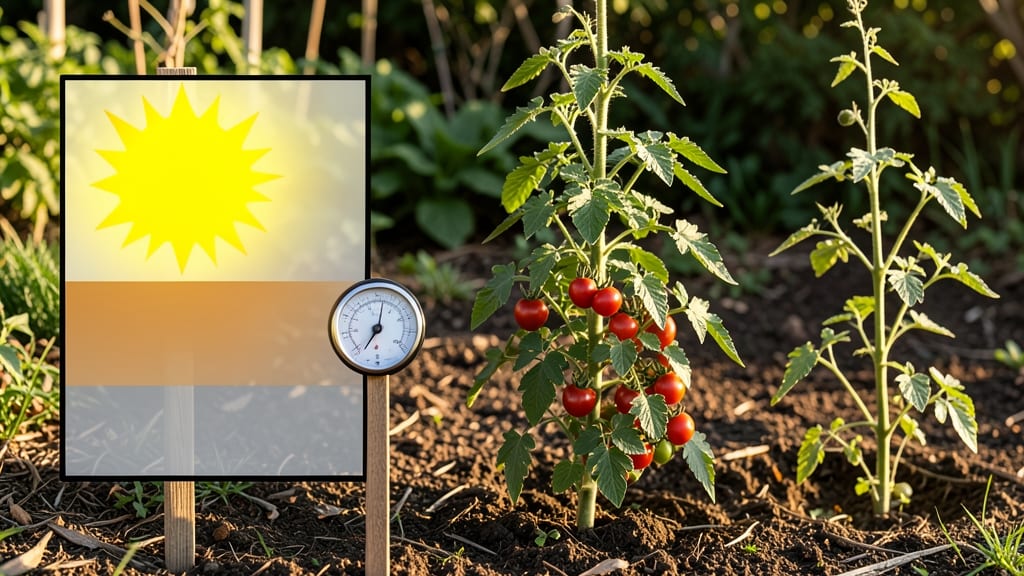
Tomato plants need a lot of sun to thrive—at least 6 to 8 hours daily—but many gardeners still get the balance wrong, leading to weak vines or no fruit.
If your 🍅 plants are struggling to produce—or worse, wilting before they even take root—sunlight might be the missing piece of the puzzle. But how much sun is too much or too little for these sun-loving plants?
Most gardeners assume more sun is always better, but scorched leaves and stunted growth can happen just as easily as weak stems from too little light. The key is finding that sweet spot where your tomatoes get enough energy for strong growth without overheating.
Below, I’ll break down exactly how much sun your tomato plants need, how to spot problems early, and simple fixes to keep your vines happy and productive all season long.

How much sun do tomato plants really need for maximum growth?
Tomatoes are sun-worshippers—they crave 6 to 8+ hours of direct sunlight daily to produce juicy, flavorful fruit. Without enough light, your plants might grow tall and leggy but fail to set fruit, leaving you with blossom-end rot or tiny, underdeveloped tomatoes.
But how do you know if your garden spot is just right? Let’s break it down by variety and what to watch for.
Most tomato varieties thrive in full sun conditions, meaning they need unobstructed sunlight for most of the day. Indeterminate varieties like 'Sungold' or 'Better Boy'—which grow continuously—demand even more light to support their sprawling vines and heavy fruit loads.
Meanwhile, determinate varieties such as 'Roma' or 'Celebrity' are slightly more adaptable but still perform best with at least 6 hours of sunlight.
Here’s a quick reference to help you match your garden’s sunlight to your tomato’s needs:
If your tomatoes aren’t getting enough sun, you’ll notice yellowing leaves (especially on lower stems) and stunted growth. The plant may produce small, pale fruit or none at all, and the stems will stretch desperately toward any available light—a condition called etiolation.
This weakens the plant and makes it more susceptible to pests and diseases.
On the flip side, too much sun can cause leaf scorch, where edges turn crispy and brown, especially in hot climates. While tomatoes love sunlight, they also need proper watering and shade cloth during peak afternoon heat (12 PM–4 PM) to prevent stress.
Mulching around the base of the plant helps retain moisture and keeps roots cool.
For container-grown tomatoes, place pots in the sunniest spot on your patio or balcony, like a south-facing window or deck. If you’re in a high-rise apartment, consider a reflective surface like a white wall or mirror to bounce extra light onto the plants.
Even a few extra hours of sunlight can make a huge difference in fruit production.
Pro tip: Monitor your garden’s sunlight throughout the day. Use a sunlight tracker or observe shadows cast by nearby structures. If your tomatoes are in partial shade for more than 2-3 hours daily, consider relocating them or choosing shade-tolerant varieties like 'Stupice' or 'Black Krim' for better results.
Remember, consistency is key. Tomatoes thrive on predictable sunlight, so avoid moving them frequently. Once you find the perfect spot, your plants will reward you with bountiful harvests all season long.
🌱
Can tomato plants survive with less sun? Adjusting light conditions for partial shade
Tomatoes are famously sun-hungry, but life happens—sometimes your garden just doesn’t get the 6-8 hours of sunlight these plants crave. The good news? Some varieties handle partial shade better than others, and with the right adjustments, you can still grow tomatoes even in less-than-ideal light.
Let’s explore how to make it work without sacrificing your harvest.
First, understand that partial shade (4-6 hours of sun) is the absolute limit for tomatoes. Below that, you’ll face stunted growth, fewer flowers, and poor fruit development.
But if you’re working with a shady spot, choosing the right tomato varieties and using smart gardening tricks can tip the scales in your favor.
Do Tomato Plants Need a Lot of Sun?
✅ Pros of Full Sun
- Maximizes fruit production (8+ hours = more tomatoes)
- Stronger stems (less risk of snapping)
- Better disease resistance (drier foliage = fewer fungal issues)
- Faster ripening (tomatoes mature quicker)
❌ Cons of Too Much Sun
- Leaf scorch (brown, crispy edges in extreme heat)
- Overheated soil (can stress roots)
- Limited shade options (fewer companion plants)
🌿 Partial Shade Workarounds
- Choose shade-tolerant varieties (e.g., 'Stupice,' 'Black Krim')
- Use reflective surfaces (mirrors, white mulch)
- Container gardening (move pots for optimal light)
- Adjust planting time (spring/fall = gentler light)
For partial shade success, start with shade-tolerant varieties like the 'Stupice' tomato, a heirloom that thrives with just 4-6 hours of sun. Its deep purple-black fruit ripens slowly but reliably, even in dappled light.
Another winner is 'Black Krim', which handles cooler temps and partial shade better than most. Both are indeterminate varieties, meaning they grow continuously and can stretch toward light if given support.
If you’re growing in containers, rotate pots weekly to ensure even light exposure. Place them on a rolling cart or balcony so you can move them toward the sunniest spot as it shifts throughout the day.
In-ground plants benefit from pruning lower leaves to reduce shade cast by the plant itself, letting more light reach the fruit-bearing stems. Mulch with white gravel or reflective mulch to bounce extra light onto the leaves.
Seasonal timing matters too. In spring and fall, when the sun is lower in the sky, tomatoes tolerate partial shade better than in peak summer. Plant early varieties like 'Patio Princess' (a dwarf type) in May or September for a second harvest when sunlight is less intense.
Avoid planting in deep shade—even the hardiest tomatoes will struggle with less than 4 hours of sun.
Watch for tell-tale signs of light deprivation: pale yellow leaves, weak stems, and tiny, underdeveloped fruit. If you see these, act fast by pruning nearby shade sources (like tall trees or fences) or supplementing with a grow light for 4-6 hours daily.
With patience and the right variety, you can still enjoy a bountiful tomato harvest—even in less-than-perfect light.