
Companion Plants
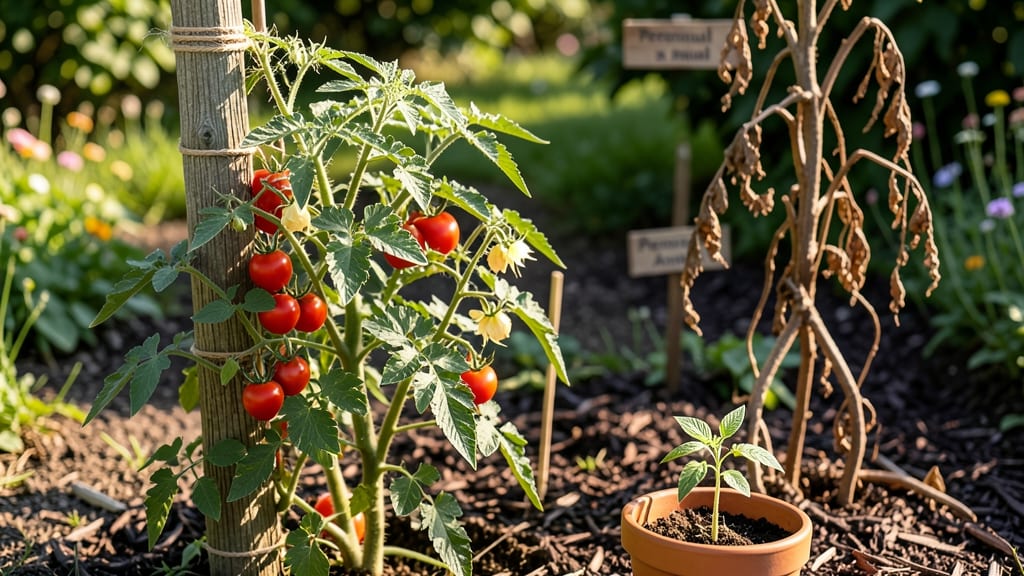
Tomato plants do not come back each year because they are annuals, completing their life cycle in one growing season. However, their roots may persist in mild climates, potentially sprouting new growth if protected from frost. Gardeners typically replant seeds or seedlings annually for best results.
Tomatoes are classified as annuals because they focus their energy on producing fruit rather than surviving multiple seasons. 🌱 In colder regions, frost kills the plants entirely, but in warmer climates like Florida or California, tomatoes might regrow from the same roots if protected.
This explains why many gardeners treat them as yearly crops—starting fresh each spring ensures stronger, more productive plants.
What's fascinating is how tomato plants prioritize reproduction over longevity. Their entire growth cycle—from seed to fruit—happens in just 60-90 days for most varieties, leaving little energy for overwintering. Even in mild climates, the roots often weaken without proper care, making annual replanting the most reliable approach for consistent harvests.
💡 In This Article
- Why Tomato Plants Are Annuals: Life Cycle and Climate Dependence
- How to Extend Tomato Plant Lifespan: Overwintering and Regrowth Tips
Why tomato plants are annuals: life cycle and climate dependence
Tomatoes are classified as annuals because their entire life cycle—from seed germination to fruit production—occurs within a single growing season.
This is driven by their biological priority: tomatoes allocate nearly all their energy to rapid growth and fruit development rather than long-term survival. 🌱 In botanical terms, this is called a "determinate" growth strategy, where the plant's primary goal is reproduction, not persistence.
Most varieties reach maturity in just 60-90 days, leaving little biological capacity for overwintering.
The key factor determining whether tomato roots survive is temperature. In regions with hard freezes (below 28°F), the entire plant—roots included—will die back. However, in mild climates like USDA zones 9-11, where winter temperatures rarely drop below 30°F, the roots can remain dormant and potentially regrow.
This explains why tomatoes might appear to "come back" in warmer areas—they're not true perennials, but their roots can persist under ideal conditions.
What most gardeners don't realize is how frost timing affects survival. Even in warm climates, a late-season frost can kill the roots if they're exposed.
The plant's energy reserves deplete during fruiting, leaving them vulnerable. 🌡️ For example, in Florida's Zone 10b, tomatoes might regrow from the same roots if protected, but in Zone 8, they'll typically need replanting due to colder winter nights.
This climate dependence is why most commercial tomato farming treats them as annuals—predictability is key for large-scale production.
There's an important distinction between annual and perennial tomatoes. While most garden varieties are annuals, some tropical species like Solanum peruvianum (a wild relative) can behave as perennials in ideal conditions. These plants develop woody stems and can live for multiple years in frost-free environments.
However, even these tropical varieties won't survive in temperate climates without protection, proving that climate is the defining factor in tomato persistence.
The science behind this involves photoperiodism—how plants respond to daylight changes. As days shorten in fall, tomato plants detect this as a signal to focus on reproduction rather than vegetative growth.
This hormonal shift explains why they prioritize fruit production over root development. 🌿 In controlled environments like greenhouses, you can sometimes extend a tomato's life by maintaining long daylight hours, but this requires significant intervention and isn't practical for most home gardeners.
Consider this comparison: While potatoes (another nightshade) can survive multiple years in the ground, tomatoes lack this tuberous storage capability. Their fibrous root system doesn't store enough energy to sustain them through harsh winters.
This fundamental difference in root structure explains why potatoes might "come back" while tomatoes typically don't—unless you're in a climate where the ground never freezes.