
Tools
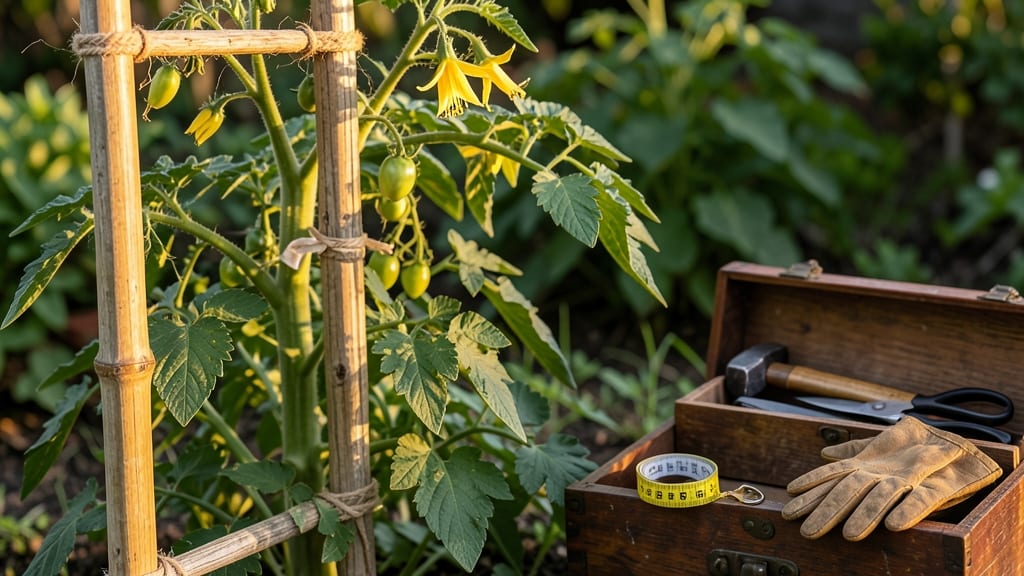
A trellis for tomato plants saves your harvest from sprawling chaos. 🌱 I built mine last summer using scrap lumber and bamboo—now my beefsteak tomatoes grow vertically instead of flopping into the soil. The right trellis system makes harvesting easier, improves airflow, and keeps fruits cleaner.
You’ll need just three materials: vertical stakes (wood, metal, or PVC), horizontal crossbars, and sturdy twine or zip ties. For a simple teepee trellis, drive four stakes in a square and weave twine between them.
An A-frame trellis uses two angled stakes with a horizontal bar at the top for extra support. Once your trellis is up, gently tie stems to the structure as they grow. Prune suckers (those little shoots in the leaf axils) to encourage upward growth.
By midseason, your plants will be climbing like jungle vines, and you’ll wonder how you ever grew them any other way. This works for determinate (bush) tomatoes too—just use a shorter trellis. The key is starting early before plants get too heavy. Your back (and your tomatoes) will thank you!
📚 In This Guide
- What you need
- Instructions
- Tips and common mistakes
- Wrapping up and next steps
What you need
- ● Trellis Framework: Wooden stakes (4–6 ft tall, 2x2 or 2x4 inches) – 2–4 stakes
- ● OR PVC pipes (½–¾ inch diameter, 4–6 ft long) – 2–4 pipes
- ● OR metal conduit (½ inch) – 2–4 pieces
- ● Cross Supports: Wooden lattice panels (pre-cut or DIY with 1x2 or 1x3 lumber)
- ● OR horizontal wooden slats (1–2 inches wide) – 6–12 pieces
- ● OR chicken wire (18–24 inches wide) – 1 roll
- ● Fasteners: Galvanized screws or nails (2–3 inches long) – 1 box
- ● OR zip ties (if using PVC or conduit) – 10–20 ties
- ● Tools: Hacksaw or reciprocating saw (for cutting PVC/conduit)
- ● Drill/driver (with drill bit for wood)
- ● Measuring tape
- ● Level (to ensure straight alignment)
- ● Pliers (for bending wire or tightening zip ties)
- ● Wood stain or paint (for weather resistance)
- ● Post caps or concrete mix (to anchor stakes securely)
- ● Garden twine or soft ties (for securing tomato vines)
- ● Corrugated plastic or shade cloth (to protect from harsh sun)
Step-by-Step instructions for building a DIY tomato trellis
Here's the simple method I use to create sturdy, custom-sized trellises that keep tomato vines off the ground and boost production.
🪴 Step 1: Gather Materials for Your Trellis Design
For a 4-foot tall trellis supporting 4 tomato plants, you'll need 2 bamboo stakes (5 feet long), 4 pieces of twine or jute rope (10 feet total), and 1 small hammer for securing stakes. I prefer bamboo because it's lightweight yet strong enough to handle heavy vines, and it blends naturally into the garden.
If you're working with a larger space, scale up by adding more stakes—place them 3-4 feet apart in a straight line for a row of plants. For a single plant, one trellis is plenty, but for multiple plants, connect stakes with horizontal supports (like wooden slats or more twine) to create a lattice structure.
✂️ Step 2: Install the Stakes for Stability
Drive each bamboo stake 6 inches deep into the soil at a 45-degree angle using the hammer. The top of the stake should extend 4 feet above ground level—this gives tomato vines plenty of room to climb without toppling. Space stakes 18-24 inches apart for single plants or 3-4 feet apart for rows.
Check for stability by gently pushing the stake—it should not wobble. If the soil is loose, dig deeper or add a 1-foot wooden stake alongside the bamboo for extra support. The goal is a trellis that won’t sway when vines get heavy with fruit.
🌱 Step 3: Create the Twine Support Structure
Tie the first piece of twine 3 inches from the top of each stake, forming a horizontal line. Then, add additional horizontal twine lines 12-18 inches apart down the stake—this creates "rungs" for vines to grip. I use 3-4 lines total, including the top one, to distribute vine weight evenly.
For extra durability, loop the twine around the stakes twice before tying it off securely. Avoid knots that dig into the bamboo—opt for square knots or bowline knots to keep the twine snug without damaging the material. If using jute rope, soak it in water first for flexibility.
☀️ Step 4: Train Tomato Vines to Climb
Once your trellis is in place, gently weave the main stem of each tomato plant through the twine lines as it grows. Start when the plant reaches 12-18 inches tall—this prevents strain on young stems. Secure the vine with a soft tie (like a strip of old T-shirt or garden twine) around the stem and trellis, but leave room for growth.
Here’s the key: Don’t let vines wrap tightly around the twine—this can strangle the stem as it thickens. Instead, guide the vine upward and tie it loosely every 6-12 inches. Watch for suckers (side shoots)—remove these so the plant focuses energy on upward growth rather than bushy side branches.
💧 Step 5: Maintain and Adjust as Plants Grow
Check the trellis weekly to ensure twine hasn’t loosened or broken. If vines outgrow the top of the trellis, extend it with additional stakes or twine—tomatoes can climb 6-8 feet tall in ideal conditions. Prune any leaves that grow below the lowest fruit cluster to improve airflow and reduce disease risk.
Water at the base of the plant, not the leaves, to keep the trellis dry and prevent rot. If your trellis sways in wind or rain, reinforce it with additional stakes or guy wires tied to nearby posts. A sturdy trellis isn’t just about looks—it’s about keeping your tomatoes upright, healthy, and productive all season.
Tips & tricks for sturdy tomato trellis support
A few simple adjustments can transform your basic trellis into a garden workhorse that lasts all season. Here's what I've learned from years of testing:
Stake Placement Matters: The 45-degree angle in Step 2 isn't just for looks—it creates a natural triangle of support that distributes vine weight more efficiently than vertical stakes. For windy areas, consider adding a second stake on the opposite side of the plant, tied together at the top with twine for extra stability. This creates a "V" shape that handles heavy fruit loads beautifully.
Twine Tension Technique: When creating those 12-18 inch horizontal lines in Step 3, pull the twine just tight enough to create gentle tension—not so tight it cuts into the bamboo, but firm enough to support climbing vines. I've found that using jute rope soaked in water first gives it that perfect balance of flexibility and strength. Pro tip: Use a small stick as a "twine stretcher" to hold the line taut while you tie knots.
Vine Training Secret: The 12-18 inch vine height mentioned in Step 4 is your cue to start training—don't wait until plants are taller! Begin when they reach that range, and you'll prevent the common problem of vines growing too bushy before they have proper support. For indeterminate varieties that can grow 6-8 feet tall, add a third horizontal twine line about 2 feet from the top to give them extra grip when they reach their full height.
Maintenance Shortcut: Instead of checking your trellis weekly for loose twine (Step 5), I've started using zip ties for the horizontal lines instead of knots. They're quicker to adjust and won't slip over time. Just be sure to use the soft, flexible garden variety—not the rigid plastic ones that can damage stems. This cuts my maintenance time by nearly half while keeping everything secure.
Pro Tips for Make A Trellis For Tomato Plants
- A few simple adjustments can transform your basic trellis into a garden workhorse that lasts all season.
- Stake Placement Matters: The 45-degree angle in Step 2 isn't just for looks—it creates a natural triangle of support that distributes vine weight more efficiently than vertical stakes.
- I've found that using jute rope soaked in water first gives it that perfect balance of flexibility and strength.
Frequently asked questions
Got questions about building the perfect trellis for your tomatoes? You’re not alone! Here are answers to the most common concerns—so you can grow like a pro.
What’s the best material for a tomato trellis?
A sturdy trellis can be made from wood, bamboo, PVC pipes, or even repurposed ladders. Wood (like cedar or pine) is durable and budget-friendly, while PVC is lightweight and rust-resistant. For quick setups, try bamboo stakes or metal cages—both work great for indeterminate varieties!
When should I install a trellis for tomato plants?
Install your trellis early—as soon as seedlings are 6–8 inches tall or when transplanting mature plants. This gives roots time to anchor while vines climb. For indeterminate tomatoes (like cherry or beefsteak), add support immediately since they grow aggressively. Determinate types (like Roma) need less structure but still benefit from early trellising!
Can I use a trellis for all tomato varieties?
Indeterminate tomatoes (vining types) need trellises to prevent sprawling and disease. Determinate tomatoes (bushier, like paste varieties) can use small cages or stakes instead. If your plants are already sprawling, don’t worry—just add support now and prune suckers to encourage upward growth.
What if my trellis keeps falling over?
Floppy trellises usually mean weak materials or poor anchoring. Bury stakes at least 12 inches deep or use heavy-duty U-shaped anchors for windy areas. For extra stability, tie plants to the trellis with soft cloth or old T-shirts (avoid wire—it can damage stems!). If using wood, opt for 2x4s or thicker for heavy vines.
Are there no-trellis alternatives for small spaces?
Yes! Try cage-like supports (like tomato towers), pruning to encourage bushiness, or vertical gardening with fabric pockets. For container gardening, use 5-gallon buckets with built-in stakes or hanging baskets with climbing frames. Even a DIY wire mesh wrapped around a post works in a pinch!
Still stumped? Drop a comment—we’re happy to help you troubleshoot!
Wrapping up and next steps
Building a trellis for your tomato plants is a simple yet rewarding way to boost their growth, improve air circulation, and make harvesting a breeze! 🌱 With just a few materials and a little creativity, you’ve got everything you need to create sturdy support that’ll turn your garden into a thriving tomato paradise. Now that you’re equipped with the know-how, it’s time to roll up your sleeves and get growing!
Ready to take the next step? Start by choosing your favorite tomato varieties—whether it’s sweet cherry tomatoes or classic beefsteaks—and plant them with confidence. Happy gardening! 🌿