
Planting
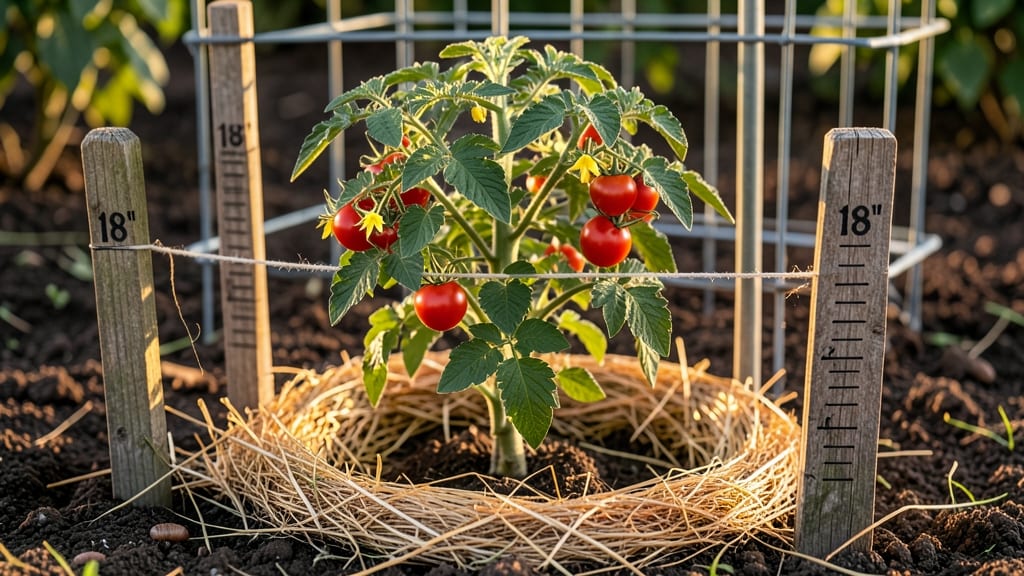
Determinate tomato plant spacing needs 18-24 inches apart to grow compact, bushy, and productive—no sprawling vines to manage. 🌱 I learned this the hard way when my crowded plants struggled with airflow, leading to blight and stunted fruit. The right spacing isn’t just about fitting more plants in; it’s about giving each one room to thrive without competing for sunlight or nutrients. For raised beds, space them 18 inches apart in rows 24 inches apart to maximize yield while keeping plants accessible. In containers, use 1-gallon pots per plant—any smaller, and roots get cramped. In-ground gardens can stretch to 24 inches apart if you’re confident in your soil fertility and disease prevention. You’ll end up with heavy branches loaded with uniform fruit, all within easy reach for harvesting. The plants stay sturdy, resist wind damage, and produce earlier and more consistently than overcrowded varieties. No more reaching or bending—just a tidy, high-yielding tomato patch. Adjust spacing slightly for shady spots (tighten to 18 inches) or hot climates (widen to 24 inches). Companion plants like basil or marigolds can fit between rows without stealing sunlight. Here’s how to plan it right!
📚 In This Guide
- What you need
- Instructions
- Tips and common mistakes
- Wrapping up and next steps
What you need
- ● Determinate tomato seedlings or seeds: Choose disease-resistant varieties like Roma, Celebrity, or Patio (2–4 plants per 100 sq ft, depending on yield goals).
- ● Well-draining potting mix or garden soil: 5–10 lbs per plant (amend with compost for fertility).
- ● Tomato cages or stakes: 4–6 ft tall, sturdy enough to support 10–15 lb fruits (1 per plant).
- ● Balanced fertilizer (10-10-10 or 5-10-10): 1–2 tbsp per plant at planting + side-dressing.
- ● Mulch (straw, grass clippings, or black plastic): 2–3 inches to retain moisture and suppress weeds.
- ● Watering can or hose with adjustable nozzle: For gentle, deep watering (1–2 gallons per plant, 2x/week).
- ○ Pruning shears: Sharp, sterilized tools for trimming suckers (optional but recommended).
- ● Gloves and knee pads: For comfort during planting and maintenance.
- ● Full-sun location (6–8+ hours/day): South-facing or raised beds work best.
- ● pH-tested soil (6.0–6.8): Adjust with lime (to raise) or sulfur (to lower) if needed.
- ○ Optional: Drip irrigation kit for automated watering.
- ○ Optional: Row covers to protect from early pests (e.g., flea beetles).
- ○ Optional: Trellis system for vertical growth in small spaces.
How to space determinate tomatoes for maximum yield
Here's how I arrange these compact varieties to prevent disease, improve airflow, and pack in more fruit per square foot.
🌱 Step 1: Understand Determinate Growth Habits
Determinate tomatoes grow in a compact bush shape—typically reaching 3-5 feet tall—and produce fruit all at once. This means spacing differs from indeterminate varieties that climb and keep producing. The key is creating a grid pattern that lets each plant support its own weight while leaving room for airflow.
I always check the variety tag first—some determinate types like 'Roma' stay shorter (2-3 feet), while others like 'Celebrity' reach 4-5 feet. This affects how much space each plant needs. The rule of thumb is 18-24 inches between plants for most determinate types, but I adjust based on the specific variety's mature height.
☀️ Step 2: Plan Your Layout for Optimal Sun and Airflow
Determinates need full sun (6-8 hours daily) and benefit from 12-18 inches between rows. I arrange them in a staggered grid—not straight lines—so each plant gets sunlight from multiple directions. This prevents shading and reduces disease risk from trapped moisture.
For a 4-plant setup (like your servings target), I use a 4x4 foot area with plants spaced 2 feet apart in a square. This gives each plant 4 square feet of growing space, which is ideal for determinates. If your row is longer, maintain 18-24 inches between plants and 3 feet between rows for better airflow.
🪴 Step 3: Prepare the Soil and Plant Correctly
Before planting, loosen the soil to 12 inches deep—determinates have a strong root system that needs room to spread. I mix in 2-3 inches of compost into the top 6 inches of soil to provide nutrients without overfeeding, which can lead to excessive leaf growth at the expense of fruit.
Plant determinate tomatoes 1-2 inches deeper than their container—this encourages stronger root development along the buried stem. Space them exactly as planned, using a measuring tape to ensure consistency. Press soil gently around the base but avoid compacting it, as this restricts root growth.
✂️ Step 4: Support and Prune for Bushy Growth
Even though determinates don’t need trellises, I still use low cages (3-4 feet tall) or sturdy stakes to support the weight of the fruit. This prevents stems from snapping when the plant is heavy with tomatoes. Place supports at planting time—never add them later, as this disturbs roots.
Prune determinates minimally—just remove suckers (side shoots) that form in the leaf axils. These divert energy from fruit production. I also trim lower leaves that touch the soil to improve airflow and reduce disease risk. Watch for yellowing leaves—this is often a sign of overwatering or poor drainage.
💧 Step 5: Water and Maintain for Consistent Harvests
Water determinates deeply 1-2 times per week, aiming for 1-1.5 inches of water per session. I water at the base (not overhead) to keep foliage dry and prevent fungal diseases like early blight. Use a soaker hose or drip irrigation for precision—this ensures even moisture without wetting leaves.
Fertilize lightly with a balanced 10-10-10 formula at planting and again when flowers appear. Too much nitrogen leads to lush leaves but fewer tomatoes. I also mulch with 2-3 inches of straw to retain moisture and suppress weeds, which compete for nutrients.
Tips & tricks for perfect determinate tomato layouts
Here's what nobody tells you about maximizing your determinate tomato harvest—these tricks make all the difference between a decent yield and a bumper crop.
Variety-Specific Spacing: That 18-24 inch spacing rule in Step 1 is your baseline, but don't treat all determinates equally. 'Roma' varieties (2-3 feet tall) can comfortably handle 18 inches between plants, while taller 'Celebrity' types (4-5 feet) need that full 24 inches. I mark my spacing with wooden stakes before planting to visualize the layout—this prevents crowding that leads to disease. The goal is each plant having its own "air zone" where sunlight reaches all foliage equally.
Sunlight Optimization: The staggered grid pattern in Step 2 isn't just about looks—it's a sunlight distribution hack. When arranging your 4-plant square, offset each plant by 6-12 inches from the corner to create a diamond formation. This ensures no plant shades its neighbor, especially important when you're aiming for that 6-8 hours of full sun daily. I test my layout by walking through it at midday to check for shadows.
Soil Preparation Secret: That 12-inch deep soil loosening in Step 3 is non-negotiable, but here's the pro move: I add a handful of mycorrhizal fungi to the compost mix before planting. These beneficial microbes form symbiotic relationships with tomato roots, dramatically improving nutrient uptake—especially phosphorus and zinc, which determinates crave during fruiting. Think of it as giving your plants a built-in nutrient delivery system.
Support System Timing: Planting those 3-4 foot cages in Step 4 at the same time as your tomatoes isn't just about convenience—it's about root disturbance. When you add supports later, you risk damaging the shallow root system determinates develop. I bury the cages 6 inches deep and stake them firmly before planting, so they're ready to go from day one. This also prevents the "leaning tower of Pisa" effect when plants get top-heavy with fruit.
Pro Tips for Determinate Tomato Plant Spacing
- Here's what nobody tells you about maximizing your determinate tomato harvest—these tricks make all the difference between a decent yield and a bumper crop.
- Variety-Specific Spacing: That 18-24 inch spacing rule in Step 1 is your baseline, but don't treat all determinates equally.
- Sunlight Optimization: The staggered grid pattern in Step 2 isn't just about looks—it's a sunlight distribution hack.
Frequently asked questions
Got questions about spacing determinate tomato plants for the best harvest?
You’re not alone! Here are answers to the most common concerns—so you can plant with confidence and enjoy a bountiful, science-backed garden.
How close can I plant determinate tomatoes without crowding?
Determinate tomatoes thrive with 18–24 inches of space between plants in rows, and 24–36 inches between rows. This spacing prevents disease spread, ensures airflow, and avoids competition for nutrients. If you’re short on space, try staggered planting or interplant with shallow-rooted herbs like basil.
When is the best time to space determinate tomatoes after transplanting?
Space plants immediately after transplanting (when they’re 4–6 inches tall) to avoid disturbing roots later. If you’re starting from seed, thin seedlings to the correct spacing once they have 2–3 sets of true leaves (about 4–6 weeks after germination). Pro tip: Mark your spacing with sticks or string to stay organized!
Can I grow determinate tomatoes in containers? If so, how many per pot?
Yes! Determinate tomatoes do well in containers if given enough space. Use a 5-gallon pot per plant (minimum) or 1 plant per 12-inch diameter pot. For bushier varieties, opt for 7+ gallons to support multiple fruit clusters. Ensure pots have drainage holes and use a lightweight, well-draining potting mix.
What if my determinate tomatoes are already crowded? Can I fix it?
If your plants are too close, prune lower leaves to improve airflow and reduce disease risk. For severe crowding, consider transplanting one plant to another spot (gently loosen roots first). If space is truly limited, focus on removing suckers and diseased foliage to redirect energy to fruit production. Prevention is key—plan spacing before planting!
Does spacing change if I’m growing determinate tomatoes in hot or cold climates?
Spacing stays the same, but microclimates affect plant health. In hot areas, increase airflow (e.g., wider row spacing) to prevent sunscald or blight. In cooler climates, group plants closer (within 18 inches) to create a "micro-warmth" effect, but avoid overcrowding. Mulch heavily in both cases to regulate soil temperature!
Wrapping up and next steps
Mastering determinate tomato plant spacing is your ticket to a thriving garden and a bounty of juicy, flavorful tomatoes! 🌱 By following science-backed layouts—like the 18- to 24-inch spacing for optimal airflow and sunlight—you’ll maximize yields while keeping pests at bay.
Whether you’re a seasoned gardener or just starting, these insights will help you grow like a pro.
Ready to plant with confidence? Grab your gloves, mark your rows, and get growing! For even more tips, check out our guide on soil prep for tomatoes—your next step to a garden that’s the talk of the neighborhood.