
Plants
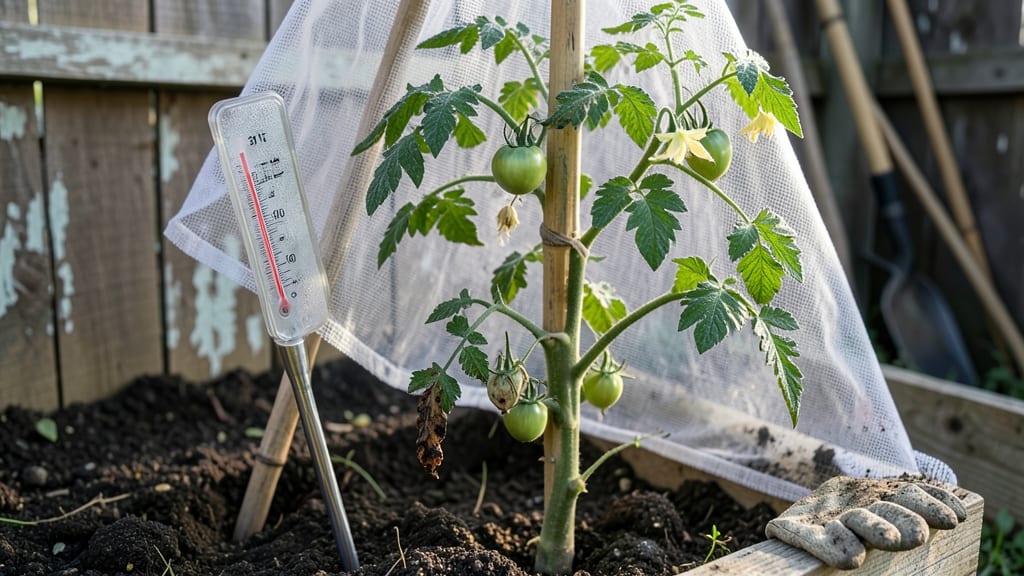
Tomato plants cannot survive frost, as freezing temperatures below 32°F (0°C) destroy their cells, causing irreversible wilting and death. Young plants die within hours, while mature ones might recover if frost stays above 28°F (-2°C) and is brief—but protection is essential to prevent permanent damage.
Frost attacks tomato plants at a cellular level, where ice crystals form inside plant tissues and rupture cell walls. 🌱 This disruption halts nutrient flow, leading to brown, mushy leaves and stems.
The 32°F (0°C) threshold is critical—below this, most tomato varieties suffer fatal damage, though some cold-hardy types (like 'Cold Set') can tolerate brief dips to 28°F (-2°C). Even a light frost weakens plants, making them vulnerable to disease.
For gardeners in unpredictable climates, proactive measures like row covers or mulch are non-negotiable to shield plants before temperatures drop.
Timing matters just as much as the method. Cover plants before sunset on nights when frost is forecasted, and remove covers by 10 AM to prevent overheating. For potted tomatoes, move them to a sheltered garage or under a porch light.
Mulching with straw or leaves adds an extra 4-6°F of insulation to the soil, helping roots stay warmer. I’ve seen gardeners use old blankets or even upside-down buckets filled with water to create microclimates—simple tricks that make a huge difference when frost sneaks in unexpectedly.
💡 In This Article
- How Frost Damages Tomato Plants at the Cellular Level
- Protecting Tomato Plants from Frost: Step-by-Step Methods
How frost damages tomato plants at the cellular level
When temperatures drop below 32°F (0°C), tomato plants experience a biological chain reaction that starts with ice crystal formation. Water inside plant cells begins to freeze, expanding by about 9% as it turns to ice—this physical pressure ruptures delicate cell membranes, much like cracking an eggshell from the inside.
The damage isn't just cosmetic; it disrupts the plant's vascular system, blocking water and nutrient transport to leaves and stems.
The real tragedy happens at the protein level. Frost causes proteins to denature, losing their functional shapes—this is why leaves turn black and mushy after a freeze.
At 28°F (-2°C), some mature tomato varieties might survive briefly because their cells contain antifreeze proteins (like those in cold-hardy wheat), but these are rare in standard garden tomatoes. The 32°F (0°C) threshold is critical because that's where ice formation becomes widespread in plant tissues.
What's fascinating is how frost affects different plant parts. Roots, buried in warmer soil, often survive longer than above-ground growth. However, the stem's vascular cambium—the growth layer—is particularly vulnerable. Damage here means the plant can't transport nutrients upward, leading to wilting even if temperatures later rise.
This is why a "light frost" can still kill a tomato plant: the cumulative cellular damage is irreversible.
You might notice leaves developing a glassy, translucent appearance after frost—this is called "frost burn," where ice crystals have destroyed chlorophyll-producing cells. The plant's natural response is to shut down photosynthesis entirely, conserving energy in a futile attempt to survive.
Even if leaves recover, the plant's growth is permanently stunted because the meristem (growth points) at the tips of stems and roots are among the first to freeze.
Cold-hardy tomato varieties like 'Cold Set' or 'Stupice' contain higher levels of proline, an amino acid that acts as a natural antifreeze by stabilizing cell membranes. These varieties can tolerate brief dips to 28°F (-2°C), but their survival depends on the frost's duration.
A 3-hour freeze at 28°F (-2°C) might be survivable, while the same temperature lasting 6 hours would likely be fatal.
Here's what most gardeners don't realize: frost damage isn't always immediate. Some tomato plants appear fine after a freeze but collapse 24-48 hours later as cellular damage becomes systemic.
This delayed reaction is why early morning frost checks are crucial—what looks like morning dew might actually be ice crystals forming on your plants.