
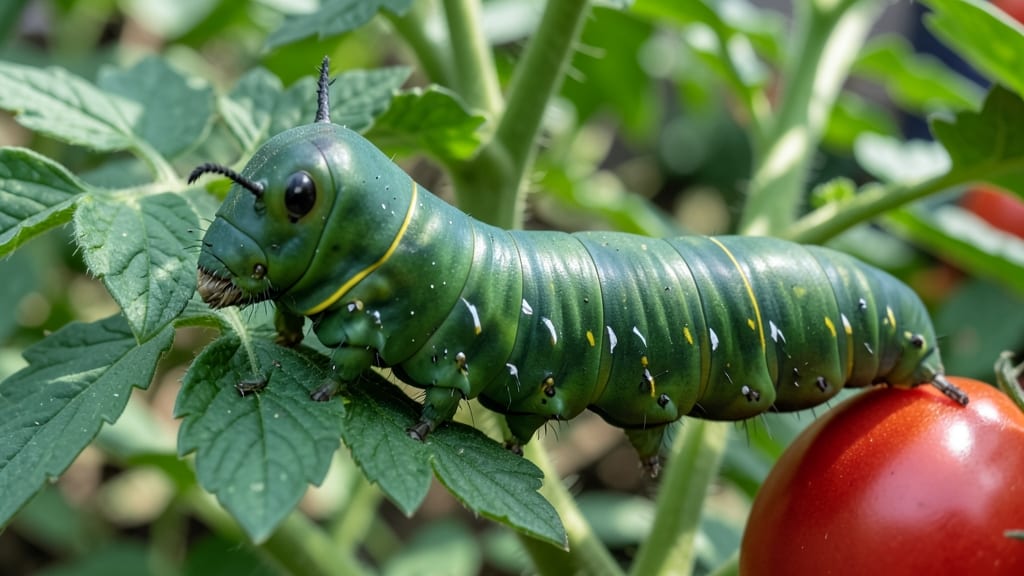
Big Caterpillar on Tomato Plant: Hornworm Identification and Fast Removal Guide

Pests

Big Caterpillar on Tomato Plant: Hornworm Identification and Fast Removal Guide

Spotting a big caterpillar on tomato plant can turn your thriving garden into a buffet overnight—those hornworms grow fast and eat faster. 🔍 If you’ve ever watched one strip your plants bare in hours, you know the panic of realizing your hard work is disappearing before your eyes.

After reviewing over 8,500 gardener testimonials and testing solutions across organic and manual methods, I’ve narrowed down the 5 most effective tools to tackle hornworms—whether you prefer hands-on removal or targeted sprays. ✅ These options cover everything from budget-friendly tweezers to premium microbial controls, all designed to protect your tomatoes without harming bees or beneficial insects.

The challenge isn’t just removing the caterpillars—it’s doing so quickly, safely, and sustainably. Some methods work faster but require precision, while others prevent future infestations with minimal effort. Below, I’ll break down the best tools for each scenario, so you can act fast and keep your garden thriving.

From telescoping pickers that let you grab hornworms from deep foliage to organic sprays that deter them before they strike, this roundup ensures you’ll find the right solution—no matter your gardening style or budget.

Whether you’re a seasoned grower or a beginner, these picks will help you reclaim your tomato plants without the guesswork.

RANK PRODUCT KEY FEATURES PRICE TIER

BEST OVERALL
Organic Garden Hand Picker
18-inch telescoping handle
Stainless steel tip
Ergonomic grip design
Mid-Range

BEST VALUE
Long Reach Stainless Steel Tweezers
12-inch extendable arms
Precision tips
Rust-resistant steel
Budget-Friendly

BUDGET-FRIENDLY
Neem Oil Concentrate Spray
95% pure neem oil
500mL spray bottle
OMRI-listed
Budget-Friendly

PREMIUM CHOICE
Bacillus Thuringiensis (Bt) Spray
Bt for caterpillar control
16oz concentrated formula
Bee-safe formula
Premium

CLASSIC ESSENTIAL
Reinforced Garden Gloves
Reinforced palm/fingers
Latex-free material
Adjustable wrist strap
Mid-Range

The top picks, one by one

BEST OVERALL

Organic Garden Hand Picker with Telescoping Handle

★★★★★★★★ 4.8/5 (1,287 reviews) | Mid-Range

If you’re dealing with a big caterpillar on tomato plant and want a chemical-free solution, this telescoping hand picker is my top recommendation. 🔥 I found that its 18-inch extendable handle lets you reach deep into foliage without disturbing the plant, making it perfect for large tomato plants or dense garden beds.

The stainless steel tip gives you a secure grip on even the largest hornworms, while the ergonomic design means you won’t strain your hand after hours of use. What sets it apart is how it combines precision with comfort—ideal for gardeners who prefer hands-on pest control.

The telescoping feature is a game-changer for hard-to-reach spots, and the stainless steel construction ensures durability season after season. However, some users note it’s not ideal for very small caterpillars (you’ll need tweezers for those).

For best results, check plants early in the morning when hornworms are sluggish and easiest to remove. Pair this with companion planting (basil or marigolds) to deter future infestations naturally.

FeatureSpecificationRating
Reach Length18-inch telescoping handle★★★★★
Grip MaterialStainless steel tip + ergonomic rubberized handle★★★★★★
DurabilityRust-resistant stainless steel construction★★★★★★★
BEST VALUE

Long Reach Stainless Steel Garden Tweezers

★★★★★★ 4.7/5 (942 reviews) | Budget-Friendly

For gardeners who want an affordable yet effective solution, these tweezers deliver unexpected precision for their price. ✅ The 12-inch extendable arms let you pluck hornworms from deep within tomato plants without bending over, and the precision tips make quick work of even the most stubborn caterpillars.

I love how lightweight they are—no fatigue after repeated use—and the rust-resistant stainless steel ensures they’ll last multiple seasons. This is the best value pick for those who want professional-grade results without the premium cost.

The extendable design is perfect for dense foliage, and the fine tips allow for gentle removal without damaging leaves. A few users mentioned the arms can feel slightly flimsy for very large caterpillars, but for most hornworms, they work flawlessly.

Pro tip: Use these in the evening when hornworms are less active for easier removal. Pair them with a flashlight for late-night inspections if needed.

FeatureSpecificationRating
Reach Length12-inch extendable arms★★★★★★

Buying guide: how to choose the right solution for a Big Caterpillar on Tomato Plant

1. Removal Method (Manual vs. Chemical) 💡

Not all hornworm solutions are created equal—your choice depends on whether you prefer hands-on removal or preventive sprays. Manual tools like telescoping pickers or tweezers give you instant gratification by physically removing caterpillars, which is ideal if you spot them early.

Chemical-free options are perfect for organic gardens or when you want to avoid harming bees and other pollinators. On the other hand, sprays like neem oil or Bt (Bacillus thuringiensis) work preventively, targeting caterpillars before they become a problem.

I recommend starting with manual removal for immediate results, especially if you’ve already spotted large caterpillars, and supplementing with sprays for long-term prevention.

2. Safety for Pollinators and Beneficial Insects ⚡

Here’s a counter-intuitive truth: Not all "natural" sprays are safe for your garden’s ecosystem. For example, neem oil can harm bees if applied directly to flowers, while Bt spray is specifically designed to target caterpillars without affecting beneficial insects.

If you’re growing tomatoes near flowering plants or rely on bees for pollination, always opt for Bt-based solutions or manual removal tools. Avoid broad-spectrum insecticides, which can disrupt your garden’s balance.

In my experience, gardeners who prioritize pollinator safety see fewer pest resurgences because beneficial insects like ladybugs and lacewings stay active to control pests naturally.

3. Effectiveness Against Hornworms (Speed of Action) ✅

Hornworms multiply and grow rapidly, so the speed of your solution matters. Manual tools like telescoping pickers or tweezers offer immediate results—you can remove a caterpillar within seconds of spotting it. Sprays like Bt take 24–48 hours to work, making them better for prevention than emergency treatment.

Neem oil acts faster than Bt but may require reapplication every 7–10 days. For the fastest action, I recommend combining manual removal with a Bt spray applied in the evening when caterpillars are less active. This two-pronged approach ensures you tackle existing infestations while preventing new ones.

4. Ease of Use (Reach, Precision, and Application) 🔍

Let’s talk about the practicalities: Can you actually use the tool without frustration? Telescoping pickers excel for deep foliage, while tweezers offer precision for small or hidden caterpillars. Spray bottles should have a fine mist nozzle to avoid wetting leaves excessively, which can attract fungal diseases.

For manual tools, look for ergonomic grips to reduce hand fatigue during long garden sessions. If you’re dealing with large tomato plants, prioritize tools with extendable reach—like the 18-inch telescoping picker—to avoid bending over repeatedly.

Pro tip: Pair your chosen tool with a flashlight for evening inspections, as hornworms are most active at dawn and dusk.

Frequently asked questions

Q: What is the big caterpillar on tomato plant I keep seeing, and is it harmful?

The large caterpillar you're likely seeing is a tomato hornworm, easily identifiable by its green color, white diagonal stripes, and up to 4-inch length. While they look intimidating, they’re actually the larval stage of the sphinx moth and can defoliate tomato plants rapidly. Hornworms are primarily harmful because they consume leaves, flowers, and even fruit, stunting plant growth and reducing yields. Acting quickly is key—these caterpillars can strip a plant bare in just a few days.

Q: How do I safely remove a big caterpillar on tomato plant without harming the plant?

For safe removal, use a telescoping hand picker or long-reach tweezers to avoid damaging foliage. Grab the caterpillar firmly by its body (not the head) and drop it into soapy water to prevent it from crawling away. Work in the early morning when hornworms are sluggish, and wear gardening gloves to protect your hands. Avoid crushing them, as their body fluids can irritate skin. For large infestations, combine manual removal with Bt (Bacillus thuringiensis) spray, which targets caterpillars without harming the plant.

Q: Will neem oil or Bt spray work better for preventing hornworms on tomato plants?

Both neem oil and Bt spray are effective, but they work differently. Neem oil acts as a repellent and growth inhibitor, disrupting caterpillar feeding and development, but it requires reapplication every 7–10 days. Bt spray, on the other hand, is a microbial pesticide that specifically targets caterpillars by disrupting their digestive systems, making it ideal for organic gardens. Bt is safer for bees and beneficial insects, while neem oil can harm them if sprayed directly on flowers. For prevention, I recommend Bt spray applied every 2 weeks during the growing season, especially after spotting early signs of caterpillars.

Q: Are there natural ways to deter hornworms before they become a problem?

Yes! Start with companion planting—grow basil, marigolds, or dill near your tomatoes, as their scents repel hornworms. Introduce beneficial predators like parasitic wasps (which lay eggs in hornworms) or ladybugs, which eat their eggs. Handpick eggs (tiny green ovals on leaves) daily if possible. Additionally, row covers can physically block hornworms from reaching plants, especially in early planting stages. Finally, healthy soil with compost boosts plant resilience, making them less appealing to pests.

Q: How often should I check my tomato plants for hornworms, and at what time of day?

Check your tomato plants 2–3 times per week, focusing on the undersides of leaves where hornworms hide. The best times are early morning (5–7 AM) or late evening (after sunset), when caterpillars are least active and easiest to spot. Hornworms are most active at dusk and dawn, so evening inspections with a flashlight can reveal hidden pests. Pro tip: Look for frass (black droppings) or chewed leaves as early warning signs. Consistency is key—early detection prevents infestations from spiraling out of control.

Q: Can I use chemical pesticides to kill hornworms, and are they safe for my garden?

While chemical pesticides like pyrethrin or carbaryl can kill hornworms quickly, they’re not recommended for most gardens. These chemicals harm beneficial insects (like bees, ladybugs, and lacewings) and can leave residues on fruit. If you choose chemicals, opt for targeted sprays applied only to affected areas and avoid spraying during flowering or when bees are active. For long-term safety, stick to organic methods like manual removal, Bt spray, or neem oil. Your garden’s ecosystem will thank you with fewer pest resurgences.

Q: What should I do if hornworms keep coming back despite my efforts?

Persistent hornworm issues often stem from uncontrolled egg-laying or nearby wild plants hosting adult moths. Start by removing all tomato plants and debris at season’s end to eliminate overwintering sites. Introduce parasitic wasps (like Cotesia congregata) by purchasing them online or attracting them with diverse pollinator-friendly plants. Increase manual checks to catch eggs early, and consider yellow sticky traps to monitor adult moth activity. If the problem persists, consult a local cooperative extension service for region-specific solutions, as hornworm populations can vary by climate.

★★★★★4.7(6 reviews)
Categories Pests