
Planting
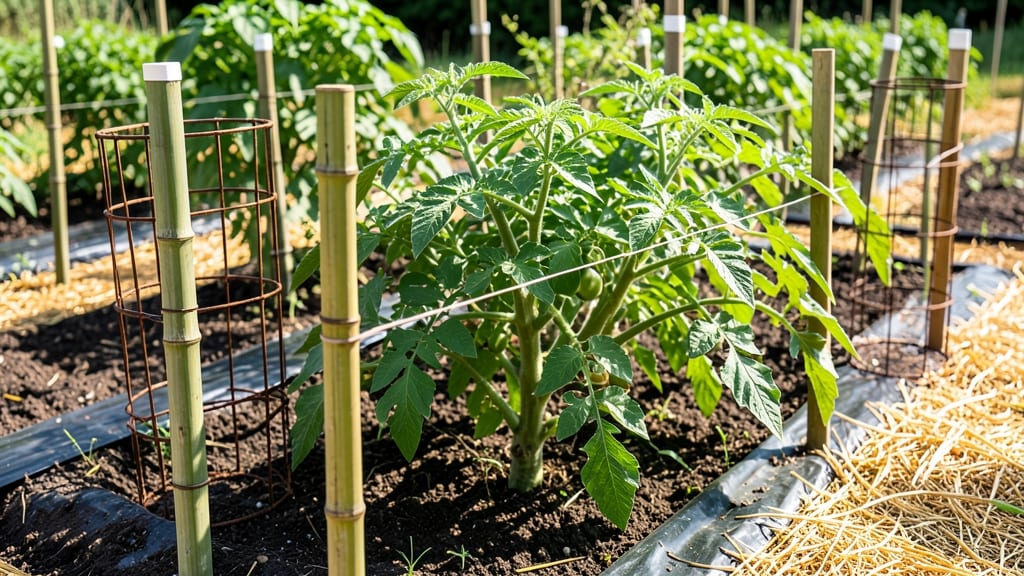
Beefsteak tomato spacing determines whether your 🍅 6-pound monsters ripen or your plants spend all summer fighting for air.
Picture this: You’ve just planted your prized beefsteak varieties, dreaming of burgers and salads that’ll make your neighbors jealous. But if you crowd them too close, you’re not just wasting space—you’re setting up a disease buffet.
Fungal spores love nothing more than damp leaves brushing against each other, and that’s how your juicy, heirloom tomatoes turn into a sad, spotted mess.
Here’s the deal: 18 to 36 inches apart isn’t just a rule—it’s the difference between a bountiful harvest and a disappointing one.
Whether you’re tucking them into a raised bed, cramming containers, or letting them sprawl in the ground, the right spacing keeps airflow humming and sunlight reaching every leaf. No more guessing—just science-backed layouts that work for your setup.
Below, I’ll break down the exact measurements for cages, stakes, and trellises, plus how to fix overcrowded beds without losing this year’s crop. Ready to turn your tomato patch into a fruit factory?
Optimal beefsteak tomato spacing by planting method (indeterminate variety guide)
Beefsteak tomatoes are the giant of the tomato world, capable of producing 1-pound fruits or larger when given the right care. But their indeterminate growth habit means they'll keep reaching skyward until frost—unless you plan ahead.
The key to maximizing those juicy beefsteaks lies in proper spacing and support, tailored to your growing method.
Crowded plants compete for sunlight, nutrients, and airflow, leading to smaller fruits and increased disease risk. Meanwhile, plants that are too isolated waste garden space. The solution? A science-backed spacing plan that balances vine growth with harvest potential.
Let's break down the ideal distances for ground planting, cages, stakes, and trellises—plus how to adjust for your unique setup.
Indeterminate beefsteak varieties like 'Big Beef' or 'Cherokee Purple' can grow 6-8 feet tall with proper support. Without it, their heavy fruit load causes vines to break or rot. The spacing you choose directly impacts fruit size, disease resistance, and ease of maintenance.
For example, trellising saves space while improving airflow, while ground planting requires more room but offers easier access.
| Planting Method | Spacing (Plants) | Row Spacing | Key Considerations |
|---|---|---|---|
| In-Ground (No Support) | 24-36 inches apart | 36-48 inches between rows | Maximizes airflow; best for large gardens with pruning to control spread. |
| Cage Support (5-6 ft tall) | 18-24 inches apart | 30-36 inches between rows | Saves space; cages must be sturdy to support heavy fruits. |
| Stakes (Single or Double) | 24-30 inches apart | 36 inches between rows | Allows vertical growth while keeping vines upright; ideal for small gardens. |
| Trellis (String or Wire) | 18-24 inches apart | 24-30 inches between rows | Most space-efficient option; requires pruning to train vines upward. |
| Containers (5+ Gallon Pots) | 1 plant per container (24" diameter min) | N/A (space pots 18" apart) | Use balanced fertilizer and deep watering to compensate for limited root space. |
For in-ground planting, aim for 36 inches between rows to allow easy access and airflow. This method works best in large gardens where you can dedicate space to sprawling vines.
I’ve found that pruning suckers (the shoots in the leaf axils) every 2-3 weeks helps maintain airflow and directs energy to fruit production rather than excessive foliage.
When using cage supports, opt for 18-24 inches between plants—this tight spacing works because the cages contain the vine's spread. Choose 5-6 foot tall cages to accommodate the indeterminate growth of beefsteak varieties.
Pro tip: Bury the cage halfway into the soil to provide stability and prevent toppling under heavy fruit loads.
Staking is a budget-friendly alternative to cages, offering similar benefits with less material. Space staked plants 24-30 inches apart and use soft ties (like old t-shirts or plant straps) to avoid damaging the vine bark.
I’ve had success with double stakes (two stakes per plant) for extra support, especially in windy areas or when growing extra-large varieties.
Trellising is the most space-efficient method, allowing you to grow beefsteak tomatoes in small gardens or urban spaces. With a trellis, you can space plants 18-24 inches apart and train vines upward using twine or nylon cord.
This method requires regular pruning to remove lower leaves and encourage upward growth. The trade-off? You’ll need to harvest fruits more frequently to prevent the weight from bending the trellis.
Container gardening is ideal for balconies, patios, or small yards, but beefsteak tomatoes need at least 5-gallon pots to thrive. Space containers 18 inches apart to allow airflow between plants.
Use a lightweight potting mix with added compost and a time-release fertilizer to support vigorous growth. I’ve grown beefsteak tomatoes in containers successfully by watering deeply twice daily during hot summers.
Regardless of your planting method, sunlight exposure is non-negotiable. Beefsteak tomatoes need 6-8 hours of direct sun daily to develop their signature large, flavorful fruits. If your garden is shady, consider reflective mulch or white-walled raised beds to maximize light penetration.
Poor sunlight leads to smaller fruits, leggy growth, and weak stems that can’t support the weight of beefsteak tomatoes.
Finally
How far apart should beefsteak tomatoes be planted? (Science-backed measurements)
Beefsteak tomatoes need ample space to thrive—not just for their massive vines but to prevent disease and maximize fruit size. Unlike smaller varieties, these indeterminate giants sprawl 6-8 feet tall and produce 1-pound+ tomatoes when given room to breathe.
Crowding them too close leads to poor airflow, inviting fungal infections like early blight or powdery mildew.
Research from the University of Florida IFAS Extension confirms that 18-36 inches apart is ideal for in-ground planting, depending on your garden layout and support system. This range ensures each plant gets 6-8 hours of sunlight and reduces competition for water and nutrients.
For container gardening, adjust spacing to 12-18 inches between plants, but prioritize container size (at least 5 gallons per plant).
| Planting Method | Spacing (inches) | Why It Works |
|---|---|---|
| In-Ground (No Support) | 36" | Maximizes airflow, reduces fungal risk, and allows vines to sprawl naturally. |
| In-Ground (Cages/Trellises) | 24-36" | Supports vertical growth while maintaining airflow; closer spacing works if vines are trained upward. |
| Raised Beds | 18-24" | Soil warmth and drainage improve root growth; closer spacing is safe due to better conditions. |
| Containers (5+ Gallons) | 12-18" | Limited space requires pruning; prioritize container depth over horizontal spacing. |
| Greenhouse/High Density | 18" | Controlled environment reduces disease risk, allowing tighter spacing with proper pruning. |
The 18-inch minimum spacing isn’t arbitrary—it accounts for the 2-3 foot canopy beefsteak tomatoes develop by mid-summer. Studies show that plants spaced 12 inches apart or closer suffer from shaded lower leaves, which trap moisture and foster blight.
Even with stakes or cages, maintain at least 24 inches between plants to avoid overcrowding the root zone.
For container gardening, the challenge shifts to vertical space. Use 5-gallon fabric pots or larger to accommodate roots, and space containers 12-18 inches apart.
Prune suckers aggressively to redirect energy to fruit production rather than foliage. In containers, daily watering is critical—small pots dry out faster, stressing plants and reducing yield.
Adjust spacing based on your local climate. In humid regions (like the Southeast U.S.), stretch plants to 36 inches apart to improve airflow. In drier climates (like the Southwest), 24 inches may suffice if you mulch heavily to retain moisture.
Always prune lower leaves to keep the plant’s center open, further reducing disease risk.
Pro tip: Use a measuring tape or spacing grid when planting to ensure consistency. Mark rows with stakes or string to avoid guesswork. With the right spacing, your beefsteak tomatoes will reward you with larger, sweeter fruits and fewer pests—no overcrowding required! 🌱