
Plants
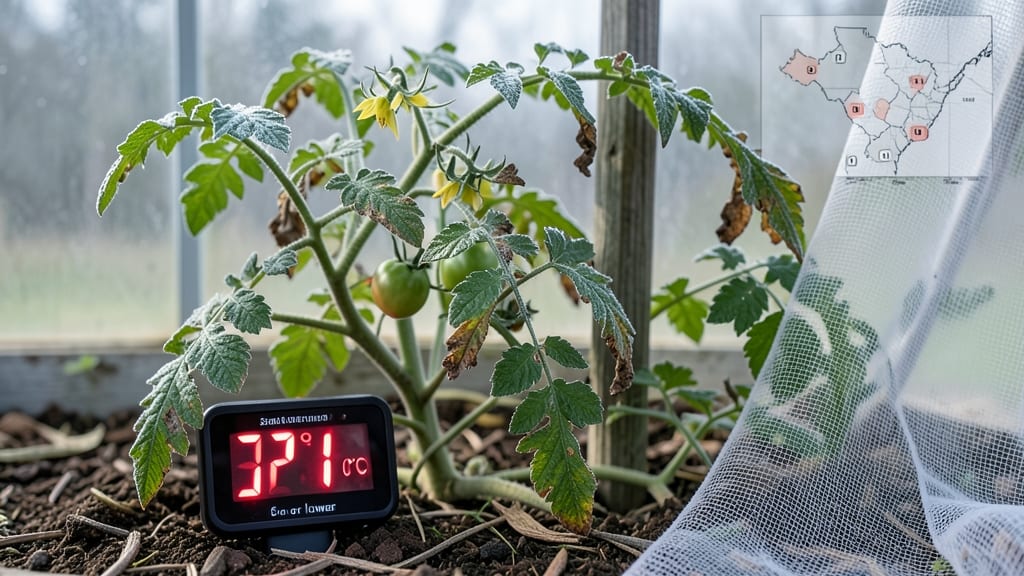
The coldest temperature tomato plants can handle is 28°F (-2°C) for short durations, but most varieties sustain damage below 32°F (0°C). Seedlings are especially fragile, while mature plants may endure brief cold snaps with protection, though frost will always prove fatal.
The cold tolerance of tomato plants varies dramatically depending on their growth stage.
Seedlings, with their delicate root systems, can suffer irreversible damage at temperatures above freezing, while established plants might survive brief dips into the low 20s°F if their foliage is protected. 🌱 Varieties like 'Stupice' or 'Mountain Merit' are bred for better cold resistance, but even these can't withstand prolonged exposure to sub-freezing conditions.
The real key is preparation—mulching, row covers, and containers all create microclimates that can shield plants from sudden temperature drops.
What's interesting is how quickly tomatoes react to cold stress. Even mature plants exposed to 32°F (0°C) for more than a few hours will show signs of damage—wilting, blackened leaves, or stunted growth. The good news?
With proper protection, you can often push the limits. For example, using floating row covers can raise temperatures by 5-10°F, making a difference between life and death for your plants during unexpected cold snaps.
💡 In This Article
- Tomato Plant Cold Tolerance by Growth Stage
- Cold-Hardy Tomato Varieties and Protection Tips
Tomato plant cold tolerance by growth stage
Tomato plants don't just react to cold—they respond differently at each growth stage because their biology changes dramatically. Seedlings, with their tiny root systems and delicate stems, are the most vulnerable. At temperatures below 50°F (10°C), their metabolism slows, and roots struggle to absorb water.
When temperatures drop to 32°F (0°C), cellular structures begin to rupture, causing irreversible damage within 2-4 hours. The key issue here is that young plants can't regulate their internal temperature like mature ones, making them particularly susceptible to sudden cold snaps.
Once tomatoes reach the transplanting stage (typically 4-6 weeks old), they develop slightly better cold tolerance, but only up to a point. Their root systems expand, allowing for more stable water uptake, but they still can't handle prolonged exposure to 40°F (4°C) or below.
At this stage, the real danger comes from blackening of leaves and stunted growth, which happens when temperatures dip below 45°F (7°C) for extended periods. The plant's energy shifts from growth to survival, delaying flowering and fruiting—critical for gardeners eager to harvest.
Flowering and fruiting stages bring slightly better cold resilience, but only because the plants are larger and more established. Mature tomato plants can often tolerate brief exposure to 28°F (-2°C) without dying outright, though they'll suffer leaf damage and reduced fruit set. The reason?
Mature plants have thicker stems and more developed root systems that can store some energy reserves. However, the real threshold for survival drops dramatically if the cold persists—32°F (0°C) for more than 6-8 hours will cause irreversible damage to the plant's vascular system, leading to wilting and death.
What most gardeners don't realize is how frost differs from cold snaps. Frost occurs when temperatures drop to 32°F (0°C) or below and moisture is present in the air. This creates ice crystals that pierce plant cells, causing immediate and fatal damage.
Even mature plants can't survive frost—it's a death sentence for tomatoes regardless of their size or stage. The good news? With proper protection, you can often raise the effective temperature around your plants by 5-10°F, giving them a fighting chance against unexpected cold.
Here's a quick breakdown of what happens at each stage when temperatures drop:
- Seedlings: Damage begins at 50°F (10°C), critical at 32°F (0°C) (cell rupture in 2-4 hours)
- Transplanting: Growth stalls at 45°F (7°C), leaf burn at 40°F (4°C)
- Flowering/Fruiting: Brief survival at 28°F (-2°C), but 32°F (0°C) for >6 hours causes vascular damage
- Frost (≤32°F/0°C + moisture): Instant cell piercing and death for all stages
The science behind this lies in how cold affects cell membranes**. At freezing temperatures, water inside plant cells expands as it crystallizes, rupturing the delicate lipid bilayers that hold cells together. Mature plants have thicker cell walls that offer some protection, but nothing can fully prevent frost damage.
That's why understanding these thresholds helps you time your plantings and protections more effectively—whether you're using row covers, mulch, or even bringing potted tomatoes indoors during cold snaps.