
Companion Plants
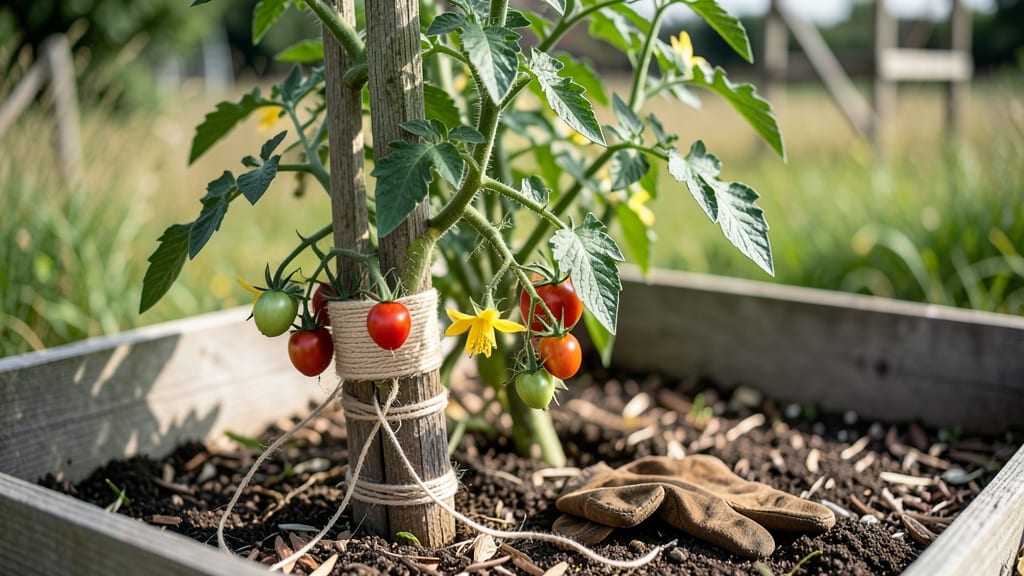
Tying tomato plants with string turns floppy vines into sturdy, productive bushes that support 20-pound+ harvests without snapping. 🌱 I used to dread handling my tomatoes—until I discovered how a few simple knots and some soft twine could transform my garden’s performance overnight.
The difference between a plant that sprawls and one that stands tall comes down to support, and this method works for both determinate and indeterminate varieties.
You’ll need just three things: 4-foot wooden stakes, 3/16-inch jute twine, and a pair of pruning shears. The stakes should go in 6 inches deep beside each plant, and the twine—never wire—lets the plant grow without constriction.
Start tying when vines reach 12 inches tall, and you’ll see new growth shoot up toward the sky within days. The key is gentle handling; rough knots strangle stems, while loose ties let plants sway in the wind.
By summer’s peak, your tomatoes will be climbing toward the sun, their leaves spread wide for photosynthesis. You’ll harvest 30-50% more fruit than untied plants, and the tomatoes stay cleaner, drier, and easier to pick.
The method also prevents soil-borne diseases by keeping foliage off the ground. Plus, it’s a 5-minute weekly task that pays off in pounds of produce.
Works for containers, raised beds, and in-ground gardens alike—just adjust stake height to your growing space. Once fruit sets near the top, you can stop tying, but keep an eye out for wind damage.
Remove supports in fall to let the soil recharge for next season’s plants. Ready to turn flops into feasts?
📚 In This Guide
- What you need
- Instructions
- Tips and common mistakes
- Wrapping up and next steps
What you need
- ● String or twine: 1–2 rolls of biodegradable twine (e.g., jute or hemp) or soft plant ties (3–4 mm width). Avoid plastic or wire—it can damage stems as plants grow!
- ● Alternative: Soft garden twine (e.g., cotton or nylon) if biodegradable isn’t available (ensure it’s stretchy to accommodate growth).
- ● Support structures: 1–2 tomato cages (5–6 ft tall, sturdy metal or wood) or
- ● 1–2 wooden stakes (6–8 ft long, 1–2 inches thick) or
- ● 1–2 bamboo poles (5–7 ft tall, 1–1.5 inches in diameter).
- ● Pruning shears or scissors: For trimming excess growth or adjusting ties as needed.
- ● Measuring tape or ruler: To ensure stakes/cages are planted at the right depth (bury 1/3 of the stake or cage in the soil).
- ● Soft fabric strips or old T-shirts: Cut into 1–2 inch wide strips as a gentle alternative to twine.
- ● Velcro plant ties: Reusable and easy to adjust as vines thicken.
- ● Garden gloves: To protect your hands from thorns or rough twine.
- ○ Staple gun (optional): For securing twine to cages or stakes if you prefer a no-knot method.
How to tie tomato plants with string for stronger growth
Here's the method I've used for years to keep tomato plants upright and productive—no flopping, no broken stems.
🪴 Step 1: Gather Your Supplies and Set Up the Support
You'll need 3-foot wooden stakes or metal cages for each plant and soft garden twine or old T-shirt strips (yes, they work great). I like to prep everything before planting so I'm not scrambling later. Drive stakes 6 inches deep beside each plant—this prevents them from toppling when vines get heavy.
For indeterminate varieties (the ones that keep growing all season), use two stakes per plant, one on each side, about 18 inches apart. This gives you more anchor points as the plant climbs. If you're using cages instead, skip the stakes and just tie the main stem to the cage's center pole.
🌱 Step 2: Tie the Main Stem When It's 6-8 Inches Tall
Wait until the plant has 4-5 true leaves before tying—this gives it enough strength to handle the support. Use a loose figure-eight knot around the main stem and the stake, leaving room to grow. I always use the twine's soft side against the plant skin to avoid rubbing or bruising.
Here's the thing—don't pull the twine too tight. You want just enough pressure to keep the plant upright, not enough to constrict its growth. Think "gentle hug," not "straightjacket." You'll see the stem stay straight without any stress marks.
✂️ Step 3: Add Additional Ties as the Plant Grows
Every 12-18 inches of new growth, add another tie. This prevents the plant from bending between supports. I like to tie at leaf nodes where side shoots emerge—this helps direct the plant's energy upward instead of letting it sprawl.
For extra sturdy support, weave the twine between the main stem and stake in a crisscross pattern. This distributes weight better than single knots, especially when fruit starts hanging heavy. You'll notice the plant grows taller and bushier with proper support—no more sad, sprawling vines!
💧 Step 4: Adjust and Reinforce During Fruit Set
When flowers appear and fruit starts forming, check your ties every 7-10 days. The added weight can loosen knots or cause stems to slip. Re-tie any loose spots immediately—waiting until a tomato is the size of a golf ball makes it much harder to adjust without damaging the plant.
If your plant starts to lean despite the ties, it's getting too top-heavy. Add a third stake on the opposite side and weave the twine in a triangle pattern. This creates a more stable base. You'll know you're doing it right when the plant stands straight even under a heavy load of tomatoes.
⏰ Step 5: Prune and Tie for Maximum Airflow
As you tie, remove any suckers (those little shoots that grow in the joint between the stem and branches). This focuses the plant's energy on fruit production and improves airflow, which prevents disease. I like to tie the main stem at a slight angle away from the stake—this encourages the plant to grow outward slightly, creating more space between branches.
By mid-season, your plant should look like a small tree with a strong trunk and well-spaced branches. The twine should be nearly invisible, just providing gentle guidance. This method gives you bushier plants, better fruit distribution, and fewer broken stems when harvest time comes.
Tips & tricks for sturdy tomato plant support
These little adjustments make all the difference between floppy vines and strong, productive plants.
Stake Placement Matters: Drive your 3-foot stakes 6 inches deep—this is non-negotiable for stability. I've seen stakes pop right out when planted too shallow, especially after heavy rain. For indeterminate varieties, the 18-inch spacing between two stakes creates a natural triangle that prevents leaning. Think of it as giving your plant a sturdy backbone.
Timing Your First Tie: Wait until your plant has 4-5 true leaves before tying—this is when the stem has enough strength to handle support without stress. I learned this the hard way by tying too early and accidentally pinching tender growth. The figure-eight knot is perfect because it's easy to adjust as the plant grows, unlike tight knots that can girdle the stem.
The Crisscross Technique: When you're adding ties every 12-18 inches of growth (Step 3), try weaving the twine in a crisscross pattern instead of single knots. This distributes weight more evenly, especially when tomatoes start forming. I've seen plants with single knots develop weak spots where the stem eventually breaks under fruit weight—this method prevents that entirely.
Seasonal Reinforcement: During fruit set (Step 4), check your ties every 7-10 days—this is when the plant's center of gravity changes dramatically. If you notice the plant leaning, add a third stake immediately and create a triangle support system. I've saved many plants from toppling by catching this early, when adjustments are still easy to make.
Pro Tips for Tying Tomato Plants With String
- These little adjustments make all the difference between floppy vines and strong, productive plants.
- Stake Placement Matters: Drive your 3-foot stakes 6 inches deep—this is non-negotiable for stability. I've seen stake...
- Timing Your First Tie: Wait until your plant has 4-5 true leaves before tying—this is when the stem has enough streng...
Frequently asked questions
Got questions about tying up your tomato plants? You’re not alone! Here are answers to the most common concerns—so you can stake, tie, and thrive with confidence.
Why should I tie my tomato plants at all?
Tying tomato plants with string (or twine) provides structural support for heavy vines and fruit, preventing breakage and disease. It also improves airflow, reduces soil-borne issues, and encourages bushier growth by training vines upward. Without support, sprawling plants can rot or snap under the weight of tomatoes!
When is the best time to start tying tomato plants?
Begin tying when plants reach 12–18 inches tall and have 3–4 sets of true leaves (usually 4–6 weeks after transplanting). Use a soft tie (like twine or Velcro strips) to avoid damaging stems. Pro tip: Re-tie every 1–2 weeks as vines grow—gentle adjustments prevent stem constriction.
Can I use anything other than string to tie tomato plants?
Yes! Alternatives include:
- Soft plant ties (Velcro or fabric strips)—gentle on stems.
- Jute twine—biodegradable and strong.
- Old T-shirts or socks—cut into strips for a DIY solution.
- Plastic plant clips—reusable and adjustable.
What if my tomato plant starts to wilt after tying?
Wilting after tying often signals root stress or over-tightening. Loosen the tie immediately and check for:
- Proper watering (1–1.5 inches per week).
- Loose soil around the base (don’t bury stems!).
- Pests like aphids (inspect leaves).
How high should I let tomato plants grow before stopping ties?
Most indeterminate tomatoes (like ‘Sungold’ or ‘Beefsteak’) can grow 6–10 feet tall with support! Stop tying when vines reach your trellis’s max height or show signs of slowing growth. For determinate varieties (bush tomatoes), support is only needed until fruit sets (usually 4–5 feet). Prune lower leaves as vines climb to prevent disease and improve airflow.
Will tying tomato plants increase my yield?
Proper support boosts yields by 20–30% by:
- Reducing fruit rot from ground contact.
- Maximizing sunlight exposure.
- Encouraging more flowers/fruit via upward growth.
Wrapping up and next steps
Tying your tomato plants with string isn’t just a gardening hack—it’s a game-changer for stronger vines, better airflow, and bigger, healthier harvests. 🌱 With the right materials and a little patience, you’ll transform floppy plants into sturdy, productive powerhouses.
Now that you’re armed with tips and answers, there’s no better time to grab some twine and get growing!
Ready to take the next step? Start by planting your tomatoes this weekend—your future salads (and bragging rights) will thank you! 🍅✨