
How To
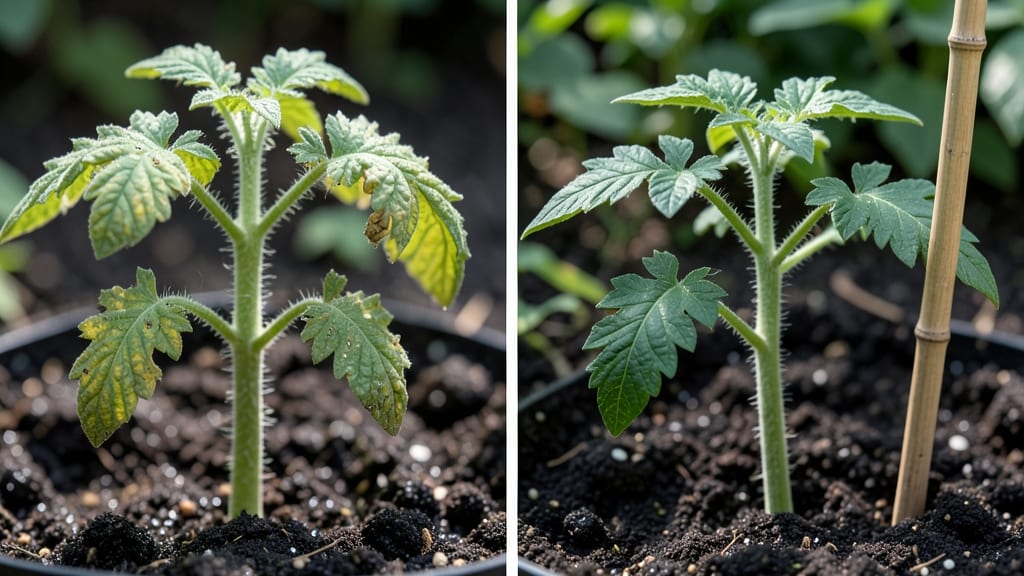
Your tomato seedlings' leaves curling down like crispy question marks?
That's your wake-up call to act fast—this is the most common sign your plants are under stress, and the fix starts with identifying the exact cause. 🌱 I've seen this happen with overwatering, aphid attacks, and even just too much heat from a sunny windowsill, and each needs a different solution.
The good news is you can reverse this in 3 simple steps: check the soil moisture (it's probably too wet or too dry), inspect the undersides of leaves for tiny pests, and adjust your growing setup to match what tomatoes actually need.
Most gardeners fix it within 24 hours of spotting the problem. By the end of this, your seedlings will be bouncing back with bright green, sturdy leaves and no more crispy edges. The key is catching it early—once leaves start yellowing or wilting, you're playing catch-up.
Works for seedlings in pots, trays, or even under grow lights. Let's get those plants healthy again before they throw in the towel!
Why it happens
When your tomato seedlings start showing leaves curling down like a sad, wilted umbrella, it’s often a cry for help from your tiny green friends. 🌱😬 Understanding the root causes—literally and figuratively—is the first step toward reviving them.
Below, we break down the most common culprits, backed by science, so you can diagnose the issue and act fast.
💧 Overwatering or Poor Drainage
Tomato seedlings thrive on a consistent moisture balance, but too much water can suffocate their roots. When soil stays soggy, oxygen can’t reach the roots, leading to root rot (a fungal infection) or nutrient starvation. This stress causes leaves to curl downward as the plant conserves energy.
- Signs: Yellowing leaves, mushy stems, or a foul smell from the soil.
- Why it happens: Overwatering disrupts the osmotic balance in root cells, forcing them to release water and wilt.
- Actionable fix:
- Check soil moisture by sticking your finger 1 inch deep—water only if it’s dry.
- Use well-draining soil mixes with perlite or vermiculite (aim for 50-70% porosity).
- Ensure pots have drainage holes and elevate them to prevent waterlogging.
☀️ Underwatering or Heat Stress
On the flip side, insufficient water or high temperatures (above 90°F/32°C) cause tomato seedlings to transpire (lose water) faster than they can absorb it. This leads to turgor pressure loss—the hydraulic system that keeps leaves perky—causing them to droop and curl.
- Signs: Crispy leaf edges, dry soil, or seedlings wilting during the day but recovering at night.
- Why it happens: Guard cells in leaves close stomata to retain moisture, but prolonged stress leads to cellular dehydration and curling.
- Actionable fix:
- Water deeply early in the morning (1–1.5 inches per week, adjusting for climate).
- Use mulch (straw or grass clippings) to retain soil moisture and cool roots.
- Avoid placing seedlings in direct sunlight until they’re hardened off (gradually expose them to outdoor conditions).
🌡️ Temperature or Humidity Extremes
Tomato seedlings are sensitive to temperature swings. Cold drafts (<40°F/4°C) or scorching heat (>95°F/35°C) disrupt their metabolic processes. Low humidity also forces leaves to curl inward to reduce water loss—a survival tactic that can stunt growth.
- Signs: Slow growth, purple stems (phosphorus deficiency from cold stress), or leaves curling at night.
- Why it happens: Extreme temps alter enzyme activity in leaves, impairing photosynthesis and causing cytoplasmic streaming (the movement of nutrients) to slow.
- Actionable fix:
- Keep seedlings in a consistent 65–75°F (18–24°C) range day and night.
- Use a heating mat (for cold snaps) or provide shade cloth (for heatwaves).
- Increase humidity with a pebble tray (fill a tray with water and pebbles, place seedlings on top).
🐛 Pests or Disease Pressure
Tiny invaders like aphids, whiteflies, or fungal pathogens (e.g., early blight) can sap a seedling’s energy, leading to curled, distorted leaves. Pests inject toxins or feed on sap, while diseases clog stomata, preventing gas exchange.
- Signs:
- Pests: Sticky residue (honeydew), visible bugs, or distorted new growth.
- Diseases: Dark spots on leaves, powdery mildew, or yellow halos around curled areas.
- Why it happens: Pests trigger jasmonic acid stress responses, causing leaves to curl as a defense. Fungal infections block chlorophyll production, reducing energy for leaf structure.
- Actionable fix:
- Isolate affected seedlings and inspect undersides of leaves for pests.
- Spray with neem oil (1 tsp per liter of water) or introduce beneficial insects (ladybugs, lacewings).
- Remove infected leaves and treat with copper fungicide if disease is suspected.
🌱 Nutrient Deficiencies or Imbalances
A lack of key nutrients (especially nitrogen, potassium, or magnesium) can cause leaves to curl as the plant prioritizes survival over growth. For example, magnesium deficiency (common in acidic soils) leads to interveinal chlorosis (yellowing between veins), while potassium deficiency weakens cell walls, causing curling.
- Signs:
- Nitrogen: Pale yellow leaves, stunted growth.
- Potassium: Curling edges, weak stems.
- Magnesium: Yellow patches between veins.
- Why it happens: Nutrient deficiencies disrupt protein synthesis (nitrogen) and osmoregulation (potassium), leading to cellular dysfunction.
- Actionable fix:
- Test soil pH (aim for 6.0–6.8) and amend with lime (for acidity) or sulfur (for alkalinity).
- Fertilize with a balanced 10-10-10 or fish emulsion (high in nitrogen).
- Add Epsom salt (1 tbsp per gallon of water) for magnesium if leaves show yellowing.
Quick Fixes for Wilted Tomato Seedlings
Now that you know the culprits behind those drooping, curled leaves, let’s roll up our sleeves and get your seedlings back on track! Each issue has a simple, actionable solution—plus a few pro tips to keep your plants thriving long-term.
Here’s how to diagnose and treat the problem fast, so your tomato seedlings bounce back stronger than ever.
Symptoms: Yellowing leaves, soggy soil, curled edges, or a mushy stem base. Fix:
- 🔥 Stop Watering Immediately
- Let the top 1–2 inches of soil dry out completely before watering again. Overwatered seedlings can’t breathe, leading to root rot and wilting.
- 🍳 Repot in Fresh, Well-Draining Soil - Gently remove the seedling from its current pot and inspect the roots.
If they’re black, mushy, or smell foul, trim the damaged roots with sterilized scissors. - Repot in a clean container with a mix of 50% potting soil + 50% perlite or vermiculite to improve aeration.
- ⏰ Adjust Your Watering Routine - Water only when the top inch of soil feels dry (stick your finger in to test!).
Use a pot with drainage holes, and avoid saucers that trap excess water. - Pro Tip: 💡 Water at the base of the plant in the morning so leaves have time to dry—this prevents fungal infections.
Symptoms: Leaves curling downward like a sad taco, crispy edges, or a "sunburnt" appearance (white/yellow patches). Fix:
- 👨🍳 Move to Indirect Light
- If seedlings are in direct midday sun, shift them to a shadier spot (east or north-facing window) or use a light sheer curtain to filter harsh rays.
- For greenhouse/grow light setups: Lower the lights or increase height to 12–18 inches above seedlings to mimic natural shade.
- 🥘 Increase Humidity (Gently!)
- Place a shallow tray of water near the seedlings (not touching the leaves) or mist the air around them (not the leaves directly) to boost humidity.
- Pro Tip: 🌡️ If temps exceed 90°F (32°C), consider a fan on low speed to improve airflow and reduce heat stress.
- 💧 Water More Frequently (But Less Deeply)
- In hot weather, light daily misting can help—just avoid soaking the leaves. Focus on keeping the root zone moist, not the foliage.
Symptoms: Sticky residue, tiny bugs, holes in leaves, or a white powdery coating (fungus). Fix:
- 🔪 Identify the Culprit
- Aphids/Spider Mites? Wipe leaves with a soapy water solution (1 tsp mild dish soap + 1 quart water). Repeat every 3–4 days.
- Whitefly? Trap them with yellow sticky cards placed near seedlings.
- Fungal Issues (Powdery Mildew)? Spray with a baking soda mix (1 tsp baking soda + 1 quart water + few drops of soap) early in the morning on dry leaves.
- 🎯 Isolate & Quarantine
- Move affected seedlings away from healthy plants to prevent spread. Check nearby plants daily for signs of infestation.
- ✨ Boost Plant Immunity
- Neem oil spray (1 tsp neem oil + 1 quart water + drop of soap) once a week deters pests and strengthens seedlings.
- Pro Tip: 🌱 Prevention is key! Rotate seedlings weekly so all sides get even light, and avoid overhead watering to keep leaves dry.
Symptoms: Pale yellow leaves, stunted growth, or curling that worsens over days. Fix:
- 📊 Test Your Soil (If Possible)
- Use a simple soil pH test kit (ideal pH for tomatoes: 6.0–6.8). If too alkaline, amend with cotton compost or peat moss.
- 💪 Fertilize Lightly
- Week 1–2 after transplant: Use a balanced, water-soluble fertilizer (5-5-5 or 10-10-10) diluted to half strength.
- Avoid high-nitrogen fertilizers—they encourage leafy growth at the expense of roots. Instead, opt for a low-nitrogen, high-phosphorus feed (like 3-4-6) to support root development.
- 🍎 Support Weak Seedlings
- If leaves are too heavy for the stem, gently tie the seedling to a small stake with a soft cloth or twist tie.
- Pro Tip: 🌱 Hardening off seedlings before transplanting reduces shock—gradually expose them to outdoor conditions over 5–7 days before moving to the garden.
Final Reminder: 🎯 Act fast, but don’t overreact! Most curled leaves recover within 3–5 days if you address the root cause. Keep an eye on your seedlings, adjust care as needed, and soon you’ll be harvesting juicy, healthy tomatoes instead of fixing wilting leaves!
Frequently asked questions
Why do my tomato seedling leaves curl downward only in the afternoon?
This is classic heat stress or underwatering during hot hours. Tomato seedlings lose water faster in afternoon sun, causing leaves to curl as a moisture-conservation tactic. Move them to partial shade or provide 1 inch of water daily in the morning to prevent this. If using grow lights, raise them to 12-18 inches above seedlings.
Can I save a seedling with completely curled leaves and yellow edges?
It depends on the cause! If it's overwatering/root rot, repot immediately in fresh, dry soil and stop watering for 3 days. For heat stress, move to shade and mist leaves lightly. If leaves are crispy and brown, the damage is permanent—but new growth will emerge from the stem if roots are healthy. Act within 24 hours for best results.
How do I tell if my seedlings have pests vs. nutrient deficiency?
Check the leaf undersides first—tiny bugs (aphids, spider mites) or sticky residue mean pests. Nutrient issues show as uniform curling with specific color changes: yellow between veins = magnesium; brown edges = potassium. For pests, use neem oil; for nutrients, test soil pH and amend with Epsom salt or balanced fertilizer.
Is it normal for tomato seedlings to curl slightly after transplanting?
Yes, but only for 1-2 days! Transplant shock causes temporary curling as roots adjust. To minimize stress: water deeply before transplanting, use well-draining soil, and avoid direct sun for 3 days. If curling persists beyond 48 hours, check for root damage or underwatering.
What's the fastest way to fix curled leaves from overwatering?
Stop watering immediately and repot in fresh soil with 50% perlite. Trim any black/mushy roots, then place the seedling in bright, indirect light and water only when the top 1 inch of soil is dry. Most seedlings recover within 3-5 days if roots aren't severely damaged. Pro tip: Elevate pots to prevent future waterlogging.