
Planting
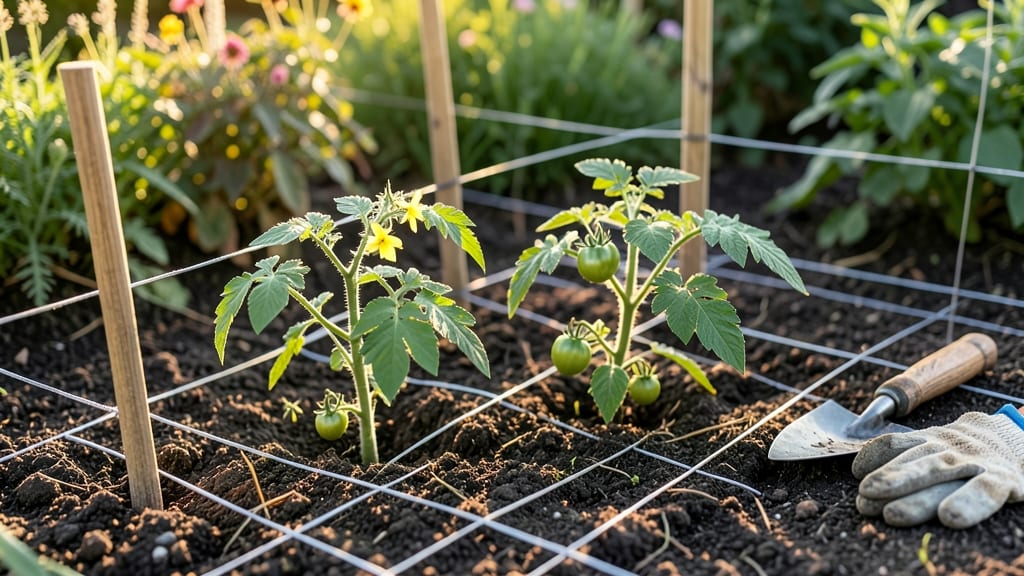
Your square foot grid can produce 30+ tomatoes per plant when spaced right. 🌱 Square foot gardening turns small spaces into high-yield tomato factories by eliminating wasted rows—just divide your bed into 1-foot squares and place each tomato in its own zone.
The secret? One tomato per square foot for determinate varieties, or four plants per 4x4-foot section for indeterminate vines that climb.
I learned the hard way that crowding plants leads to disease, poor air circulation, and stunted growth—my first year’s overpacked bed yielded half as much as my properly spaced second attempt.
You’ll end up with vibrant green foliage, heavier fruit, and easier maintenance because plants compete less for sunlight and nutrients. The grid system also makes rotating crops and companion planting effortless—just swap out squares each season. Works for both determinate bush tomatoes and indeterminate vines (with trellises).
Here’s how to map it out!
📚 In This Guide
- What you need
- Instructions
- Tips and common mistakes
- Wrapping up and next steps
What you need
- ● Square Foot Garden Grid: 1x 12-inch grid frame (or DIY with wooden stakes and string)
- ● 1x 12-inch x 12-inch grid panel (or use a pre-made square foot grid kit)
- ● Tomato Plants: 1 plant per square foot (for dwarf varieties) or 4 plants per square foot (for indeterminate, spaced 4" apart in a grid)
- ● 4-9 plants per 4'x4' bed (adjust based on variety and support needs)
- ● Soil & Amendments: 1x 12-inch-deep raised bed or in-ground plot
- ● Mel’s Mix soil blend (or equivalent: 1/3 peat moss, 1/3 vermiculite, 1/3 compost)
- ● Balanced organic fertilizer (5-5-5 or 10-10-10, 1 tbsp per square foot)
- ● Support Structures: Cages (5' tall) or stakes (6' long) (1 per plant for indeterminate varieties)
- ● Twine or plant ties (for securing vines)
- ● Basic Tools: Hand trowel or transplanting tool
- ● Watering can or hose with gentle nozzle
- ● Pruning shears (for maintenance)
- ● Mulch (straw or shredded leaves) to retain moisture and suppress weeds
- ● Drip irrigation system for consistent watering
- ● Plant labels (to track varieties and spacing)
- ● Compost tea or seaweed extract for a nutrient boost
Step-by-Step guide to tomato plant spacing in square foot gardening
Square foot gardening transforms your tomato harvest by maximizing space and airflow—here's how to do it right.
📏 Step 1: Plan Your Grid Layout for Tomato Varieties
Square foot gardening uses a 1-foot grid where each square accommodates specific plant counts based on maturity size. For tomatoes, determinate varieties (bush types) get 1 plant per square, while indeterminate varieties (vining types) need 1 plant per 2 squares to sprawl properly. I always sketch my grid first—drawing a 4x4 grid on graph paper helps visualize yield potential.
Label each square with its plant type to avoid confusion later. For our 4-plant yield, you'll need a 2x2 section of your grid dedicated solely to tomatoes. This prevents overcrowding while maximizing vertical growth space. Remember, tomatoes need their own dedicated squares—they're heavy feeders and compete aggressively with other plants.
🌱 Step 2: Prepare Planting Holes Within Each Square
Within each assigned square, place your tomato plants at the center point of the square. For determinate varieties, dig a hole just deep enough to accommodate the root ball without bending stems. I use my finger to gauge depth—it should match the plant's current soil level. For indeterminate varieties, create a small trench along the square's diagonal to encourage upward growth.
Loosen the soil around the planting hole with your fingers to prevent root circling. Add a handful of compost to the bottom of each hole—this jumpstarts root growth in the confined square foot space. Water the hole thoroughly before planting to settle the soil and eliminate air pockets that could stress young roots.
🌿 Step 3: Space Plants According to Variety Requirements
After planting, maintain the proper spacing between plants within each square. Determinate varieties should stand 12-18 inches apart within their square, while indeterminate varieties need 24 inches between plants due to their sprawling habit. I measure from the center of each plant to ensure even distribution—this prevents future shading and disease spread.
For our 4-plant yield, arrange two determinate varieties in separate squares and two indeterminate varieties in their own squares. This creates visual balance while accommodating each plant's growth pattern. The key is vertical support—install stakes or cages immediately after planting to guide vines upward and prevent sprawl into neighboring squares.
☀️ Step 4: Optimize Airflow and Sun Exposure
Square foot gardening relies on proper spacing to maximize airflow, which is critical for tomato health. Ensure each tomato square has 6+ hours of direct sunlight daily—rotate your grid every 2-3 weeks to prevent shading from one side. I use a small flag marker in each square to track sunlight exposure patterns throughout the day.
Monitor leaf contact between plants. When leaves begin touching, it's time to adjust spacing or add trellising. Overlapping foliage creates humidity pockets that invite fungal diseases like early blight. For indeterminate varieties, prune lower leaves regularly to maintain airflow at the base where soil-borne pathogens lurk.
Tips & tricks for perfect square foot tomato planting
Square foot gardening turns small spaces into high-yield tomato powerhouses—here's how to avoid common pitfalls and maximize every inch.
Variety-Specific Placement: The 1-plant-per-square rule for determinate tomatoes and 1-plant-per-2-squares for indeterminate varieties isn't arbitrary—it accounts for how each type grows. Determinate plants stay compact, while indeterminate vines need that extra space to sprawl. I've seen gardeners cram both types together, leading to crowded plants that produce smaller fruit and invite disease. Stick to the spacing guidelines in Step 3, and you'll notice healthier plants with better air circulation between leaves.
Root Ball Precision: When planting in Step 2, resist the urge to bury stems too deeply—this can cause rot. The hole should accommodate the root ball without forcing stems downward. For indeterminate varieties, that diagonal trench along the square's edge creates a natural growth path upward while preventing roots from circling. I've learned this the hard way after watching plants struggle when planted too deep or with compacted soil around roots.
Sunlight Tracking System: The 6+ hours of direct sunlight requirement is non-negotiable, but tracking exposure gets tricky. I use small wooden flags in each square to mark sunlight patterns throughout the day. After 2-3 weeks, rotate your entire grid 90 degrees to balance exposure. This prevents one side from becoming shaded permanently, which is especially critical in rectangular gardens where morning and afternoon sun create shadows.
Pro Tips for Tomato Plant Spacing Square Foot Gardening
- Square foot gardening turns small spaces into high-yield tomato powerhouses—here's how to avoid common pitfalls and maximize every inch.
- Variety-Specific Placement: The 1-plant-per-square rule for determinate tomatoes and 1-plant-per-2-squares for indeterminate varieties isn't arbitrary—it accounts for how each type grows.
- Root Ball Precision: When planting in Step 2, resist the urge to bury stems too deeply—this can cause rot.
Frequently asked questions
Got questions about tomato spacing in square foot gardening?
You’re not alone! Here are answers to the most common queries to help you grow like a pro.
How many tomato plants can I fit in a 1-square-foot grid?
For determinate (bush) tomatoes, plant 1–4 plants per square foot, depending on size. Indeterminate (vining) varieties need 1 plant per square foot—they sprawl! Use dwarf or patio types (like ‘Tiny Tim’) for denser spacing if space is tight.
Can I plant tomatoes closer together for bigger yields?
Nope! Crowding leads to poor air circulation, increasing disease risk (like blight) and stunted growth. Stick to spacing guidelines—your tomatoes will thrive and produce more fruit. Pro tip: Use pruning to manage size, not spacing.
When is the best time to transplant tomato seedlings into my square foot grid?
Wait until after the last frost and soil temps hit 55°F+ (13°C+). Seedlings should be 6–8 inches tall with 2–3 sets of leaves. Harden them off first (acclimate to outdoor conditions) for 7–10 days to avoid shock. Pro tip: Plant in the late afternoon to reduce transplant stress.
What if my square foot garden has limited space? Are there alternatives?
Yes! Try vertical gardening—use trellises, cages, or stakes to grow indeterminate varieties upward. For determinate types, opt for dwarf or bush varieties (e.g., ‘Tiny Tim’ or ‘Patio Princess’). Container gardening also works: 5-gallon buckets hold 1–2 plants each!
My tomato leaves are yellowing—did I space them too close?
Yellowing leaves often signal overcrowding or disease (like early blight). Check for poor airflow—prune suckers and thin foliage. If spacing is the issue, transplant to a larger area or add support to elevate plants. Pro tip: Mulch heavily to prevent soil-borne pathogens from splashing onto leaves.
Can I mix tomatoes with other plants in square foot gardening?
Pair tomatoes with companion plants like basil (repels pests), onions (deters aphids), or marigolds (deters nematodes). Avoid planting with brassicas (cabbage family) or corn—they compete for nutrients. Stick to 1 tomato plant per square foot when mixing to avoid overcrowding.
Wrapping up and next steps
Mastering tomato plant spacing in square foot gardening isn’t just about fitting more plants into a small space—it’s about unlocking their full potential! 🌱 With the right grid layout, proper spacing (like 1-4 plants per square foot), and a few smart tips, you’ll harvest bountiful, healthy tomatoes even in limited areas.
Whether you’re a beginner or a seasoned gardener, this method makes growing delicious, homegrown tomatoes easier and more rewarding.
Now that you’re armed with the knowledge, roll up your sleeves and start planting! Grab your square foot grid, pick your favorite tomato varieties, and watch your garden thrive. Happy gardening—your future salads (and bragging rights) will thank you! 🍅✨