
Planting
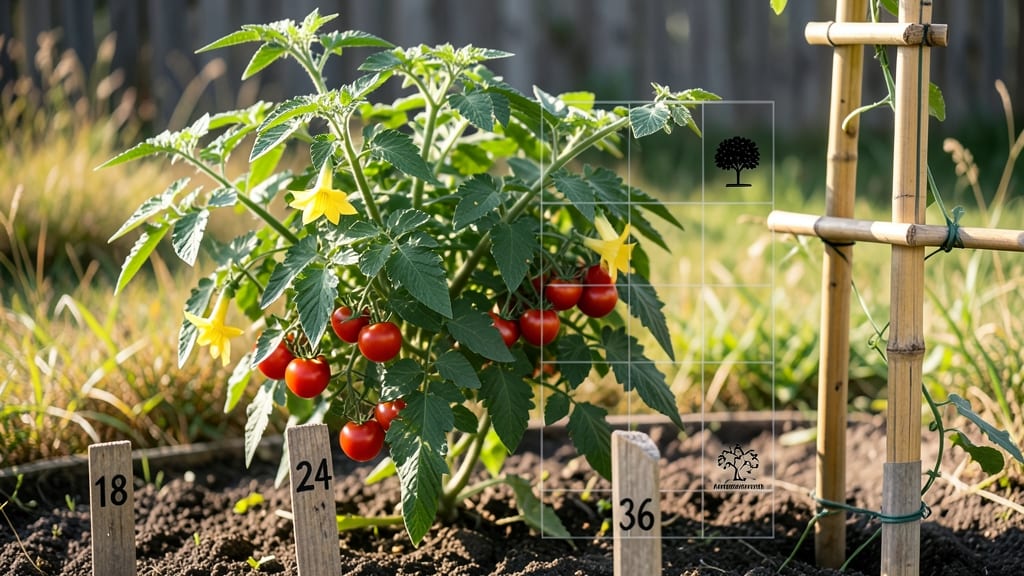
A tomato plant spacing chart is your secret weapon for turning a scattered garden into a high-yielding 🍅 powerhouse—because cramming plants too close doesn’t just limit growth, it invites disease and steals sunlight from your harvest.
Picture this: You’ve spent weeks nurturing seedlings, only to watch them compete for space like kids fighting over the last slice of pizza. The result? Stunted vines, blight-prone leaves, and a fraction of the tomatoes you imagined.
But here’s the good news: exact spacing—measured in feet and inches—can transform your garden from a crowded mess into a thriving, productive space.
This guide breaks down the ideal spacing for every tomato variety—whether you’re growing bushy determinate types or towering indeterminate giants—plus how to tweak those numbers for containers, trellises, and small gardens. No more guessing, no more wasted effort.
By the end, you’ll know exactly how far apart to plant your 🍅, how to adjust for your climate, and why airflow is the unsung hero of a bountiful harvest. Let’s get started.

Tomato plant spacing chart by variety: indeterminate vs determinate guidelines
Getting the tomato plant spacing right is one of the most overlooked secrets to a high-yield harvest. Too close, and you’ll battle disease and poor airflow—too far apart, and you waste precious garden space.
The key difference? Indeterminate tomatoes grow continuously, while determinate varieties set fruit all at once. Let’s break down the exact feet-inches spacing you need for 12+ popular varieties to maximize your sunlight exposure and fruit production.
Proper spacing isn’t just about fitting plants into your garden—it’s about creating an environment where each plant thrives. Indeterminate tomatoes need room to sprawl or climb, while determinate varieties stay compact but still require airflow to prevent blight and rot.
Even a few inches can make the difference between a healthy vine and a struggling plant. Below, you’ll find the precise measurements for each type, along with tips to adjust for containers, trellises, and small spaces.
🌱
| Variety | Growth Habit | In-Ground Spacing | Container Size (Min) | Notes |
|---|---|---|---|---|
| Cherry (Sweet 100) | Indeterminate | 24-36" | 5-gallon pot | Great for trellises; needs support |
| Beefsteak | Indeterminate | 36-48" | 15-gallon pot | Heavy fruit load; stake required |
| Roma | Determinate | 18-24" | 3-gallon pot | Compact; ideal for sauces |
| Brandywine | Indeterminate | 36-48" | 15-gallon pot | Heirloom; needs trellis |
| Celebrity | Determinate | 24" | 5-gallon pot | Disease-resistant; bushy |
| Sungold | Indeterminate | 18-24" | 5-gallon pot | Trailing; great for hanging baskets |
| Early Girl | Indeterminate | 24-36" | 5-gallon pot | Early producer; needs staking |
| Patio | Determinate | 18" | 3-gallon pot | Dwarf; perfect for balconies |
| Black Krim | Indeterminate | 36-48" | 15-gallon pot | Heirloom; needs strong support |
| Better Boy | Indeterminate | 36-48" | 15-gallon pot | Hybrid; heavy producer |
| Mountain Merit | Determinate | 24" | 5-gallon pot | Disease-resistant; reliable |
For indeterminate tomatoes, the wider spacing (up to 48 inches) ensures their vining growth doesn’t compete for sunlight or nutrients.
These varieties keep producing until frost, so giving them room to sprawl or climb is critical. Beefsteak and Brandywine, for example, can grow 6+ feet tall and need sturdy trellises or cages to support their weight.
On the other hand, determinate tomatoes like Roma and Celebrity stay compact and produce fruit all at once. Their 18-24 inch spacing allows for
How to adjust tomato spacing for containers, trellises, and small gardens
Small spaces shouldn't limit your tomato dreams! With the right container sizes and vertical training, you can grow 2-3 times more tomatoes than traditional in-ground gardens.
Urban gardeners and balcony planters often face challenges like limited square footage and wind exposure, but smart spacing adjustments turn these obstacles into opportunities for high-yield harvests.
Traditional 18-24 inch spacing works for sprawling in-ground gardens, but containers and trellises require completely different approaches. For example, indeterminate varieties like 'Sungold' can climb 6-8 feet on a trellis, while determinate 'Roma' tomatoes thrive in 5-gallon pots with just 12 inches of space.
Let's explore how to maximize your yield without sacrificing plant health or flavor.
Tomato Spacing Comparison: Traditional vs. Space-Saving Methods
| Method | Container Size | Spacing (ft/in) | Yield Potential | Best For |
|---|---|---|---|---|
| Traditional In-Ground | Full garden bed | 18-24" | Moderate (10-20 lbs/plant) | Large gardens |
| 5-Gallon Containers | 5 gallons | 1 plant per container | High (5-10 lbs/plant) | Balconies, patios |
| 10-Gallon Containers | 10 gallons | 1 plant per container | Very High (10-15 lbs/plant) | Indeterminate varieties |
| Trellis System | Vertical support | 12-18" apart, vertically | Very High (20-30 lbs/plant) | Small gardens, urban areas |
| Square Foot Gardening | 1 sq ft per plant | 1 plant per sq ft | Moderate-High (8-12 lbs/plant) | Small raised beds |
*Yield potential varies by variety and growing conditions. Indeterminate varieties benefit most from vertical support.
For container gardening, size matters more than you think. A 5-gallon pot works for determinate varieties like 'Patio Princess', but indeterminate tomatoes need at least 10 gallons to thrive.
Use well-draining potting mix with added compost to prevent root bound conditions. Remember, root growth equals fruit production, so bigger containers = bigger harvests.
When using trellises or cages, focus on vertical spacing rather than horizontal. Place plants 12-18 inches apart in rows, but train vines upward to save space. This method works especially well for cherry tomatoes and slicing varieties like 'Brandywine'.
Just be sure to prune suckers regularly to encourage upward growth and improve airflow, which reduces disease risk.
Small gardens benefit from interplanting techniques. For example, place bush beans between tomato plants early in the season—they fix nitrogen and provide shade for young tomato roots.
Later, you can remove the beans and let the tomatoes spread slightly. This rotational spacing trick maximizes your square footage without overcrowding at any single growth stage.
Don't forget about wind protection in urban settings. Use